Showing posts with label Bisexuals I never met. Show all posts

Wednesday, February 29, 2012

Bi lives: Nerina Shute/3

Nerina2

(Above: Nerina in 1995, aged c87, right. With Sue1066, left, whose pic this is)

There are so many things you can learn, and be inspired by, when you look at an individual’s life in depth. Studying Nerina Shute’s life through her writings has given me so much to think about. This is just the beginning:

Bisexuality over a lifetime
For many people who aren’t bi – and even for some who are – bisexuality is something that is for young people. Only for young people. I suspect that’s because many of them connect bisexuality with having lots of partners and/or not being “settled down”.

Not much is known about the ways in which people remain bisexual over the course of their lives, how their sexuality changes (or doesn’t), and how these changes interact with the changes in society.

But for Nerina (as with other people of her generation, now dead, such as James Lees-Milne, who have published volumes of diaries) we can see that her bisexuality was important throughout her life. In her 90s, she was happy to tell an interviewer she was bisexual (see this post); in her 80s, in her autobiography Passionate Friendships, she wrote at some length about the (late 1980s) fraught relationship between bi women and lesbians. She simply didn’t understand why this tension existed:
“We are bisexual. We are ambisextrous, as Aimee Stuart would say. Lesbians accuse us of wanting the best of both worlds. Well why not?”

Bisexual life in London
As I’ve already written, bohemian Londoners of this time – whether intellectual Bloomsburyites, or actual and wannabe actresses, people who worked in nightclubs and many etceteras – tended not to choose one opposite-sex marital partner and stay with them, forsaking all other. The blog I referred to in the first of these posts, Cocktails with Elvira, describes many of the personalities involved, and the merry-go-round of relationships in which they were involved. Some of these characters tended to be gay, some tended to be straight, but many of them seemed to have partners or occasional lovers outside of this. What there were, though, were (physical) fights, intrigues and quarrels – something Nerina complains about in We Mixed Our Drinks. No doubt alcohol played a large part.

Playwright Aimee Stuart, friend of Nerina’s from 1926 until Aimee died, introduced Nerina to many of these women through her “at homes”, where sex was frequently discussed and being “ambisextrous” far from unusual. One of them was almost certainly the wonderfully named Sunday Wilshin, who acted in the film version of Stuart’s play Nine till Six. She really intrigues me, and there’s more about her here.

This is a still from The Gentle Sex from 1943, co-written by Aimee Stuart, Moie Charles (also a friend of Nerina's) and others. Apparently there is a free download of the film on that site too!


It also seems that there was a group of women who saw themselves as specifically bisexual, as distinct from lesbian. This was certainly how Nerina saw herself as a mature woman. When young, she was unhappy about her attractions to women, didn’t like the contempt heaped on lesbians, and couldn’t understand the fact that she needed both women and men.

She saw her love for men, and her love for women, as mutually complementary. A relationship with a woman would not threaten her relationship with a man, or vice versa. Her friend and sometime lover, Helen Mayo, thought so too. This is a pic of Helen, left, and Nerina, right, on holiday in Ireland, 1939.


And in Passionate Friendships, she quotes Helen, in a conversation from the late 1950s:
“’To deceive him with another man would be wrong, but not with a woman. There’s no harm in it,’ said Helen, ‘because the love between two women is totally different. It’s a form of friendship, a passionate friendship.’
“Of course I knew exactly what she meant. There is little or no similarity between the lusty love-making of a man or tender or motherly love-making between women. A male lover is unthinkable for a married woman in love with her husband. A female lover can be delightful.”

To Nerina’s husband Howard Marshall, though, a lover was a lover; their relationship ended because he considered she had been unfaithful. The fact that her lover was a woman was neither here nor there. In Passionate Friendships, she blames herself for hurting him so much, and thereby ending their marriage, when she still loved him.

Helen and Nerina’s view of sex between women seems to have some connection with the romantic friendships of the 19th century and earlier, as detailed by Lilian Fadermann in Surpassing the Love of Men. Fadermann, writing in the early 1980s, saw romantic friendships as NOT being sexual. I don’t see that we can know, definitively.

Helen Mayo and her partner (Dorothy Anderton) Andy Sharpe, friends of Nerina’s from 1939 until their deaths in the 1970s, are also interesting to consider. They were a dentist and obstetrician, respectively, so not obvious candidates for bohemianism. Instead, Nerina places them within a work-hard/play-hard, live life to the full framework. Andy had a fiancĂ© who was killed in WW2, and Helen had other lovers too, as well as Nerina. They were extremely sociable and life-loving, with their large house in Portland Place the scene of many parties. This was mentioned in Andy Sharpe’s obituary in the BMJ, with no further comment or explanation.

Things I don’t know about Nerina
Although I wrote above about Nerina’s lifetime of bisexuality, in fact there is little publically available information about her life in old age. I found a couple more pictures of later-life Nerina via Google Images, and they intrigue me. They are from Sue1066’s flickr account. Who are you, Sue1066? You obviously knew Nerina (see the picture of the two of them at the top of the post) and perhaps have some connection to her family – given that some of the other pics are of Nerina’s mother’s childhood home and a memorial with her maiden name Pepper Staveley. I hope you don't mind me using your pic.

Obviously, there are lots more things I don’t know. And sadly for my bank balance, these are the sort of interests that lead jobbing writers to attempt biographies.

The most obvious are: what were the real identities of her lovers Charles – abortionist turned condensed-milk salesman; and Josephine – Catholic monocle-wearer, met at a lesbian party, greatly in love with Nerina, and her assistant at Max Factor in the late 1930s? Cocktails with Elvira contains a number of candidates for Josephine, although I don’t think any likely monocle-wearers are mentioned.

Maybe Nerina was deliberately laying false trails for any future nosey-parkers.

Tuesday, February 28, 2012

Bi lives: Nerina Shute/2


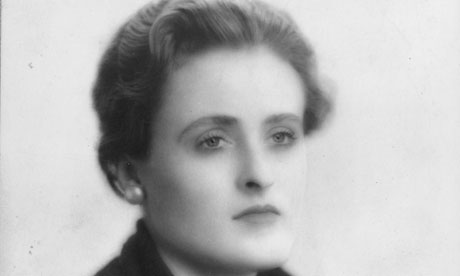
(Left, Nerina Shute in the late 1930s)

This is the second post in my LGBT history month series on bisexual writer Nerina Shute. If you haven’t read yesterday’s post on why I’m doing this, best to read here first.

Nerina's life and times

Nerina Shute was born to an upper middle class family in Northumberland in 1908, the daughter of Cameron and Renie. Her father was in the army, her mother wrote several scandalous novels which were optioned by Hollywood.

While in California (with Nerina), Renie invested all of her money in a married paramour’s gold mine and when Cameron came to visit them, persuaded him to invest his money too. The married man was killed in a car accident and the goldmine was found to be devoid of gold, meaning that the family lost all their money.

Nerina won a short story competition while still in the USA, despite the fact that she had left school at 14. She came back to Britain from California, aged 18, soon moving to London, where she became a typist at the Times Book Club. Attending dance classes, she met playwright and bohemian stalwart Aimee Stuart, who held frequent parties and gatherings in her central London flat. As Nerina wrote later in We Mixed Our Drinks (where she writes of herself in the third person:
“Shute was an odd, rebellious young woman who happened to come of good family but preferred to be thought a ‘bohemian’ than ‘a lady’ or even ‘a gentlewoman’. She was untidy, careless and heavily made up with lipstick and rouge and eye-black ... Behind a half-hearted attempt at flippancy she was deeply in earnest. Behind her sex-talk and her bad manners she was old fashioned, and full of what she herself sometimes called ‘twisted ideals’.”

In 1927, at the tail end of the silent picture era, Nerina was offered a job as a reporter on Film Weekly. She interviewed many celebrities, and did not mince her words, offending many film stars such as Madeleine Carroll, who she described as a “ruthless Madonna”.

Here she is in The First Born, a great (silent)film that was restored/relaunched recently by the BFI.


Nerina also made a nuisance of herself around film sets: director E A Dupont banned her from his productions, and she once returned disguised as a rabbi to see what was going on.

In 1931, her first, autobiographical novel, Another Man’s Poison was published, causing scandal with her relatives, and attracting reviews, as one of its main characters, Paula, describes herself as ambisextrous. This received a fortuitous review from Rebecca West in The Daily Telegraph:
“Miss Shute writes not so much badly as barbarously, as if she had never read anything but a magazine, never seen any picture but a moving one, heard any music except at restaurants. Yet she is full of talent.” (Shute, 1944:40)

This was excellent publicity for Nerina, despite the fact that she was hurt by it, thinking it an accurate criticism. As “the girl with the barbarous touch” she wrote a series of articles for the Sunday Graphic newspaper at 10 guineas a week (compared to £4 for her job at Film Weekly), giving the opinions of “the ultra-modern girl”. Subsequently, she was invited to Lord Beaverbrook’s estate (he was then owner of the Express newspapers) and given a job as a general reporter at the Express, where she was sacked again, this time after six months.
“Far from being a good reporter, she was inexperienced, useless at writing a straightforward news-story, and on top of these fundamental drawbacks, as everyone probably knew, she disliked her job.”

Nerina was aware of her attractions to women from the 1920s on, and was nervous about them. She did not want to become a lesbian, feeling that the societal opprobrium was too great, and she felt “hurt and diminished” by this prejudice.

But around this time, she met “Charles”, a doctor who had been struck off for performing an illegal abortion. Feeling lonely, and anxious to lose her virginity, they began a relationship and were soon in love. After some months, she went to “live in sin” in Liverpool with him, where he had got a job as a condensed-milk salesman. She became jealous, however, which caused arguments, and so she left him and returned to London. Here they are, posing on Blackpool Pleasure Beach, in 1930.


Once more, she became a journalist, where she says she was obliged by her editor to write light stories which she felt were wrong in times of terrible poverty. For instance, she was sent to investigate nudist clubs and colonies “which were springing up in the green fields of England like rude little mushrooms”. She went to visit nudists in Earl’s Court but was amused to find that, for the interview, they were clothed. The editor wanted her to write stories about how they were immoral but she liked the nudists she met and wouldn’t do it.

Like very many creative (and other) people of that time, she was attracted by what appeared to be the greater equality in Russia, although after a trip there she also offended Russian Communists she met by saying they had replaced religion with politics.

Around this time, she also began a relationship with a woman she calls “Josephine”, who was a close friend and lover until the end of the 1930s.

Disillusioned with journalism, and by the lack of success of a play she had written, in 1935 she began to work for Max Factor as their publicity manager, doing what she described as “commercial propaganda” and becoming what she called a “Bond Street blonde” – well dressed and groomed, wearing high heels and bleaching her brown hair. This was a dramatic contrast to her previous look of androgynous messiness, complete with black hat. She was also briefly married to James Wentworth-Day, a high Tory journalist, who attracted her with his strongly felt ideals, even as she furiously disagreed with them. The marriage only lasted a year.

He was around 40 when they married, so I imagine this is him in the 50s:


By 1937, Nerina had lost her eagerness to write:
“A few years ago Shute had been the budding novelist and journalist, a young woman of rebellious thoughts who dreamed each night of rising up and up into the golden heights, creating with words the brave people and the lovely places she saw so clearly in her New World. Full of ambition, she had been a pig-headed untidy young romantic; she intended to write what she believed, live as she wanted, and to hell with criticism”.

In 1939, while riding her horse in Rottingdean, Sussex, she met Helen Mayo and Andy Sharpe, two women who lived in Portland Place in London and worked as a dental surgeon and obstetrician respectively. She went to live with them, becoming Helen’s lover, and worked as a nurse, almoner, and ambulance driver, throughout the war.

She also met her second husband, Howard Marshall, in 1940, a very prominent radio journalist, and the first person to broadcast ball-by-ball cricket commentary.

For the duration of the war, their relationship was intense and idyllically romantic, much of it carried on in intense secrecy as he was both famous and still married, his wife and sons being in America for safety.

This – Begin the Beguine - is one of the songs they used to dance to:


They married in 1944 and were both strongly socialist at this time, endlessly discussing what a better world might look like. Still, however, she had creative ambition: “... she was not a good enough writer. With all her heart she envied the experienced word-wealthy people”. She did, however, publish We Mixed Our Drinks (discussed in the previous post).

In the immediate post-war period, their relationship was “blissfully happy” despite the fact that they were both unemployed and in general found this period difficult:
“When all the excitement was over we all had a feeling of anticlimax. We had done our job. We had won the war. We were unprepared for the long littleness of life.”

What a telling quote! Their intense relationship soon began to show cracks: she wanted to go out, he wanted to stay in. For some years, she acquiesced to this, despite increasing loneliness. When Howard began to work in PR in late 1945, they hired a French housekeeper, "Renee". Renee brought fun and joy into what, over the next few years, became an increasingly unhappy marriage. They loved each other but were wildly incompatible.

Howard did, however, support her quieter, more intellectual endeavours. Nerina studied English at London university, and began to write the first of her historic novels. This one, about Shelley, was published in 1951


After a few years, Nerina and Renee began a sexual relationship (instigated by Renee) which seems to have been maternal on Nerina’s side. Renee, however, was in fact in her 30s, and her mental health was deteriorating. Her family had died in a bombing raid in France, and she had found parts of her mother’s body scattered in the ruins of their home.

Towards the end of her three-year stay with Nerina and Howard, Renee had a serious nervous breakdown, eventually returning to France. Nerina then became very depressed as well and sounds as if she were on the edge of a breakdown herself. “The longing to escape had returned ... this time I felt a desire to die”.

During a furious argument with Howard on New Year’s Eve 1953, several years after Renee had returned to France, she told him she had had sex with Renee. He had known nothing about her attractions to women. Despite speaking on the phone and writing letters, they never saw each other again, although she maintained until the end of her life that she still loved him.

This is Howard, perhaps in the 1940s.


Nerina went to stay in Sussex with her mother and her mother’s much younger and alcoholic sixth husband, Noel. While her depression lifted rapidly, she, her mother and step-father struggled financially, negotiating with the Inland Revenue, trying to make money on renovating houses and moving, or selling off parcels of land. Over the next four years, as her mother’s health deteriorated, Nerina wrote a memoir of Renie’s life Come into the Sunlight, designed to be a reflection of her mother’s joyful philosophy of life. After her death, Nerina and Noel soon moved to London, where they lived in Chelsea, at this time just starting to be the centre of Swinging London.

When she and Noel decided to take ballroom dancing lessons (so Nerina could take Noel’s mind off drinking) they were taught by Phyllis Haylor.

Nerina and Phyllis began a relationship and remained lovers until Phyllis’s death. This was, according to Nerina, a very happy relationship although no particular details emerge in her late-life autobiography Passionate Friendships.
“Phyllis made me happy with an adoration based on a need for motherly tenderness which only a woman can give to another woman. Now, late in life, Phyllis was giving it to me and I was giving it to her. It was like a marriage. We became passionate friends, and our friendship lasted until the day of her death.”

During the 1970s, Nerina wrote two travel and history books about London’s villages, as well as a volume of tell-little autobiography, The Escapist Generations and, in 1986, The Royal Family and the Spencers.


In 1981, Phyllis died suddenly of a heart attack and Nerina was alone once more. Although this is not mentioned by Nerina, her obituaries mention that she began a relationship with another woman, Jocelyn Williams, in 1989, and they stayed together until Nerina died.

In later life, Nerina became as fervent a conservative as she had once been a socialist, but she remained interested in the contemporary world, even as she distanced herself from some of it. With the publication of her final autobiography, Passionate Friendships (1992), she was able to talk more freely about her bisexuality:

“I believe there are many women in the world who need the love of another woman in addition to the love of a man. We are bisexual. Usually we hide this fact from our husbands for fear of ending a happy marriage. I made the mistake of telling my husband ... By explaining how it all happened, and how it ended, I may possibly give help to others.”

So not exactly what bi people tend to think these days, then! Nerina was a product of her class and time, but/and I warm to her and think she would have made a marvellous companion.

In tomorrow’s post, I’ll be writing about some of the questions and issues that studying Nerina’s life has led me to consider.

(The information in this post comes primarily from Nerina’s memoirs and autobiographies, with additional information from Shepperton Babylon, by Matthew Sweet, and from various obituaries.)

Monday, February 27, 2012

Bi lives: Nerina Shute


Nerina Shute, in the early 1930s


February is LGBT history month (in the UK) and – although I have several other blog posts in the offing/promised/massively overdue - I really want to add my twopennorth while I can.

Actually many more pennorth than that. This is a long post, so I’m splitting it into three, to be published over three days, thereby just about squashing it in before the end of the month.

People in the bisexual community often talk about the need for more information about bi lives – people who are now, or were in the past, some kind of bisexual. And whereas there can often be debates or confusion about whether we now can give a contemporary identity (bisexual) to them then, with Nerina there is no confusion. "I am bisexual," she said to writer Matthew Sweet, when she was in her 90s. "What does your generation think about such things?"

Nerina Shute: 1908-2004
This isn’t the first time I’ve written on this blog about Nerina – teenage film critic of the silent era, novelist, London bohemian, laugh-out-loud memoir writer and explicitly bisexual at a time it is so often assumed that people weren’t. But since 2006, when I wrote about her before, I've had more time to think about her, and her life and times.

I first found out about Nerina when I read her memoir We Mixed Our Drinks in around 2000, while I was doing research for another project. Published in 1944, WMOD is the story of her life from her teenage years in the USA when her mother lost all their money in a goldmine fraud; her time as reluctant film critic – she didn’t like film stars; an even more reluctant journalist – she didn’t know what she was doing; and an eager young novelist (nicknamed “the girl with the barbarous touch”).

At the time, WMOD was considered very shocking. Nerina is open about having lived with a man without being married, about being taken to a Chelsea orgy (where the hostess wore a vest that was both too long and too short, and they were thrown out for not taking off their clothes), about the “pansy” and lesbian circles in which she never quite said she moved.

I am fascinated by Nerina for a whole range of reasons, some of which may already be apparent. So fascinated, in fact, that even though writing about her was a significant part of my master’s degree in life history research, I still google her and her gang to see if anything new shows up. Sure enough, I found this superlative blog Cocktails with Elvira. It’s based around a notorious court case – of socialite Elvira Barney, who shot her lover in 1932.

The blog also contains a lot of information about bohemian London of that time, much of which would now be (and somewhat differently would have been then) considered “queer”. This is not simply the haute intelligentsia of the Bloomsbury Group, which has been well-documented. The various overlapping London bohemias of the 20s and 30s (and earlier, and later?) seem to have been overwhelmingly queer. Musicians, actors, models, chorus girls and boys, journalists and people about town seemed to have been strikingly unstraight. Not to mention artists, particularly those condemned with the word “Chelsea”.

“Hello darling, how’s your sex life? Lousy, darling, how’s yours?”
While Matt Houlbrook’s brilliant book Queer London looks at all the different ways in which men at this time interacted with each other for sexual/romantic purposes, there has been very little published about women’s relationships with each other outside of the most famous instances – Violet Trefusis and Vita Sackville-West, for instance.

Now that I’ve read all Nerina’s memoirs/autobiographies, it seems really apparent that there was a lively lesbian/bi/queer women’s scene in London in the interwar period and afterwards. There is more information about some of these characters in Cocktails with Elvira, and I wish I had the time to research this properly. This scene was mainly based around friendship networks of various sorts, rather than the cottaging/picking up/Turkish baths scene etc, described by Houlbrook.

While these women were often well-off, sometimes rich and independent, they weren’t necessarily so – Nerina came from a once-rich background but in the 30s she was often without a shilling for the gas - indeed the whole mix of class and bohemias seems to be to be quite complicated. I’d love to know how much, if at all, any sexual/romantic friendship networks spread to “ordinary women”.

It also seems that there was a group of women who were actively, explicitly, bisexual, who sometimes wanted to distance themselves from lesbians and sometimes had relationships with them. I’ll be looking at this in a bit more detail in a couple of days.

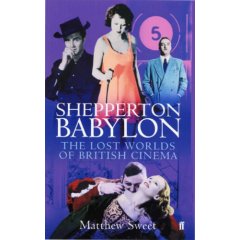
When I read Shepperton Babylon by Matthew Sweet – about the British film industry - I was delighted to discover that Nerina was bisexual, and quite happy to talk about it. I was much less delighted to find out that, at the time I was first devouring We Mixed Our Drinks, Nerina was actually still alive and living in Putney. She didn’t die until four years later. I suppose that’s the hard lesson for oral historians: the people you really want to speak to are often just beyond reach.

Tomorrow, I'll be posting more about Nerina's life and loves. Then finally, I'll be looking at some of the questions that her life, and what I know of her thoughts and opinions, pose for bisexual people today.

Thursday, February 17, 2011

20th Century Bi - Books and Links

Last Saturday (12th February) about 30 people came to Conway Hall in London for what was a really good bi history event. Sadly, Lindsay River was ill and so didn’t do her talk on creative women of the inter-war period, but Christian Klesse, Ian Watters and I were there. As well as the talk listed in the previous post, I did a personal memoir of the 70s. Nothing too personal...

Anyway, I said to people I would give a few links and notes about my talk Androgynous, Ambisextrous, or "enjoying all life's pleasures" - bisexuality before the sexual revolution - so here we are. I also have audio files of all the talks (from an Olympus voice recorder – won’t play on a Mac without some jiggery-pokery that I don't know about), plus printed versions of the talks that I did. Email me if you’d like them (my address is below my pic, on the right).

Books I mentioned
Queer London, by Matt Houlbrook: a truly excellent book about all sorts of man-man sexual behaviour from 1918-57.
The Secret World of Sex, by Steve Humphries: Oral histories of people in the UK before WW2, to accompany the 80s TV series of the same name.
Sex before the Sexual Revolution, by Simon Szreter and Kate Fisher: oral histories, plus analysis, of married couples in Britain who were sexually active before the 1960s. Recently out in paperback.
Fashioning Sapphism, by Laura Doan, looking at androgyny in the 1920s, and how the "masculine" fashions for women in the early part of that decade became connected with lesbianism after The Well of Loneliness prosecution.
Bisexual Love by Wilhelm Stekel. Originally published in 1922, this radical and almost unknown book has been digitally scanned and is available from Amazon!
Passionate Friendships, by Nerina Shute, in which she writes about her bisexuality and her relationships with women and men, was published in 1992. Nevertheless, it almost never appears on abebooks lists, or elsewhere on the second-hand market. I have only ever seen it in the British Library. Currently, there is one copy on Amazon for £29.50
There is more information about her in Shepperton Babylon, by Matthew Sweet – a great book for anyone interested in British cinema, bisexual or not.

Thursday, February 03, 2011

20th Century Bi - London's bisexual history event


February is LGBT history month in the UK and - as promised last year, and the year before - this year there WILL be a specifically bi history event (I think there may even be two. More details at the end of this post).

So... drum roll ... I am co-organising, and speaking at, an event in London called 20th century bi. (Great title, eh. Not my idea sadly, but that of my co-organiser Lisa Colledge.) Here's the details:

20th Century Bi
To mark the 30th anniversary of the bisexual community in the UK, this event will look at some of the big, bad, bold bis who made the 20th century great. A panel of speakers discusses 20th century bisexuals and bisexuality in Britain, as part of LGBT History Month.

Speakers are:

Sue George: Androgynous, ambisextrous, or “enjoying all life’s pleasures”: being bisexual before and after the sexual revolution

Christian Klesse: 'Re-writing the scripts of Love. The Critique of Monogamy, Polyamory and Bisexual Intimacies in the late 20th Century'

Lindsay River: Lesbian... or bisexual? The (mis)naming of creative women of the early 20th century

Ian Watters: Bisexuals at Pride: The somewhat partial story of bisexual involvement in the annual London Pride celebrations

Our individual talks will be followed by a panel discussion and Q&A.

Everyone is welcome to this bi-positive event.

Saturday 12 February 2011
2.30 - 4.30 pm

Conway Hall (Bertrand Russell Room)
25 Red Lion Square
London WC1R 4RL
(nearest tube is Holborn)

Tickets £5 (£3 unwaged) from EventElephant here and at the door (all profits to BiCon Helping Hand Fund)

Wheelchair-accessible venue: for Conway Hall access details contact Carina on 0207 242 8032


Manchester

There's also an event in Manchester on Feb 15th. It doesn't sound as specifically historical as ours, but nevertheless good stuff. This information is taken from Biphoria's website.

As part of LGBT History Month 2011, on Tuesday, 15 February we will have a special event to launch our new publication "Getting Bi in a Gay/Straight World". It will be at the Levenshulme Inspire centre, 747 Stockport Road, Levenshulme M19 3AR, from 7pm to 9pm. Come along, and if you have them, share your memories of bisexual Manchester.

Have a great LGBT History Month everyone, and I hope you will go to one of these events - bi or not - to celebrate our history.

Sunday, September 12, 2010

Bisexual war hero


The really inspiring experience of BiCon a couple of weeks ago, combined with me finishing my MA, means my blog hibernation is over. At the very least, there will be a few posts again before I run out of steam...

Anyway, back to an old theme of mine - Bisexuals I never met – where I write about famousish dead bi people.

The BBC radio programme Last Word often has really interesting subjects featured on it. It’s essentially an obituary programme, about notable people who’ve died in the last week or so, with comments from those who knew them. Catch it on iPlayer (if you are in a country that allows it; I don’t think the US does).

Today’s Last Word had a feature about Michael (Micky) Burn – war hero, foreign correspondent for The (London) Times, poet, novelist - who has died aged 97. Here’s an obituary about him here. Yes, posh man + the Second World War + derring-do = Daily Telegraph obituary.

There’s also an interesting trailer for a documentary about his life here, and I have to say I warm to him:


Like many people who’ve made it to obituary programmes, he came from an upper class background, and this shows in his early politics. Specifically, as a young man he used to be a Nazi sympathiser, even introducing Unity Mitford to Hitler. But (thank the lords) a trip to Dachau in 1937 put a stop to that and he spoke later about how ashamed he had been to have been taken in by fascism. He turned to the Left shortly after, and had a very active war, being imprisoned in Colditz for several years. Later, he saved the life of the little girl who would become actress Audrey Hepburn. Burn was socialist throughout the rest of his life, apparently losing all his money in mussel-breeding workers’ co-operative in the 1960s.

He was also bisexual, having a long on-off affair with the (later) Soviet spy Guy Burgess as a young man. Apparently there were other men too, and in the 1950s he was mentioned (anonymously) in the News of the World as a victim of blackmail. He was also married to Mary, who was, he said, ”the love of his life”.


Bi-invisibility
Correct me if I’m wrong, but this man sounds bisexual and you’d have thought that the word might have featured at least once in the programme. Not a bit of it. One of his old acquaintances bugged the hell out of me by saying again and again that Burn was homosexual. No. If he was married simply because he wanted to hide his homosexuality, fine. But Burn describing his wife as the love of his life surely puts paid to that.

I do take the point of groups like Bi Index, who say that the only person who can say someone is bi is themselves.

But Mr Burn wasn’t on this programme to say he either was or wasn’t; it was other people removing the possibility for him after his death. Anyway, one of the inter-titles on the documentary trailer (done with, presumably, his involvement) was “bisexual”. So there!

Heroes
I sometimes wonder about this “Bisexuals I never met” tag - am I looking for heroes amongst them? Role models, people I can be like, look up to? I don’t really believe in that; people are flawed and adulation doomed to failure. I suppose it is partly volume: look, here’s a large number of people, bisexuals are everywhere. Still, a lot of the people I list here led fascinating lives, with all sorts of tales to tell, and I wish I had met them.

Mr Burn is a particularly apposite member of this team at the moment, what with the 70th anniversary of the Blitz (where urban parts of the UK were bombed by the Nazis) being written about so much right now. How can people in developed wealthy countries nowadays be so brave? I'm not sure that they can.

In 2008, there were reports that Burn’s autobiography, Turned Towards the sun, had been bought by Hollywood and that Jude Law was likely to be starring. Interesting. I wonder who will play Guy Burgess – or will this sub-plot be strangely absent?

Thursday, June 26, 2008

Royals in messy relationships shock


I don’t know if any British readers saw last night’s mind-boggling TV programme on the marriage of Princess Margaret and Lord Snowdon. There’s more here.

Dearie me, what a mess their marriage was, principally due to his inability to keep his trousers on. To say he had an eye for the ladies was an understatement – he had two eyes for the ladies, and a couple in the back of his head as well by the sound of it. He probably still has all those eyes: he doesn’t sound as though age (78) is likely to wither him. And while a certain amount of open-marriage, swinging-sixties-ness was perfectly fine by both of them, he essentially treated PM horribly – abandoning her at parties, making her cry on the shoulders of semi-strangers, being very unhappy when she found lovers of her own.

It seems there are also “persistent rumours” that he “refuses to deny” that he is bisexual! Apparently when they first met, PM thought he was gay. Many of his social circle were gay or bi men, and viewers were lucky enough to see the photo of a young male Snowden in drag?!? His closest male friend – Jeremy Fry - was openly bisexual and had been done for importuning (ie trying to pick up men for sex). This apparently stopped Fry being best man at the wedding (which you will note is not mentioned in his obituary)! Snowdon also had an affair with (Mrs) Camilla Fry, and fathered her daughter Polly.

These are Mr and Mrs Fry…


Fascinating stuff – and this is from me, who finds the royals usually very yawnsome. Perhaps you can see it via the Channel Four look again thingy?

And weren’t there also rumours that she was bi? Lawks, those royals!

Wednesday, February 20, 2008

Ossie Clark


This time’s sort-of-historical blog post is another bisexual I never met – fashion designer Ossie Clark. He’s also my second Elegantly Dressed Wednesday subject, because not only could he look pretty smart himself, he made lots of rich and lucky women look good, and had an influence on the style of plenty of poorer women too – including the teenage me.

Born in 1942 and murdered in 1996, Ossie Clark was a terrific designer who made some of his best clothes in the late 60s and early 70s.

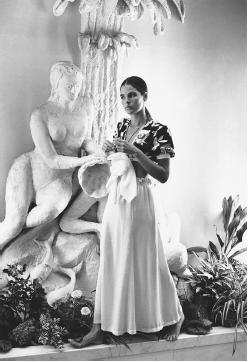
The clothes he made tended to the flowing, like the pictures I’ve posted here.


A kind of 40s meets 70s crepe or chiffon. And very sexy, in my opinion.


I can’t find many pictures that will allow me to post them here, but the site for the London Victoria and Albert Museum’s 2003-04 exhibition has quite a few to look at.

A fashion historian said to me that she thought he really liked women, because his clothes made female bodies look good. They didn’t require you to have a particular body shape – certainly not the rake-thin type usually associated with fashion.
Of course, nowadays his clothes are characterised as “vintage” so you can buy them in auction houses and upmarket clothing emporia. Unsurprisingly, they are really expensive – this one (below) was sold in 2004 for £3592.


Still, it’s the sort of thing I’d love to wear if I had the money/ thought that spending that sort of money on clothes was morally defensible!

Many of the clothes he designed were done in collaboration with his fabric designer wife, Celia Birtwell, who nowadays has a rather pretty collection for Top Shop. There are some more of their 70s clothes on that site too.

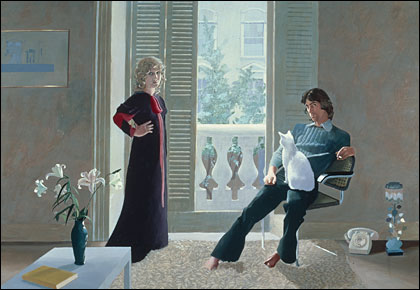
This really famous picture of them was painted by David Hockney and now hangs in Tate Britain, in London.


So what about his bi-ness? He’s written about on this blog, entitled Gay for Today, but I think the writer is a wee bit snide by saying:

In 1969 he married Celia Birtwell. Although Ossie was openly bisexual and carried on many affairs with men, he and Birtwell had two sons together.


And your point is, Mr Gay for Today?

What can I easily find out about him? Well, he lived the Swinging Sixties life, with the sex, drugs and rock and roll that that implied – particularly the drug part, which apparently set his marriage and career, and subsequently his whole life, on the skids.

In 1996 he was murdered by his (male) ex-lover, very violently indeed. A sad and sorry end really to such a creative life.

For more on him, go here, and his posthumously published diaries are available here. I feel there’s a lot more I could write, but - boo-hoo – no time for the research.

He’s also been in the news recently, as his sons tried to stop his name being used as a new Ossie Clark brand, which they considered exploitation.

Speaking of fashion designers, I have a feeling that Calvin Klein was bi too. Can anyone advise?

Wednesday, February 13, 2008

Bisexual history


So what is bisexual history then and why – apart from the fact that it is LGBT history month (see my last post) – am I blogging about it?

Well, the quick answer to that is that bi people are essentially “hidden from history” as Sheila Rowbotham wrote in the 1970s about women in the past. And I would dearly love to see it, them and us out in the open.

I am doing my microbit. As well as writing about how men who had sex with men before WW2 often seemed to act, or feel about their experiences, somewhat differently than they do now, and how some young women in the 1920s seemed to be having relationships with each other, I wrote a few blog posts about a year ago about bisexuality in the 70s, 80s and 90s – what I remember, in a nutshell. Bizarrely that is now history too. You can see them all in the history link to the right of the page.

But what about before that?

The gay liberation movements of the 1970s set about finding, recording and reclaiming the lives of gay people across the ages – we are talking pretty much exclusively north America and Europe here. They found people across all time – mainly men, mainly rich, but not all - who had same sex relationships.

It used to be, and probably still is, argued that it is simply inappropriate to label people gay, lesbian or bisexual when those terms were not used at the time, and people would not have considered themselves in that way. Sexuality before the end of the 19th century was perceived in terms of the act, not the identity, and whether or not you married was what was important. So partly as a result of that – and also for political reasons – pretty much anyone gay historians could find who had other than other-sex relationships was treated as gay for reclamation purposes.

It’s certainly true that many or most people earlier than say the 1970s (and even now almost everywhere in the world) who would like to have same-sex relationships were compelled to at least appear to be having straight ones.

Nevertheless, it is also true that many people have been claimed as gay/lesbian (three being Virginia Woolf, Oscar Wilde and indeed Sappho – pictured above, although how can anyone really be sure it is her?) who seemed to have authentic romantic or sexual attachments with men and women. So while it might have been a good idea to claim them as lesbian or gay in the 1970s, now I think it’s time to take a more nuanced view of their sexual complexities.


Other than that there are, of course, reports of men who put it about with all and sundry… the 17th century poet and satirist the Earl of Rochester, for instance, pictured left. A fictionalised version of his life featured in the film The Libertine. Very little of his sex with men was apparently included.

As usual in matters historical, written records are overwhelmingly about men, specifically rich and/or aristocratic men, so we know much more about what they said, did and wrote. But that doesn’t mean there is nothing at all written about women, just that it is harder to tease out. Anne Lister, for instance, a wealthy 19th century Yorkshirewoman, lived as a lesbian and had many affairs with women before marrying the wealthy heiress Ann Walker. But what about her other girlfriends? Mightn’t some of them have loved men as well as her?

One shining example of bisexual history is Eva Cantarella’s book, Bisexuality in the Ancient World - an academic look at ancient Greece and Rome, the (mainly) male bisexuality that went on there, and the constraints – of which there were many – that applied. I do have this book but as it is currently in storage, I can’t enlighten you any further.

So have there been any other history books from a specifically bi perspective? I can’t find any, but if anyone knows of one I’d be mighty glad to read it.

In the meantime, there are some bi-themed history features here.

Friday, December 14, 2007

Queer London


No, not a description of life as we know it now but an absolutely fantastic book that I have been reading. Queer London, by Matt Houlbrook, is about gay life from 1918 – when the first world war ended – to 1957, and the publication of the Wolfenden Report, which recommended that sex between men in England and Wales should no longer be a crime. Life in London, obviously, and between men – slightly less obviously. Things were rather different for women, so that’s another book – in fact, one that I am reading now – and blog post.
It was a very mixed picture for gay men in London at that time. For instance, in the 20s and 30s, there was quite an active gay pub, club and café scene, with lots of cottages (at that time, old-fashioned metal pissoirs that were in the middle of the street) where men could pick each other up. For most of that time, too, there were four or more Turkish baths where you could be steamy in several senses.

But of course, having sex with another man was illegal and from time to time there were clamp-downs. Clubs would get raided and cottaging individuals would be targeted by agent-provocateur style “pretty policemen”. (Pretty policemen were still operating until at least the 1980s, as I remember.) Men who were caught faced prison and subsequent ruin.
Homophobia was rampant – as Quentin Crisp, above (probably in the 1930s) testified. But not everyone experienced homophobia in the same way, and many gay men were in great demand as entertainers. Fine if you were amusing, I suppose, not so great if your bent was in the sphere of road digging or accountancy.

Bi men
One of the most fascinating things for me about this book was to look at how sexual identity, and the categorical division between straight and gay men, has developed. Boy, oh boy, were things different then – probably until the 1950s, when being “masculine” started to preclude having sex with men.
So while there were men who were only interested in having romance or sex with men, there were many other men who were quite happy to do so some of the time.

For instance, there were young men (especially but not only working class) coming to London and mixing in same-sex environments where women were not available. They often had homosex and sometimes romantic relationships with each other too. Then, when they decided it was time to marry, they got a girlfriend, married her, and generally speaking said to themselves: on to the next part of my life now. Sometimes/often, they remained close friends with their male ex-partners who were doing the same.

Sometimes there was a financial involvement in this. For instance, people like gay writer Christopher Isherwood (in his case in Berlin in the late 1920s-early 1930s) had boyfriends who were romantically and sexually involved with them, and kept by them, Then, in their mid or late 20s the boyfriends got married. In neither of these cases did they seem to be “turning their backs” on their “gay pasts” and saying it was a mistake and they were really straight after all. It was much more of a moving between gay and straight behaviours.

There were other young men who were primarily into girls but unabashed about the fact that they would have sex with another boy if girls were not available. As one said: “I had sex with a brown-hatter last night for a laugh”. There was no sense of losing face or masculinity by doing so. Straight men, on the other hand, were often seen by men who were committedly gay as “trade” or TBH (to be had). Or indeed Naff (not available for fucking).

Then there were soldiers - the Guardsmen (why Guards specifically, as it seems to have been?) who would have sex and fun with older wealthier men – who usually gave them presents, meals and drinks etc. This was semi-prostitution but there seems to be no real sense that the Guardsmen were doing it solely for money – they were “made a fuss of” and got, rather than spent, money. Working class masculinity was part of their attraction for their admirers.


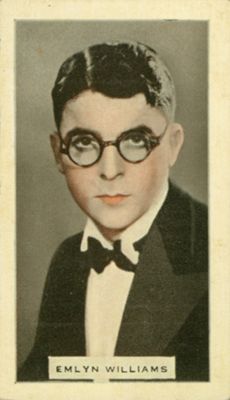
Middle class men seem to have found it a bit more difficult. According to his autobiography (Emlyn: An Early Autography, 1927-1935, long out of print) playwright and actor Emlyn Williams found it difficult to reconcile his feelings for men and women. According to Matt Houlbrook, middle class men were more likely to feel guilty about breaking their marriage vow. Being masculine, for middle class men, was more to intimacy and fidelity, rather than physical strength. EW came to London and had deep relationships with men but remained attracted to women. When his male lover died, he got a girlfriend but was still attracted to men. When another man let him down, he married his girlfriend.

Anyway, I loved this book and Matt Houlbrook – an academic at Liverpool university – has also written an interesting paper for anyone who wants to look at the role make-up played in gay men’s lives in the 1920s-30s.

Between the Acts

Some of this is fleshed out a bit more in the book Between the Acts. It’s the life stories of 12 gay men from the earliest years of the 20th century, who were interviewed during the late 1970s when many of them had become involved in the Campaign for Homosexual Equality. Several of them mention getting married themselves between the wars – with various degrees of success – but one, Sam (with the chapter heading The Dancer’s Life) also talks about being the boyfriend of (several) married men,
In one instance, Sam’s boyfriend’s wife is tolerant of, even happy about, their relationship. When she is about to give birth to her third child, Sam actually moves in to look after the family.
I love that anecdote. In history, in life stories, we get to know some of the complex real lives behind the simplistic stereotypes.

Monday, November 05, 2007

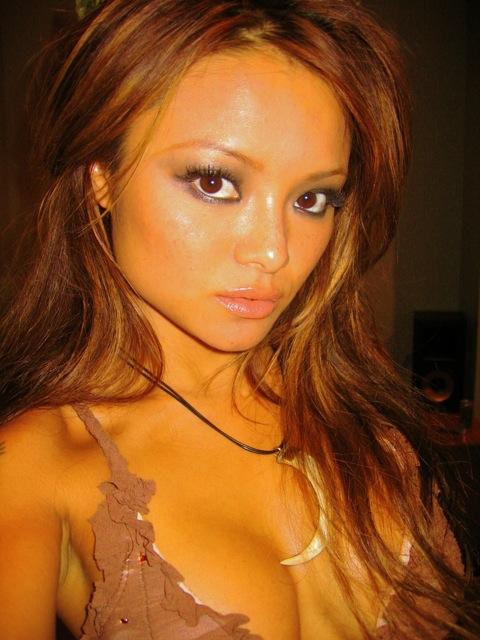
Tila Tequila and the MySpace bisexual


You couldn’t make it up – although someone obviously has. A bisexual dating show where a woman who is quite literally famous for being famous is getting “16 gorgeous straight guys!" and "16 hot lesbians!" to compete for her affections on the MTV show A Shot at Love with Tila Tequila. It sounds positively demure besides her previous series: Pants-Off Dance-Off. And that’s “pants off” in the underwear sense of the word, rather than simply an overly constricting pair of trousers.
Now Tila Tequila is most famous for having completely invented herself as a sleb through self-promotion, and clearly she’s very good at it, with currently 2,170,161 MySpace friends – more than when I looked a couple of hours ago. Now she’s a singer/actress/presenter/model/stripper/all-purpose brand, and good luck to her I suppose.
She has also been credited for giving rise to the term MySpace Bisexual, which Urban Dictionary defines as:
“A girl who makes out with other slutty chicks at parties and then claims to be bisexual because it's trendy to say so and gets people's attention on Myspace.
Pretty much any girl on Myspace who lists her sexual orientation as "bisexual". Hence, Myspace Bisexual.”

Well, being a “girl” who lists my sexual orientation as “bisexual” on MySpace I obviously have a quarrel with that. Actually lots of quarrels with that. You could equally well call them “Girls Gone Wild”. But moving on…

Now this show has attracted a lot of commentators – both bi (who hated it), anti-celeb (who hated it) and homophobes (who hated it). But also, unfortunately, people who didn’t necessarily hate it but considered that it gave a marginalised group (bisexuals) some much-needed publicity.

Yet, given that millions of people are watching this programme, what can we make of it? In fact, it reminds me in some ways of the Jerry Springer programmes of the 1990s, where bisexuals took their place among all the other freaks who wanted to show off in public.

It seems to me that the problems with A Shot at Love with Tila Tequila are a) that she had to lie to the contestants, making out that she was straight/lesbian – and Any Fule Kno that bisexuals lie; and b) that because there is nothing else about bisexuality on TV, this is seen as What Bisexuals Are Like.

The world at large has a strange and unusual view of “bisexual relationships”. Even Ms Tequila herself says: “The show will be about me finding love as a BISEXUAL!!!!! THAT IS CRAZY, RIGHT?”. Er no… how sad it would be if that were true. But it isn’t and I can’t believe she thinks so either. The world is actually full of bisexuals having good, bad and indifferent relationships, if people only knew. And they certainly aren’t going to be finding out through this show.

Of course, there are stereotypes a gogo in this programme, but that’s reality TV. Anyone who seriously thinks that, say, The Bachelor, is a realistic view of heterosexual relationships needs to be thrown into a vat of Mills & Boon novels and left to claw their way out.

The problem isn’t that there are wacky views about bisexuality in the media – there are wacky views about everything - it’s that all of them are wacky. Isn’t it about time that there were some genuine ones too?

An hour later…
Tila Tequila has added another 46 friends.

Wednesday, October 31, 2007

Black History Month


Right on the very last day, here’s my teensy contribution to Britain’s Black history month. (Do people have it elsewhere? No idea.) Anyway, here are two Black bisexual people that you probably haven’t heard of unless, like me, you particularly like the music of the 1920s and 30s.

So, in chronological order, here’s… Ma Rainey.

Ma – so called as her husband was Pa, and they had a double act, but whose real name was Gertrude - was born in 1886 and was one of the earliest Blues singers. Rainey, in fact, claimed that she had invented the term “Blues” – but that seems unlikely. Anyway, she appeared on stage from the age of 14, and sang the Blues right through the 20s, when she recorded 50 songs in five years.

Among my albums of the 70s, currently in storage, is one called Wild Women Don’t Get the Blues. (If only that were true. But anyway….) And one of the tracks on that amazing collection of feministy, ass-kicking (not a term I normally use, but spot-on here) music is by Ma Rainey. The most famous section goes:

Went out last night with a crowd of my friends,
They must have been women, 'cause I don't like no men.
Wear my clothes just like a fan, Talk to gals just like any old man
'Cause they say I do it, ain't nobody caught me, Sure got to prove it on me.
Ma Rainey, Prove It On Me


Certainly into the girls then – though what she thought of old “Pa” is not known. By me, anyway.

She retired in 1933 – six years before her premature death in 1939 – having done pretty well for herself.

You can buy an album of hers here and if you search around, there are plenty of others too.


Hutch


A few of the blogs I read have signed up to Elegantly Dressed Wednesday – where bloggers post pictures of gorgeously attired individuals (not usually themselves). I certainly think Hutch qualifies.

Leslie “Hutch” Hutchinson, born in Grenada in 1900, spent much of his working life as a cabaret singer in the UK. After a short stay in Harlem, and a brief period in Paris, where he was Cole Porter’s lover, he came to London in 1926. Allegedly the lover of a whole loaf’s worth of the upper crust – from Edwina Mountbatten to Noel Coward – he was enormously popular with “Society” as well as “ordinary people”, singing on the radio a great deal. His voice was soft, sweet and gentle, and he tended to sing romantic ballads…. But he was “tormented” and spent his last years in poverty. What a waste.

There’s not a great deal about him on the internet - wikipedia has a “stub” – but there’s an interesting-sounding biography of him, on sale here.

His music is a bit harder to track down – he has the odd track in plenty of period dance band compilations – but here’s an album which they are practically giving away….

To find out more
Information about bi people is often hard to track down; good stuff – as distinct from racist nonsense - about Black bisexual women or men is even harder. But if you are interested in finding out more about Black British LGBT stuff, rukus promotes events and is organising an archive.
The main Black History Month site is here.

Thursday, October 11, 2007

Bisexuals a bit less jolly today


I don’t think it’s just my age that makes me feel decidedly underwhelmed that Angelina Jolie is perhaps, maybe, just possibly, not actively bisexual any more.
According to Nicole Kristal, on the website After Ellen, the undoubtedly pulchritudinous Ms Jolie has consigned her bisexuality to the past. And Ms Kristal is bereft.
I’m not. I’m sure I’ve written before about my ambivalent feelings towards bisexual (female) celebrities, or rather, as Kristal’s piece rightly has it The Pop-Tart Publicity Whore Bisexual. You can’t trust celebrities, “bi” or otherwise. And I’m not sure they are doing real bisexual people any favours.
Celebrities aren’t real. They have publicists who decide which bits of the person we can see, where they can go, what they can do, the public words that come out of their mouths. Including the B one. And whether or not they should be pawing other celebrities.
Of course, when you’re young, and alone, you need role models. You need people who are successfully doing what you’d like to. Obviously, in a way, celebrities are the best people to do this – after all, they are in the public eye. You can see what they’re doing. But we can’t rely on them to act consistently, or do something if their PR people tell them it might involve the loss of money/status/fill in gap here.
Angelina Jolie is a celebrity, the daughter of celebrities, the wife of another. That is her job, not being an actress, mother, goodwill ambassador for the UN or anything like that. She doesn’t operate under the same rules as the rest of the world. She lives in celebrityland, an other-worldly place built on money, whose inhabitants can do whatever they like as long as they realise that they cannot be themselves. (This, of course, exacts its price – Britney Spears, another possible bi gal, is currently paying it.)
So who knows what Jolie’s real motives are in anything at all? At the moment, she seems to exist to be a larger than life character whose current role is as the 21st century’s answer to Mia Farrow: earth mother extraordinaire. There’s not much space for bisexuality – or any sexuality – in that.

And another one

I feel a bit the same (yawnsome) about Ani DiFranco – who was interviewed in the Guardian yesterday without “bisexual” being mentioned once. Strange, when according to Jennifer Baumgardner, whose book I mentioned in a post not so long ago, Ani DiFranco was almost single-handedly responsible for the increase in young American women’s bisexuality in the mid 90s. But that can’t be true, surely? Were there no other social factors involved? Even David Bowie – who really did encourage a whole lot of young men to “try it out” – was part of a glamrock movement and a culture that was challenging how men and women dressed and behaved.
Angelina Jolie may or may not still be bisexual. The same goes for any other bi celebrity – past or present. But if we rely on them – rather than less celestial beings - to show us the way, then we really are sunk.

Friday, May 11, 2007

The many secrets of Daphne du Maurier

Another bisexual I never met... (and whose pictures stubbornly refuse to upload).
I'm doing something old-fashioned at the moment: convalescing. I've had a minor operation - a TVT if you're bored/nosy enough to google it; there's no point in being coy – that only required an overnight stay in hospital but means that I am having two weeks off work to "recover". This means sleeping/dozing a lot and walking small distances gingerly because my thighs feel like I’ve been riding a horse for 12 hours. I assume.
I can't really concentrate a great deal, but one thing I am doing is listening to the radio. BBC radios 4 and 7 are excerpting My Cousin Rachel and Frenchman's Creek respectively, the reason being that their writer Daphne du Maurier would have celebrated her 100th birthday on Sunday. Interesting links are here and here. Apparently there will be a BBC TV drama about her tomorrow night (12th) which should be interesting. There's also the cententary version of the annual Daphne du Maurier festival in Fowey,Cornwall, where she lived.
I'm not really a lit crit person, so can't give a run down or analysis of her work – although I read her most famous books as a teenager – but in a nutshell she wrote romantic/historical/psychological/gothic novels. As well as the two mentioned above, she wrote Jamaica Inn, the House on the Strand, very many short stories – including two on which were based the films The Birds and Don't Look Now – and, most famously, Rebecca.
Its opening line "Last night I dreamt I went to Manderley again" is one of the most famous openings to any English novel. Alfred Hitchcock also made it into a fantastic film. I do know that many argue she wasn’t taken as seriously as a writer as she deserved, being, instead, pigeon-holed as a "women's writer". Bah!
But anyway, I'm in deep water here as this isn’t an Eng lit blog, but a bisexual one – and this is about D du M’s bisexuality.

Divided loyalties
Or rather, her sexuality. Apparently, she kept things pretty close to her chest - many of her letters are sealed until 50 years after her death - and according to her official biographer, Margaret Forster, lots of things about her are shrouded in mystery.
Her relationship with her father, actor-manager Gerald du Maurier, was at the very least... troubled. Daddy wanted a boy, or alternatively wanted to be her brother, or perhaps her lover. And was vociferously homophobic to boot. She married "Boy" Browning, producing three children, and they stayed married till he died, but she had a strong "lesbian side" too.
Apparently Gertrude Lawrence - a musical comedy star who may also have been her father's lover - was her main female love. She also had a powerful crush on Ellen Doubleday, wife of the publisher. Du Maurier saw herself as having two distinct sides: wife/mother (female) and lover/writer (male), a side of herself that she showed few other people and a division that she found tormenting. So she was constricted by the mores of the time and the expectations of both herself and other people.
A complicated psychology, then, but the right sort of creative compost from which to grow her dark psychological fiction.

Two more fascinating women I never met…
… and who (evidence suggests!) weren't bisexual, died this week. Isabella Blow, fashion journalist, icon and muse, discoverer of many a designer, wearer of fabulous and eccentric hats and woman who ploughed her own furrow, drank weedkiller. At 48, her third suicide attempt worked.
Lesley Blanch, traveller, "great and glamourous beauty well into extreme old age", writer of The Wilder Shores of Love - about Victorian women who chose exile and love with Arab men rather than settle for stifling English conventionality, has died aged 102. Ladies, I salute you!
If anyone is interested as to what "my type" is – so far as women are concerned – they, to a large extent, are it. Not the posh part probably (they were both pretty upper crust), but eccentric, flamboyant, unconventional, larger than life women… well, hello!

Tuesday, January 09, 2007

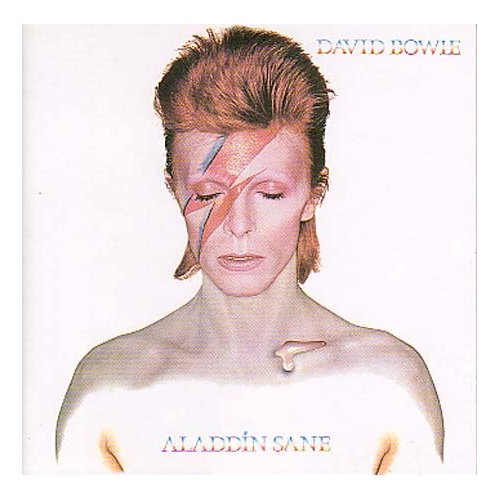
David Bowie made me bi


Oh dear, late again, with this blog as with life. It was David Bowie's 60th birthday yesterday. I spend a lot of time thinking about how I can post things that are, y'know, timely and here I go and miss one.

So, David Bowie made me bi. Well, no, obviously not. No one can form your sexuality just like that. And there were other significant people (Kate Millett etc) later on. But he was My First and let's just say he helped. A lot.
I don't remember how I first knew about DB - he was sort of there throughout my early adolescence. But I do remember the first time I really thought about him. In 1973, when I was 16, my then-boyfriend Martin gave me a copy of Aladdin Sane. It was like having a bucket of water thrown all over me, like nothing I had ever heard before. Then I discovered shortly after that Bowie had said he was bisexual (or gay, or something, exactly what was immaterial; he denies it now anyway) and you could see him cosying up to male musicians... Wow - my eyes were opened.

Time... it's waiting in the wings

Last night I was lying in bed listening to various Bowie tracks on my iPod and it wasn't bisexuality I was thinking about first and foremost, it was my youth. In particular, all the people I used to know and don't see any more. Martin - who came to hate me for being better educated than he was; Robin, a wonderful, funny man who died in 2005 and I don't know why; Jane, his dancer girlfriend who's now a signer for deaf people and has, apparently, "a lovely life"; Trevor, my Diamond Dogs-loving ex-boyfriend who became a born again Christian. Back when Bowie was king, we were all a seething mass of potential, waiting for our lives to start.
But I also thought about how downright impossible it was to be a suburban bi-girl in the 70s. Some of my male friends experimented sexually with each other - they told me so, it wasn't a secret, just something that would-be bohemian boys did - but when I told Trevor that I was attracted to girls he simply laughed and told me I was trying to make him jealous. I filed my own bisexuality away for the future, for the life I was going to have when I could get the hell out of there. When, at about 17, two of my female friends did kiss each other in public (at a girls-only event, interestingly), I thought they were simply trying to attract attention. They were both a bit outrageous anyway, but I was furious. I knew that I wouldn't be able to get away with that myself: I had a "bad reputation" - it didn't take much in those days - and I wanted people to carry on speaking to me. I had no inkling that those girls might have actually fancied each other, and I don't suppose they did, but as one of them later had a 12-year relationship with a woman no doubt I was being harsh.

The prettiest star

Going back to David Bowie again, it was mainly because of him that I started to connect bisexuality with creativity, with androgyny and glamour and excitement, with rejecting what I perceived to be the suburban values of everyone around me. I didn't see him in concert till 1983, so missed by more than 10 years the ĂĽber-bisexuality of Ziggy Stardust and those amazing clothes. Bowie looked great though. Still does.
And the music sounds as fantastic as ever.

Wednesday, November 15, 2006

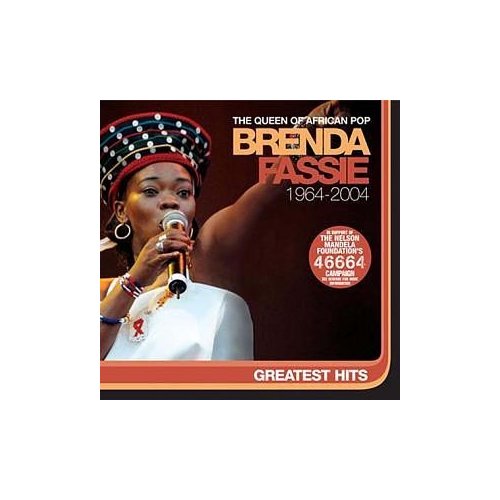
Bisexuals I never met: Brenda Fassie


I'm not sure now whether or not South African pop star Brenda Fassie was still alive the first time I heard of her, but I remember very distinctly how I heard of her. It was an Arena documentary, re-broadcast on BBC4, all about her and her life, following her comeback and forthcoming wedding to Landile Shembe.
She was an amazing woman - endearing diva, yet down to earth woman; massive star living in what seemed to me an ordinary bungalow; a larger than life character possessed of an amazing voice. She was also openly bisexual, a taboo for many Black South Africans.
Dubbed "Madonna of the Townships" Brenda was born in 1964 in the Cape Flats township outside Cape Town, she started singing at the age of five. Her career proper started in the early 1980s, when she and her band The Dudes recorded their hit song Weekend Special. It's a brilliant piece of music - catchy, cheerful, get up and dance-worthy. Other greatest hits-style tunes followed shortly after.
If she had been American, she would have been world famous. South African singers, though, particularly of the Apartheid era, rarely made it outside of the continent and for a long time the only people who knew of her were Black South Africans, for whom she was a superstar.

A hard life
But her life was also very difficult, and not just because of the political situation. She became addicted to drugs, chose a selection of bad husbands and boyfriends and saw her career go down the toilet. Then, in 1995, her girlfriend Poppie Sihlahla was found dead of an overdose. Brenda, in a drug-induced haze, was lying next to her. This horror sent her into rehab.
But while she recorded some more great songs, now in the specifically South African Kweito genre - including one used by the ANC in their 1999 election campaign - the drug problems continued. As did her bad taste in men. Her teenage son Bongani begged her not to marry the last one. He turned out to be a conman only after her money.
In April 2004 she collapsed at home and slipped into a coma. Nelson and Winnie Mandela and Thabo Mbeki visited her in hospital when she was dying. Although people were initially told it was due to asthma, in fact it was a cocaine overdose; brain damage meant she never regained consciousness and she died in early May.

Her fans react
There was a massive outpouring of grief from all parts of Africa, as can be seen on this rather morbid death site. There's a good obituary here about her life and times.


But her music lives on. You can buy some of her albums here and of course, she has a myspace site where you can play some of her tracks. It's here.

I notice that one of her albums that I possess Memeza (Shout) - her big comeback album - is currently for sale on Amazon from £49.35. But I think I'll keep it thanks.

Thursday, October 26, 2006

Bi-girls of the 20s

Bisexuals I never met, part two


I'm reading a really interesting book at the moment, Shepperton Babylon by Matthew Sweet. He's writing about the British film industry from its beginnings to the 70s, and it's based on discussions with those very very elderly movie people still alive in the late 1990s/early 2000s, who talked to him about what it was like when they were young.

I started reading it really because I wanted to know about Nerina Shute.
In fact, I had intended to post at length about her, because she sounded so downright fascinating, but I think I've come to the end of what I can know about her - at least, without extensive research elsewhere or reading her entirely unavailable autobiography.
NS was Britain's first female film critic - starting in 1928 at the age of 19. She had a weekly film column as the studio correspondent of the biggest fan magazine. Perhaps leading writer on Heat would be today's equivalent. But she was also a very harsh and influential critic, known for being able to make or break a career. There's lots more about her in the link above - her obituary when she died in 2004.
She was also a fierce, passionate, amazing, bisexual - quite consciously so, none of this: oh it was so different then malarkey. "I'm bisexual, you see," she told Matthew Sweet. "Tell me, what do your generation think about such things?" When she came to London in the mid-1920s, she became part of a group of "ambisextrous social radicals", and proceeded to embark on a lifetime of marriages to men, and dalliances with women, to be rounded off with a long-term relationship with a female ballroom dancer that only ended when the dancer died.
NS's autobiography, Passionate Friendships, was only published in 1992 but the whole of the internet yields not one second-hand copy. A few years ago, I read her book We Mixed Our Drinks, published in 1945 but written about her youth in the 20s, and it seems like she toddled along from one club to another, a hotel here, a bar there, having a simply marvellous time. No mention of the sex though.

Gay's the Word

This book (the bits of it I've read so far) is quite fascinating. The utterly gay composer (of the song Gay's The Word) and film/musical comedy star Ivor Novello (who also appeared as a character in Gosford Park, played by Jeremy Northam) used to have a club in London's Wardour Street called the Fifty-Fifty - a direct allusion to the bisexuality of its clientele. The club also appeared under the name The Half-and-Half in the 1932 film The First Mrs Fraser. I remember seeing that - or perhaps just the relevant clip from it - and being pleasantly shocked by its overt gayness. I mean, men in white tie and tails quite openly dancing together...

My name is Tallulah
Then there was the uber-bad girl Tallulah Bankhead. Actress, dope fiend, drinker, "well-known for being a lesbian and immoral with men", who spent a lot of time in Britain that decade. Her quotes are legendary, for instance: "my father warned me about men and booze but he never said anything about women and cocaine". In fact, she's certainly known more these days for her wit and sexual exploits than anything she did on stage and screen.

Roaring 20s
Of course, many people know that the 1920s were jam-packed with same-sex sexual activity (among the upper-class bohemian set, I mean let's not get over-romantic here. Can I say the words "Bloomsbury Group"?) and lots of those people were also married. I remember reading Evelyn Waugh's diaries where he talks with irritation about sharing a ride home with two women and that he was fed up with them "lesbianising in the back of taxis"!
But there was also what seems to have been a dramatic increase in sexual activity in general among girls of all classes. Young women were allowed a great deal more freedom after the first world war - earning their living, wearing short skirts, cutting their hair, casting off their corsets, abandoning their chaperones. And, if you knew where to go, contraception in the form of the diaphragm. Both men and (particularly) women adopted a fashion and hair style that was, for the time, shockingly androgynous. Noel Coward's song Masculine Women and Feminine Men was about precisely that. And here's an amazing site called Queer Music Before Stonewall that includes it.


Well, that's the British film industry. Female bisexuality of the time in Hollywood sounds much, much more frenetic. If Marlene Dietrich had sex with half as many people as it's made out she did, I can't imagine she'd have had time to make any films whatsoever!

Monday, September 11, 2006

How Kate Millett turned me on

Or: bisexuals I never met, part one

In the autumn of 1976, I was an au pair in Paris. Dizzyingly lonely, harassed by men every time I set food outside the front door, pretty much centimeless (due to my own inability to negotiate - or mention even - the fact that I was expecting to get paid) I spent a lot of time hanging out at the Drugstore du Rond Point des Champs Elysees. It was a kind of bookshop/newsagents - probably more too, but that's what springs to mind - and there I clapped eyes on the book Flying, by Kate Millett.
Realistically, it was probably the fact that it was a book in English that made me notice it. Perhaps there was more. Perhaps I knew that she was an influential and controversial feminist thinker, author of Sexual Politics, but more probably that came later. I know why I spent day after day in that bookshop, with no money to pay for the book, just reading it standing there propped against the magazine shelves.
The clue is in the blurb on the back:
"Flying is her extraordinary, frank account of the tumultous period when both her book and her own acknowledged bi-sexuality [sic] outraged the public and triggered some of the most violent, far-reaching aspects of the women's movement."
That word, that one word, made me know I had to read it. And I wasn't disappointed. In this, her autobiography. KM - artist, writer, academic, intellectual, wife and lover of women - gives a fearless, naked in all senses, account of her life and loves up till that point (38). Her writing is extraordinarly vivid and personal; she does a lot, mixes with fascinating people at a fascinating time, but there's every sense that she is suffering too.
The book starts with a trip to London, where she recalls her sudden, unwanted rise to fame after the publication of Sexual Politics - an interview in Life magazine, on the cover of Time, being asked in public if she was a lesbian, the pain and guilt of hurting her religious mother.
Sexual Politics, after all, was essentially the first work of feminist literary analysis, and the mainstream was very keen to slap down the new women's movement. The book looked at misogyny in American literature, to illustrate how men in general use sex to degrade women. The work - and KM herself - were overtly against monogamy and the family. In the late 1960s, that was heretical to almost everyone.

Still true today
Unfortunately, some of what she writes is still quite true today: "The line goes, flexible as a fascist edict, that bisexuality is a cop-out. Yes, I said, yes I am a Lesbian. It was the last strength I had."
She was vilified as a result of this enforced coming out – by the heterosexual women's movement for being queer, by radical lesbians for not being enough of lesbian, by straight society for supposedly hating men. She can't, mustn't, write about sex. Just like now. See this post. Yup, I will repeat, women aren't allowed to talk about their sexual feelings and remain intellectuals of good standing.
More than that, though, what I found moving, and could relate to, were her struggles: to find love, to not feel rejected, to keep on creating - through a film of fairly consistent low-level depression and relentless introspection.
People are always talking about the need for role models and KM - wild woman, artist, bohemian - was the perfect role model for me. She was very consciously, openly bisexual. Feminism might have been going hell for leather in 1976, but not where I was and I certainly didn't know where to find it. But she did, she was doing all those things I wanted to do and be, in my tiny, solitary Parisian room.
I didn't meet any women in Paris, 1976. I didn't meet much of anybody: everyone (apart from the men who wanted a piece of my body) kept themselves to themselves, and I was too scared to go to a lesbian club although I walked up and down outside plenty of times. In fact, I couldn't wait to come home.
I finally bought the book myself in 1980 (I wrote the date inside) by which time I was officially a "practising bisexual". I also read some of the others: Sexual Politics (of course), Sita, the Basement, but it was Flying that really blew me away.

Where she is now
The 1980s and 1990s weren't particularly kind to Kate Millett: her influence faded and she had periods of serious mental illness, which she wrote about in The Loony Bin Trip. I was really pleased when I heard she was coming to London to give a talk in the 1990s but her mother was ill, and she never made it. The next time I heard of her, was in an article in the Guardian in 1998 - where she was apparently selling Christmas trees to make a living. Cue righteous shock about what happened to our feminist heroines; certainly from me. Apparently, though, this article - which she wrote - had all the wit and humour taken out by the editor and her life was not nearly as pitiful as it sounded. See here.
Lots of her books are available now, being reissued in 2000 after being out of print for years. The farm (where the Christmas trees came from) she bought in upstate New York with the proceeds of Sexual Politics is now a centre for women writers, artists and musicians around the world. KM herself conducts masterclasses in writing from time to time.
I was so pleased to read this when I did an internet search while doing this post. You can find out more about her by looking at her website
Thank you Kate Millett. You helped me become myself.