Last Saturday (12th February) about 30 people came to Conway Hall in London for what was a really good bi history event. Sadly, Lindsay River was ill and so didn’t do her talk on creative women of the inter-war period, but Christian Klesse, Ian Watters and I were there. As well as the talk listed in the previous post, I did a personal memoir of the 70s. Nothing too personal...
Anyway, I said to people I would give a few links and notes about my talk Androgynous, Ambisextrous, or "enjoying all life's pleasures" - bisexuality before the sexual revolution - so here we are. I also have audio files of all the talks (from an Olympus voice recorder – won’t play on a Mac without some jiggery-pokery that I don't know about), plus printed versions of the talks that I did. Email me if you’d like them (my address is below my pic, on the right).
Books I mentioned
Queer London, by Matt Houlbrook: a truly excellent book about all sorts of man-man sexual behaviour from 1918-57.
The Secret World of Sex, by Steve Humphries: Oral histories of people in the UK before WW2, to accompany the 80s TV series of the same name.
Sex before the Sexual Revolution, by Simon Szreter and Kate Fisher: oral histories, plus analysis, of married couples in Britain who were sexually active before the 1960s. Recently out in paperback.
Fashioning Sapphism, by Laura Doan, looking at androgyny in the 1920s, and how the "masculine" fashions for women in the early part of that decade became connected with lesbianism after The Well of Loneliness prosecution.
Bisexual Love by Wilhelm Stekel. Originally published in 1922, this radical and almost unknown book has been digitally scanned and is available from Amazon!
Passionate Friendships, by Nerina Shute, in which she writes about her bisexuality and her relationships with women and men, was published in 1992. Nevertheless, it almost never appears on abebooks lists, or elsewhere on the second-hand market. I have only ever seen it in the British Library. Currently, there is one copy on Amazon for £29.50
There is more information about her in Shepperton Babylon, by Matthew Sweet – a great book for anyone interested in British cinema, bisexual or not.
Thursday, February 17, 2011


Thursday, February 03, 2011
20th Century Bi - London's bisexual history event

February is LGBT history month in the UK and - as promised last year, and the year before - this year there WILL be a specifically bi history event (I think there may even be two. More details at the end of this post).
So... drum roll ... I am co-organising, and speaking at, an event in London called 20th century bi. (Great title, eh. Not my idea sadly, but that of my co-organiser Lisa Colledge.) Here's the details:
20th Century Bi
To mark the 30th anniversary of the bisexual community in the UK, this event will look at some of the big, bad, bold bis who made the 20th century great. A panel of speakers discusses 20th century bisexuals and bisexuality in Britain, as part of LGBT History Month.
Speakers are:
Sue George: Androgynous, ambisextrous, or “enjoying all life’s pleasures”: being bisexual before and after the sexual revolution
Christian Klesse: 'Re-writing the scripts of Love. The Critique of Monogamy, Polyamory and Bisexual Intimacies in the late 20th Century'
Lindsay River: Lesbian... or bisexual? The (mis)naming of creative women of the early 20th century
Ian Watters: Bisexuals at Pride: The somewhat partial story of bisexual involvement in the annual London Pride celebrations
Our individual talks will be followed by a panel discussion and Q&A.
Everyone is welcome to this bi-positive event.
Saturday 12 February 2011
2.30 - 4.30 pm
Conway Hall (Bertrand Russell Room)
25 Red Lion Square
London WC1R 4RL
(nearest tube is Holborn)
Tickets £5 (£3 unwaged) from EventElephant here and at the door (all profits to BiCon Helping Hand Fund)
Wheelchair-accessible venue: for Conway Hall access details contact Carina on 0207 242 8032

Manchester
There's also an event in Manchester on Feb 15th. It doesn't sound as specifically historical as ours, but nevertheless good stuff. This information is taken from Biphoria's website.
As part of LGBT History Month 2011, on Tuesday, 15 February we will have a special event to launch our new publication "Getting Bi in a Gay/Straight World". It will be at the Levenshulme Inspire centre, 747 Stockport Road, Levenshulme M19 3AR, from 7pm to 9pm. Come along, and if you have them, share your memories of bisexual Manchester.
Have a great LGBT History Month everyone, and I hope you will go to one of these events - bi or not - to celebrate our history.
Friday, January 14, 2011
The bizarre world of the bisexual
Happy Friday!
Some of you may have seen this before, but just in case you haven't....
PS: it's meant to be ironic.
Some of you may have seen this before, but just in case you haven't....
PS: it's meant to be ironic.
Thursday, September 23, 2010
Celebrate bisexuality day

It’s 23rd September today, and more people than usual are wearing purple. They’re doing that, because it’s International Celebrate Bisexuality Day or, as it has been rebranded this year Bi Visibility Day. Whichever, it’s a sort of mini-pride, and it’s all ultra-good. There’s more here about events in the UK, events in the US here, and information about why it started here.
I’ll probably be at one of these events tonight, but not wearing purple, which always makes me look sickly.
However
It’s no doubt just a co-incidence, but the numbers of LGB (not T, don’t know about T) people in the UK seem to have gone down. Official figures from the Office of National Statistics released today indicate that the LGB population of the UK is only 1.5%. There’s info about it from the Guardian here. The ONS asked people how they defined their sexuality, and this is the answer. Simples.
But but but ... What does it mean? Apparently interviewees were given four categories, and asked which best described them: heterosexual/straight, gay/lesbian, bisexual or other. That’s surely too broad-brush. For instance, someone who is now monogamously married, but has had significant lesbian relationships in the past, might well consider that heterosexual/straight “best describes her” but it best describes her behaviour as it is now, not her feelings, her past, her desires, all the things that make up sexuality. She might be “behaviourally heterosexual” but that’s only part of the story.
According to the ONS (in the Guardian):
“ ... the [previous] higher estimate [of LGB people] was based on different sampling methods and responses to questions about sexual attraction and behaviour both in the past and present."
But isn’t that the right way to assess sexuality? Which category “best describes you”! To my mind, that over-simplifies something which is often complicated.
The stats are odd in other ways too. Sixty-six per cent of LGB people, according to this, are under 44. What does this mean? That older people have “turned straight”? That more young people are gay these days? That queer sexuality is something that happens to the young? I don’t know. Interestingly, quite a high proportion of this 1.5% says “bisexual” best describes them.
It does seem strange to me that, when Kinsey did his famous reports estimating the gay/lesbian population of the US as 10% (this may not be precisely what he said; do correct me if I’m wrong), homosexuality was both hidden and stigmatised. This figure was accepted for a long time.
Now, homosexuality is very much less hidden. There are far far more openly gay, especially gay (and lesbian, and bi) people than there were when I was young. Yet consistently, official numbers go down. In the 1950s, it was 10%; more recently, it has been accepted as being 5%.
Purple power
As someone once said: There’s lies, damned lies, and statistics. Who knows what any of these figures mean.
What concerns me most, is that queer people’s issues will be ever more marginalised if we are seen to be such a tiny minority of the population. I simply don’t believe that it is true.
As to why bi people have taken on purple: I guess it’s because pink = gay (and, because it is the colour stereotypically loved by little girls, nothing Real Men should have anything to do with). Also, pink (for girls) mixed with blue (for boys) = purple for any and everyone.
Whatever, tonight I will be having my cake and eating it. I hope you will too.
Sunday, September 12, 2010
Bisexual war hero

The really inspiring experience of BiCon a couple of weeks ago, combined with me finishing my MA, means my blog hibernation is over. At the very least, there will be a few posts again before I run out of steam...
Anyway, back to an old theme of mine - Bisexuals I never met – where I write about famousish dead bi people.
The BBC radio programme Last Word often has really interesting subjects featured on it. It’s essentially an obituary programme, about notable people who’ve died in the last week or so, with comments from those who knew them. Catch it on iPlayer (if you are in a country that allows it; I don’t think the US does).
Today’s Last Word had a feature about Michael (Micky) Burn – war hero, foreign correspondent for The (London) Times, poet, novelist - who has died aged 97. Here’s an obituary about him here. Yes, posh man + the Second World War + derring-do = Daily Telegraph obituary.
There’s also an interesting trailer for a documentary about his life here, and I have to say I warm to him:
Like many people who’ve made it to obituary programmes, he came from an upper class background, and this shows in his early politics. Specifically, as a young man he used to be a Nazi sympathiser, even introducing Unity Mitford to Hitler. But (thank the lords) a trip to Dachau in 1937 put a stop to that and he spoke later about how ashamed he had been to have been taken in by fascism. He turned to the Left shortly after, and had a very active war, being imprisoned in Colditz for several years. Later, he saved the life of the little girl who would become actress Audrey Hepburn. Burn was socialist throughout the rest of his life, apparently losing all his money in mussel-breeding workers’ co-operative in the 1960s.
He was also bisexual, having a long on-off affair with the (later) Soviet spy Guy Burgess as a young man. Apparently there were other men too, and in the 1950s he was mentioned (anonymously) in the News of the World as a victim of blackmail. He was also married to Mary, who was, he said, ”the love of his life”.

Bi-invisibility
Correct me if I’m wrong, but this man sounds bisexual and you’d have thought that the word might have featured at least once in the programme. Not a bit of it. One of his old acquaintances bugged the hell out of me by saying again and again that Burn was homosexual. No. If he was married simply because he wanted to hide his homosexuality, fine. But Burn describing his wife as the love of his life surely puts paid to that.
I do take the point of groups like Bi Index, who say that the only person who can say someone is bi is themselves.
But Mr Burn wasn’t on this programme to say he either was or wasn’t; it was other people removing the possibility for him after his death. Anyway, one of the inter-titles on the documentary trailer (done with, presumably, his involvement) was “bisexual”. So there!
Heroes
I sometimes wonder about this “Bisexuals I never met” tag - am I looking for heroes amongst them? Role models, people I can be like, look up to? I don’t really believe in that; people are flawed and adulation doomed to failure. I suppose it is partly volume: look, here’s a large number of people, bisexuals are everywhere. Still, a lot of the people I list here led fascinating lives, with all sorts of tales to tell, and I wish I had met them.
Mr Burn is a particularly apposite member of this team at the moment, what with the 70th anniversary of the Blitz (where urban parts of the UK were bombed by the Nazis) being written about so much right now. How can people in developed wealthy countries nowadays be so brave? I'm not sure that they can.
In 2008, there were reports that Burn’s autobiography, Turned Towards the sun, had been bought by Hollywood and that Jude Law was likely to be starring. Interesting. I wonder who will play Guy Burgess – or will this sub-plot be strangely absent?
Tuesday, August 17, 2010
Blogging bisexuality at BiCon
I know, I know, the gaps between posts on here are getting longer.
It's quite hard to keep up the momentum when there's so very much else to do. In particular, I have my MA to hand in, in just over three weeks time. That's 20,000 words I am paying to write!
Anyway, in the meantime I am giving a talk on 26th August at BiRecon, the academic/research part of BiCon - the UK annual gathering of bi people that this year is both held in London and is an International BiCon too, with people from many countries attending. Here's a wikipedia site on the history of BiCons which made me downright nostalgic.
With that in mind, I have some questions:
Do you, or have you, used blogs as part of coming out as bi? If so, was it helpful? Do you write a blog yourself about coming out bi? If so, what sort of impact has it had? If you blogged about bisexuality, but have now stopped blogging, why did you stop?
If you could let me know - either here, or at sues_new_email at yahoo dot com - sooner, rather than later, I'd be ever so grateful.
xxx
It's quite hard to keep up the momentum when there's so very much else to do. In particular, I have my MA to hand in, in just over three weeks time. That's 20,000 words I am paying to write!
Anyway, in the meantime I am giving a talk on 26th August at BiRecon, the academic/research part of BiCon - the UK annual gathering of bi people that this year is both held in London and is an International BiCon too, with people from many countries attending. Here's a wikipedia site on the history of BiCons which made me downright nostalgic.
With that in mind, I have some questions:
Do you, or have you, used blogs as part of coming out as bi? If so, was it helpful? Do you write a blog yourself about coming out bi? If so, what sort of impact has it had? If you blogged about bisexuality, but have now stopped blogging, why did you stop?
If you could let me know - either here, or at sues_new_email at yahoo dot com - sooner, rather than later, I'd be ever so grateful.
xxx
Monday, April 26, 2010
Ten Reasons You Need This Bisexual Blog 2010

www.bigfoto.com
This post, originally from September 2006, is by far the most read and commented on thing I have written on this blog - so I thought it was worth a reprint. And what I say about myself in point 10 - still true now. Things just aren't changing quickly enough.
So why do we still need this bisexual blog?
1. Because almost everyone thinks almost everyone is really gay or straight. Or more probably straight or gay. There is no bisexuality.
2. Except among female celebrities, where there may be bisexuality... of a kind.
3. And although there are a lot of sex sites where bisexual people get together, there's nowhere at all dedicated to the discussion of bisexuality. If you have a blog that does just this, for God's sake get in touch and I'll buy you a drink. A big one. What we have to discuss will take a while.
4. In any case, there are hardly any British blogs that discuss sexuality at all. If they do, it's about bloggers' own personal experiences. See post below.
5. The blogs that do talk about sex are from the US. Come on now, fellow Brits. Let's get talking.
6. And whenever bisexuality is mentioned in public, people still curl their lips, as if to say "oh yeah?"
7. So hardly anyone comes out.
8. Making everyone else think that bisexuality doesn't exist; and bi individuals that they are the only one ever.
9. Especially if they are men.
10. In any case, I need to write this blog. I do. Because it bugs the hell out of me that still, in the 21st century, what seems self-evident to me - that many people, men as well as women, desire, or love, or have sex with, men and women - seems so hard to grasp for so many people. I know I'm not the only one who thinks they need to wise up.
Friday, April 16, 2010
Michael Bailey and bisexuality - again
Hello!
I am not in the UK at the moment. Not, indeed, anywhere with a reliable internet connection, but I read this and thought of you dear followers, regular readers, and people who find this site via Google, Twitter, Sex is Not the Enemy, Bipolar Bisexual,Mark Simpson and other sites that link to me.
It's about Michael Bailey, he who has been so controversial in denying that bi men are really bi.
The piece below (which was posted on the academic bi yahoo group) begs so very many questions - but I thought it interesting to throw it out there and see what you think.
Lots of love and post soon...
Sue x
The Daily Northwestern - NU Prof. Bailey researching possible 'gay
gene'
See piece here
Recent research from Northwestern Prof. J. Michael Bailey raises new questions in the science behind sexual orientation, namely bisexuality and the prototypical "gay gene."
In his studies on bisexuality, Bailey, a psychology professor, and a team of researchers look at sexual arousal patterns to objectively determine sexual orientation in men and women. Bailey tracks the subject's brain activity while they are looking at erotic pictures to essentially determine "what turns them on," he said.
One new finding is in the sexual orientation of women. Bailey said he found most of his female subjects to be scientifically bisexual, even if they subjectively thought otherwise.
"Women don't work in the way we thought, based on a lot of research we did five to 10 years ago," he said. "Women, at least in the laboratory, get aroused to both stimuli."
This changes everything, Bailey said.
"Now I don’t even know if women have something like a sexual orientation," he said.
About two-thirds of women are showing arousal patterns that differ from what they consider to be their orientation, said Adam Safron, a research consultant on the project.
"Women are not being driven in their arousal pattern in the same way as males," he said.
Male arousal patterns were less flexible than female patterns, Bailey said. Men who believed themselves to be bisexual were aroused by both female and male stimuli but exhibited a stronger arousal to males than females. Bailey published a paper in 2005 suggesting bisexual men do not have bisexual arousal patterns. If sexual arousal patterns are the key to sexual orientation and his research is accurate, male bisexuality may not actually exist, Bailey said.
"I never meant to suggest bisexual men were lying about their sexuality," he said. "But there has been some skepticism about if bisexual men are really bisexual in the same way gay men are gay or straight men straight."
Safron said the science behind sexual orientation can get complicated.
"In terms of what people tell you they like, you can't always trust what they tell you, especially with something as emotionally involved as sexuality," he said.
...
I am not in the UK at the moment. Not, indeed, anywhere with a reliable internet connection, but I read this and thought of you dear followers, regular readers, and people who find this site via Google, Twitter, Sex is Not the Enemy, Bipolar Bisexual,Mark Simpson and other sites that link to me.
It's about Michael Bailey, he who has been so controversial in denying that bi men are really bi.
The piece below (which was posted on the academic bi yahoo group) begs so very many questions - but I thought it interesting to throw it out there and see what you think.
Lots of love and post soon...
Sue x
The Daily Northwestern - NU Prof. Bailey researching possible 'gay
gene'
See piece here
Recent research from Northwestern Prof. J. Michael Bailey raises new questions in the science behind sexual orientation, namely bisexuality and the prototypical "gay gene."
In his studies on bisexuality, Bailey, a psychology professor, and a team of researchers look at sexual arousal patterns to objectively determine sexual orientation in men and women. Bailey tracks the subject's brain activity while they are looking at erotic pictures to essentially determine "what turns them on," he said.
One new finding is in the sexual orientation of women. Bailey said he found most of his female subjects to be scientifically bisexual, even if they subjectively thought otherwise.
"Women don't work in the way we thought, based on a lot of research we did five to 10 years ago," he said. "Women, at least in the laboratory, get aroused to both stimuli."
This changes everything, Bailey said.
"Now I don’t even know if women have something like a sexual orientation," he said.
About two-thirds of women are showing arousal patterns that differ from what they consider to be their orientation, said Adam Safron, a research consultant on the project.
"Women are not being driven in their arousal pattern in the same way as males," he said.
Male arousal patterns were less flexible than female patterns, Bailey said. Men who believed themselves to be bisexual were aroused by both female and male stimuli but exhibited a stronger arousal to males than females. Bailey published a paper in 2005 suggesting bisexual men do not have bisexual arousal patterns. If sexual arousal patterns are the key to sexual orientation and his research is accurate, male bisexuality may not actually exist, Bailey said.
"I never meant to suggest bisexual men were lying about their sexuality," he said. "But there has been some skepticism about if bisexual men are really bisexual in the same way gay men are gay or straight men straight."
Safron said the science behind sexual orientation can get complicated.
"In terms of what people tell you they like, you can't always trust what they tell you, especially with something as emotionally involved as sexuality," he said.
...
Sunday, February 14, 2010
LGBT history month

In the UK - although not anywhere else, as far as I know - February is LGBT history month. The US has its month in October.
As with most years, there are no specifically "B" events although some were nearly planned. Next year, next year. There are other good things, though, which might be worth a look.
There should be some bi history stuff at this year's International Conference on Bisexuality (the 10th! and held in London this time) at which I will be speaking. About.... something or other.
A French bisexual picture
For a long while I've been meaning to scan in this picture, which was given to me a couple of years ago. It's an illustration from a French magazine of the 1920s - possibly one called Modes Nouvelles (or new fashions) - and it's drawn by one Gerda Wegener.
It's entitled "Elle ou Lui, Lequel Choisir?" which means "Her or Him, which one to choose?"
Clearly set in a mixed gender, pansexual club or cafe of some sort, in this wonderland anyone can dance with anyone, and the men look only slightly masculine and the women only slightly feminine - or vice versa. This was a time, just after the first world war horrors, where strict Victorian-style notions of gender went right out of the window, women cut their hair and shortened their skirts. Both men and women went for an androgynous look. I think it's hard for us to realise now how revolutionary that was.
So, in this pic, we are left wondering who is doing the choosing?
Most likely it is the be-gloved lady sipping her diabolo menthe through a straw, looking at the saucy yet ever-so-slightly dangerous man and woman on the right.
But what is the woman in the green dress thinking. And, indeed, what do we think. Him or Her, which one should I choose? It doesn't really matter. Maybe one today, and the other tomorrow.
Oh, Paris in the 20s. What a fabulous place to visit for a holiday.
Thursday, January 28, 2010
Bisexuals at work

Offices of the Metropolitan Life Ins Co, New York, 1896
It’s nearly the end of January, thank the lords, which signals the end of all those media articles about how this is the most miserable day of the year. In the northern hemisphere the days are also slightly longer and lighter than they were a month ago, which makes getting up for work slightly easier.
Ah yes, work.
I had been thinking about posting on this earlier but got waylaid, and this seems like a good time to do it.
Stonewall report
According to a recent report from the British LGBT equality organisation Stonewall, bisexual people experience prejudice, discrimination and stereotyping at work which stops them/us achieving their/our full potential.
The good practice guide, downloadable here, is a practical resource geared at employers who want to enable bisexual employees to make the most of their potential at work. They garnered this information by asking bisexuals what their experiences were, what stopped them doing as well as they might have, and how they felt their workplaces could be improved.
As far as I know, this is the first report on bisexual people at work to be published anywhere, ever, and the fact that Stonewall has produced it is very very welcome.
Stonewall was often criticised for being anti-bi in the past, or for saying lesbian, gay and bisexual when they were simply incorporating B into the L and G, and this is report obviously step in the right direction.
So what does it say? That bi people have experiences and challenges which are not the same as lesbians and gay men. They/we encounter prejudices and stereotypes not met by lesbians or gay men In particular, the support networks of the latter often excluding us. That there is a lack of awareness of bi issues, and that bi people’s sexuality is often dismissed. As one woman says:
Bisexuality is something that you can still poke fun at, partly because people don’t think it’s as serious as homosexuality.
There’s more but you get the drift – it’s the usual panoply of spite, insecurity and confusion directed against us.
Out at work
The report considers the extent to which bi people feel able to be out at work and not many are.
As far as my own experience is concerned, anyone I have worked with consistently since the late 1980s has known I was bi. Personally think it important to be out anywhere. To me, being out is not about talking about your sex life; it’s not even talking about your romantic/sexual/dating experiences necessarily – it’s being able to be honest where relevant. For instance, when I discuss “girlfriends”, people know I’m not talking about female companions with whom I drink cocktails and moan about useless men.
However, despite this I have never met another out bi at work. Ever. The nearest I got was when I exchanged emails with one woman who outed herself to me - with the request that I kept this information to myself.
I have, though, worked with some lesbians and quite a few gay men. One of the latter (an arrogant-shit type editor of mine) was absolutely convinced that bisexuality didn’t exist because he “didn’t know any and he had met thousands of people”. My own experience of interviewing hundreds of people and meeting many more was, of course, irrelevant.
However things are changing in some quarters: when I left my job recently and I filled in an exit form, the first box to tick in the sexual orientation section of the monitoring box was “bisexual”. I felt a strange mixture of pride and being almost sorry that I was going.
And in
While I am a big fan of being out when possible, as for so many people it really isn’t possible, and I believe in bisexual visibility helping all of us, it’s not necessarily a good idea to be out all the time in all circumstances.
In recent years, I have been lucky enough to travel a fair bit for work – often to countries where homosexuality is at least frowned upon, and often illegal. Clearly being out there would have been wrong/insensitive/foolish/dangerous for the people I was with.
But this has often made me feel awkward as I did think that I am hiding, that a significant part of me – not just in the sense of who I choose to have relationships with, but in terms of my history, politics, and a substantial part of my “work” - was hidden and they would feel cheated in some sense if they had found out.
I feel a bit similar in not having a religion, travelling in places where faith is extremely important ... but that leads more to reactions of pity and bafflement, rather than disgust.
Anyway, when you are travelling to a developing country as a journalist, it really isn't about you.
Everyone has to weigh up the extent to which they can face the discrimination/endless explaining they may have to do if they are out as bi. But ultimately hiding significant parts of yourself, or pretending to be something you’re not, is not going to help you be happy or productive at work – or anywhere else.
Friday, January 22, 2010
Bisexuals on television

Chances are that, at some point over the weekend, you will be watching television. Maybe you’ll be looking (in vain) for some bi characters in drama, or out bisexuals reading the news, presenting gardening programmes, pretending to be Teletubbies, and everything else we can see on the small screen.
Today there’s been a report in the Guardian that the BBC is to ask The Public what they think of the representation of LGBs on TV and radio. Interesting. But they are even asking homophobes. Yuk. I don’t care what homophobes think, and I don’t think the BBC should care either.
It’s interesting, though, that they are asking about bi representation. Is this really about bi representation, or are they just adding in a B with the L and the G, not really meaning to give the B word any attention at all? It wouldn’t be the first time “bisexual” has been added as a casual, inessential addition to Lesbian and Gay. (No T though, I wonder why not?)
The other thing I am wondering after reading the above is: who are these bisexual people on television? Maybe I am watching the wrong programmes but, reality shows aside, I can only remember the L Word – only available on Living (a hard to view on a cable/satellite TV channel) in the UK – where there has been bi characters in recent years.
Part of me thinks that there is a dire need for positive images of bi people – but one person’s positive representation is another’s weirdo/ slut / sop to straight society / bimbo. We are as individual as people of any other sexuality – probably more so – and deserve to have a range of people representing us. Another part of me thinks that anything is better than total invisibility.
Still, according to a GLAAD report discussed in the Bisexuality Examiner last July there are now more bi people in US TV dramas, and some of them are definitely viewable outside of the US. They include:
* True Blood (Evan Rachel Wood is pictured above)
* Grey’s Anatomy
* House
* Bones
* Brothers and Sisters
Plus a whole heap of others I’ve never heard of. Mind you, I’ve never seen any episodes of those listed above either (my TV preferences being mainly for CSI and similar). I’ll give them a look
S/He’s so Real
Reality television has the upper hand here.... Big Brothers across the world often have bi characters, presumably on the assumption/hope that they will do something outrageous and up the viewing figures. Then there’s A Shot at Love with Tila Tequila, where her bisexuality is a part of the story (and apparently there is now a spin off involving bisexual twins Rikki and Vikki. Of course there is). The most recent The Real World (on MTV, which I don’t have access to) apparently has two bi characters, one boy, one girl.
A boy! Finally.
As I have written endlessly, I’m not at all happy with the proliferation of female celebrity so-called bis (most recently, Kylie Minogue is declaring her interest). And most of the bis/bi characters listed above are – no, really! – women.
But a good bi woman – by which I mean someone who is genuine, authentic, sincere, not trying to excite men or increase her audience – could do a heap of good for other bi women. Likewise good bi female characters in drama.
I think we’ll have to wait a long time (or until something significant changes) until bi men can do anything like that.
So which bi characters or individuals are there on television – British or otherwise, drama or factual – who you think is worth watching? And as for the radio....? I listen to the radio almost all the time, and the last time I heard an out bi presenter or character was.... probably never.
Thursday, December 31, 2009
Happy new year

Many people’s favourite bisexual, Angelina Jolie, is in the news again (well, the Daily Mail, if that counts). According to that esteemed [sic] organ, both she and the lovely Brad don’t rate fidelity as important to their relationship. They got this factlet from a new book Brangelina: The Untold Story of Brad Pitt and Angelina Jolie, by author Ian Halperin, via a German newspaper Das Neue.
Many people don’t think that physical exclusiveness is essential to a happy relationship. Infidelity (in the sense of lying) is another matter. I think not lying is essential to a happy relationship myself. Not being "physically exclusive" (aka polyamory) is entirely up to the people concerned.
Apparently, Brangelina don't "restrict" each other. That's nice. And it seems that Jolie and her ex Jenny Shimizu kept a jungle love nest for “trysts” – one of those words that never appears in ordinary vocabulary. Perhaps only celebrities have them.
However, as a mother (only of one) I am baffled that parents of six - even with "help" - have the time and energy to pursue more than one sexual relationship but perhaps I am being lazy.
Anyway, this non story has given me the chance to add another pic of the toothsome couple - and when Ms Jolie is pictured here, my blog stats always leap up. I’m cheap like that. Sometimes.
For a more nuanced view of some bi stories in 2009, take a look at the Bisexuality Examiner here with its best and worst bisexuality stories of 2009.
In other news
I have done a bit of tidying on this site, by removing most of the blogs I had linked to on the right. It is telling that, in the three and a half years since I started writing here, almost all of the personal blogs I listed then are no more. Blogging consistently over a long period is hard and, if you start to do it for personal reasons, often outlives its point. Others come to take their place.
Anyway, the ones I have added here are (at the moment anyway) posted to regularly and hopefully will keep you amused, entertained, challenged and supported.
If you know of any other good sites or blogs, especially your own, let me know as it is easy to miss them. I know there are more to add but I can't find them right this minute.
My last blog of 2009
For those of you whose New Year’s resolution is to act on your bisexuality, which often seems to people to come here at this time of year, I would say “go for it”. To me, anyway, the fact that you are thinking about it and weighing up your options means that you have a good chance of making it work for you.
Bisexuality is not necessarily difficult – from my point of view it is cause for celebration, something that I am proud of and is an intrinsic part of myself – but for many people it certainly can be. Perhaps those who find it easy-peasy tend not to comment on this blog! But I hope that even people who have found it difficult are on the way to a happy bisexual life.
Have a great 2010.
Sunday, December 27, 2009
Telling it like it is

This is the time of year when many of us are thrown together with various loved ones and, while this can be all warm and glowy, it also has its difficulties.
I was already thinking of this when I read this post – which wasn’t specifically about the festive season, but about sharing important things – specifically, your (bi)sexuality.
The nameless male blogger who posts at Bitheway, had a tricky December as he came out to his female partner. She felt he had lied by omission by not telling her before; he had felt unable to discuss it earlier in their relationship as he hadn’t feel safe enough. They are still together, but it has been tough.
Keeping it quiet
As Mr Bitheway said: “There are many things we do keep from our partners (as bisexual men this is typically our bisexuality)”.
Oh, how I wish it wasn’t the case, but I tend to agree. So many bi men – with the exception of activist/ openly poly/ bi community men – tell almost no one they are bi. I’m not thinking about actual sexual infidelity here, but about keeping a whole part of yourself - your history, feelings, experiences – from your partner.
I am generalising in this post, I know – something I don’t do lightly – but bear with me here.
It seems to me that it is much more difficult for bi men to come out than bi women. There are two main reasons for this:
* The widespread agreement that while women can be bi, men are “Gay, Straight or Lying” – the notorious title of an equally notorious article in the New York Times.
Spurious, over-simplistic research (such as that by Michael Bailey) tends to state that, while women are often attracted to people regardless of gender, men almost never are. Therefore, men are really either gay or straight.
This can put bi men into a terrible quandary. What are they really? And, also important, what do their partners think they are really.
Lots of gay men – some of whom wondered if they were bi for a while – consider that, because they aren’t bi, neither can anyone else be. Some hold the strange view that it is easier for men to be bi than gay, which I just don’t believe. People saying it never really try to explain why they think this, they expect it to be obvious. Why is it easy to be told constantly you are deluded and oversexed than to have a community that supports you? And also, it isn’t ever easier to be something you aren’t than something you are.
* A feeling that women (rather than men, I think) will reject them as potential lovers/partners.
This is tricky. Some women can and do reject bi men – sometimes horribly. They have a whole range of reasons for this, believing bi men to be (eg) unreliable, necessarily unfaithful, uncommitted, prone to contracting HIV ... generally not what they want at all.
But there are women who want bi men as their partners. I always did – although I am spoken for now thanks! – but never met all that many. There are others who wouldn’t mind, if only men could trust them enough to tell them.
Come out, come out wherever you are
Of course, the fewer out bi men there are, the fewer bi men will come out. It’s a vicious circle. Because if bisexuality in men is seen to be impossible, more men who are attracted to men and women will believe that they can’t be, leading to fewer bi men being out.
When I was interviewing bi men for my book on bisexuality (see archive, right) many of them found it hard enough to be out to themselves, let along others. They had totally compartmentalised their lives, with that part attracted to men tucked in the depths of their consciousness/conscience.
I do hesitate to give advice on this blog (or anywhere else) – I mean what do I know, life is complicated! But it seems to me that even if you aren’t out about your sexuality to the world at large, dropping hints about it to potential or new partners is pretty much essential. Far better you discover at the outset that it is something they could never countenance, rather than have some big secret hanging over you. Big Secrets tend to have a way of being uncovered.
There was a terrific article I read once about women in happy long-term relationships with bi men. I can’t link to it as I don’t think it’s online and I don’t remember now who wrote it, but the gist of it was... those women tended to be unconventional, who didn’t rely on their partner for all their sense of self/companionship/money, and had their own goals and interests.
There is no shortage at all of such women these days – especially those who are bi themselves. So, bi men, if you want an honest, real, happy relationship with a woman, look for someone who doesn’t want to live in your shadow.
Thursday, November 19, 2009
Spending more time with my blog
It’s been a long, long time since I last wrote on here. That was down to the usual reasons – a combination of too-hard work and health issues. As a result, all things blogging ground to a halt.
But, at the same time, I have been stunned to see my blog traffic not going down, my Google followers going up, and people still leaving comments on lots of posts – not just the most recent ones.
Like quite a few bloggers, I think, I have been on Twitter a lot more than I have here. The reason for that is simple: tweets are maximum 140 characters and require next to no thought. A blog like this requires a hell of a lot of thought and in many ways is similar to what I do for money. And, as for most people, anything you do that makes money has to win.
Twitter also has lots of great stuff for bi people, particularly with the links that lots of bi tweeps put up. I particularly like @bivisibility who retweets (ie reposts) all the bi-related stuff they find on Twitter. Some of the tweets are really bloody horrible, not to mention all sorts of ignorant – but bivisibility (whoever they are) often delivers some short and snappy retorts.
Twitter is also a great way to get links to more lengthy and considered information, of whatever sort.
Of course, I know lots of people can’t bear it (and so never look at it) and it will also never take the place of said lengthy and considered stuff. Hence - now that I have plenty more time on my hands (ahem!) - a return to this blog. A welcome return for me ... and for you too, I hope.
Perhaps my next post should be on bisexuality at work – given that I have now returned to the big bad world of freelancing. The report that Stonewall has done on that subject came out recently and, unsurprisingly, I have some thoughts.
For other blog-post suggestions... I just have to look at the comments here. Thank you all for your thought-provoking responses.
But, at the same time, I have been stunned to see my blog traffic not going down, my Google followers going up, and people still leaving comments on lots of posts – not just the most recent ones.
Like quite a few bloggers, I think, I have been on Twitter a lot more than I have here. The reason for that is simple: tweets are maximum 140 characters and require next to no thought. A blog like this requires a hell of a lot of thought and in many ways is similar to what I do for money. And, as for most people, anything you do that makes money has to win.
Twitter also has lots of great stuff for bi people, particularly with the links that lots of bi tweeps put up. I particularly like @bivisibility who retweets (ie reposts) all the bi-related stuff they find on Twitter. Some of the tweets are really bloody horrible, not to mention all sorts of ignorant – but bivisibility (whoever they are) often delivers some short and snappy retorts.
Twitter is also a great way to get links to more lengthy and considered information, of whatever sort.
Of course, I know lots of people can’t bear it (and so never look at it) and it will also never take the place of said lengthy and considered stuff. Hence - now that I have plenty more time on my hands (ahem!) - a return to this blog. A welcome return for me ... and for you too, I hope.
Perhaps my next post should be on bisexuality at work – given that I have now returned to the big bad world of freelancing. The report that Stonewall has done on that subject came out recently and, unsurprisingly, I have some thoughts.
For other blog-post suggestions... I just have to look at the comments here. Thank you all for your thought-provoking responses.
Wednesday, July 15, 2009
Duncan from Blue comes out. Etc.
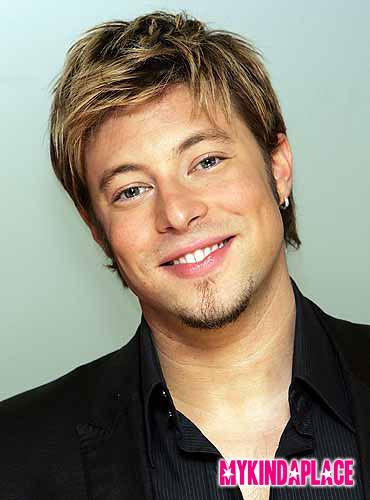
Another week, another celebrity comes out as bi. I stopped posting on bi celebrity long ago, but there is something about male celebrities coming out as bi that does, in fact, deserve more attention.
I’ve done the women, as it were – Megan Fox, Lady Gaga, Katy Perry, et al all the way back to Madonna c1990… well, they may be bi, or they may not. They may have felt a sudden desire to be, like, totally honest with their public at this particular moment in time, or they may have seen a marketing opportunity.
Celebrities, eh. You just can’t trust them/their public images/their people. And they do real bi women no favours at all.
However, female bi celebrities don’t really get flak from anyone (apart from the likes of me, who matters not diddley-squat in the big old world of music PR). Bi male celebrities (like bi men in general) are not seen as that teensy bit sexier, they are seen as pretend gay men with all the homophobia and ridicule that implies in mainstream society.
Complementary posts
Two blog posts on this subject cover pretty much everything I could or would have said on the subject. I have never heard of Gary Nunn before, but Marcus Morgan is a long-time UK bi activist, and knows of what he speaks.
However, I want to highlight the many comments these posts attracted. The negative comments, that is; the positive comments are similar and from people who actually know other bi people or are bi themselves.
Obviously, the Guardian’s Comment is Free site attracts a different set of prejudices to that of Pink News – a gay news site. Specifically, CiF commenters tend to believe that there is no problem in being gay or bi these days, that gay/bi people still “shouting from the rooftops” aka mentioning their sexuality are somehow oppressing heterosexuals. Or, connected, that we should just all love whoever and it really doesn't matter any more.
Biphobia really does exist
But it is depressing that the bile posted on PN by gay people (men) beats that on CiF by the factor of many. Specifically, that bi men cannot be trusted because X poster has met a no-good one (or two).
Perhaps most people who are out as bi have heard this already - God knows how many times I have heard this in my life! So bi people are supposed to police / apologise for the bad behaviour of every other person who has ever said they were bi. You can't be judged as yourself, but against what others may or may not have done.
I find that extraordinary, nothing but downright prejudice. It puts us in an impossible position. We “good” bis, by our attempts at openness and honesty, are as nothing beside these bogeyman “bad” bis. And there are bad bis, of course. There are bad people of all sexualities. Sexual identity does not correlate to good or bad behaviour.
'Bi now, gay later'
I don’t know where those gay people posting get the idea that being bi is so much easier than being gay. That, as a result, all the bi (men) they have ever met who then turned out to be gay negate the very existence of genuinely bi men.
One commenter says that a lot of people who say they are bi are really gay. How does he know? Some people say they are bi and are really gay. True. Some people say they are gay and are really bi. True. Presumably, both think that the sexuality they profess is easier to manage / more acceptable than the one they feel in their hearts that they are.
Well, I have met plenty of gay men who turned out to be bi. Including some bi men who have girlfriends they do not tell the gay community about. And married bi men who were completely honest with their wives. And monogamous bisexuals by the bucketload.
The supposition remains: bi men = really gay; bi women = really straight. Are men, or perhaps Men, really so irresistible?
Wednesday, July 01, 2009
Getting gaydar
One of the googled queries that often sends people to this blog is: “How do I know if X [person that I fancy] is bi?” Chances are, they go away entirely unenlightened.
I was thinking of this myself the other day, when I was chatting to someone I know slightly. She knows about me – and we have always had a rapport – but, unless she tells me, how will I ever know if there is anything to “know” about her?
I am not planning to proposition her, indeed am quite enjoying the continued existence of Unresolved Sexual Tension, but I’d like to know that UST is what it is, and not just friendliness.
In the past, I have got this horribly, hideously wrong – to the embarassment and bafflement of both parties - and I just wonder how other people sense mutual sexual attraction.
Going clubbing
No doubt if you are operating in an entirely lesbian/gay environment, then it is easier. At least if you are in a queer club, it’s likely that the people who are there are queer. And that’s one of the reasons why LGBT online dating is so popular – you at least know that people there are looking for lovers of whatever gender you are.
But queer people operate in all sorts of mainstream and heterosexual environments too, and seem to meet partners there without necessarily verbally coming out to them. How?
Assuming everything
My lack of gaydar, though, isn’t confined to people I may sort of kind of fancy. Several times over the past year, I have been told that “of course” so and so is gay, what was I thinking?
Well, what was I thinking? In theory, I don’t assume anyone is anything. In practice, unless people have an obvious attachment, or I meet them in an unarguably queer environment, I kind of think they’re all asexual.
I was thinking of this myself the other day, when I was chatting to someone I know slightly. She knows about me – and we have always had a rapport – but, unless she tells me, how will I ever know if there is anything to “know” about her?
I am not planning to proposition her, indeed am quite enjoying the continued existence of Unresolved Sexual Tension, but I’d like to know that UST is what it is, and not just friendliness.
In the past, I have got this horribly, hideously wrong – to the embarassment and bafflement of both parties - and I just wonder how other people sense mutual sexual attraction.
Going clubbing
No doubt if you are operating in an entirely lesbian/gay environment, then it is easier. At least if you are in a queer club, it’s likely that the people who are there are queer. And that’s one of the reasons why LGBT online dating is so popular – you at least know that people there are looking for lovers of whatever gender you are.
But queer people operate in all sorts of mainstream and heterosexual environments too, and seem to meet partners there without necessarily verbally coming out to them. How?
Assuming everything
My lack of gaydar, though, isn’t confined to people I may sort of kind of fancy. Several times over the past year, I have been told that “of course” so and so is gay, what was I thinking?
Well, what was I thinking? In theory, I don’t assume anyone is anything. In practice, unless people have an obvious attachment, or I meet them in an unarguably queer environment, I kind of think they’re all asexual.
Thursday, April 16, 2009
British newspaper publishes good bi article shock
Hallelujah! The first positive piece about bisexuality in an eon is published.
Basically, writer A, Stephanie Theobald (writer of chick lit), used to be a lesbian. Now she’s having a relationship with a man. Viz, writer B, Jake Arnott (far more famous writer of gay gangster novels). He has always been bisexual but mostly had relationships with men. Now they’re in lurve and want to tell the liberal intelligentsia about it.
Or: two novelists each have a new book to push, and they’ve found a handy two-in-one angle for a nifty little feature.
But...
Mr Writer
I have absolutely no beef with Mr A. I have never read any of his books (or hers for that matter) but what he says is interesting… In fact, it's all good: the first famousish bi man out and proud in the UK since Tom Robinson.
According to the piece, he has identified as bi since he was young, and came out as such in the 80s. But he didn’t find acceptance on the politicised gay scene at the time; nor did he find much scope for bi political activity. So, although he was always in relationships with men, he always knew that was not the whole story. Then he met Ms Theobald.
Ms Writer
Stephanie Theobald was (I think) a fashion/style journalist, and a lesbian. Back in 2002, she wrote the most virulent piece of drivel that I have ever seen on male bisexuality, since the work of 1950s sexologists or contemporary religious bigots, or rejected comments on this site. And it was published! In the Guardian! No way am I going to link to it (can’t find it anyway). But it was all the usual stereotypes with extra added venom.
She thought bi women were sell-outs too and wrote so at length. Then she became one. Oh well, it just goes to show what many people think – that those who are secure in their own sexuality don’t have to ridicule that of others.
Out and proud hypocrites, as she styles herself, are simply hypocrites. She doesn't say she's wrong, or apologise, just jokes about it. Pah!
It occurs to me that this is the first time I have ever really slammed any other "bi" people on this site, but I do believe that she deserves it.
Bi The Way
Well I saw this film mentioned in my last post, and certainly didn’t hate it as much as the Bi-Furious writers, although their criticisms - too many to list here - are generally valid. It was about a world that seemed very foreign to me – bi teenagers in the US. At least it was laugh-out-loud funny in places. And it did show that, for some young people, being bi meant they were a target for bi and homophobia, not just lots of sex!
One thing that really pissed me off though: no activists. Robyn Ochs was allowed precisely one sentence. Of course those young people (and others like them) are going to feel abandoned and isolated if they don’t know there is a whole movement of individuals who are battling for them. The bi movement/theorists seem to be made invisible in all places and times. As the bi-furious people wrote, there was no sense of bis being part of a queer community at all.
Complete absence of a sense of history or geography too. Lookie here, filmmakers Brittany Blockman and Josephine Decker, bisexuality didn’t spring out of nowhere last year or the year before, some time after Madonna kissed Britney. Bisexuality exists everywhere and at every time. And not just for teenagers, either.
Basically, writer A, Stephanie Theobald (writer of chick lit), used to be a lesbian. Now she’s having a relationship with a man. Viz, writer B, Jake Arnott (far more famous writer of gay gangster novels). He has always been bisexual but mostly had relationships with men. Now they’re in lurve and want to tell the liberal intelligentsia about it.
Or: two novelists each have a new book to push, and they’ve found a handy two-in-one angle for a nifty little feature.
But...
Mr Writer
I have absolutely no beef with Mr A. I have never read any of his books (or hers for that matter) but what he says is interesting… In fact, it's all good: the first famousish bi man out and proud in the UK since Tom Robinson.
According to the piece, he has identified as bi since he was young, and came out as such in the 80s. But he didn’t find acceptance on the politicised gay scene at the time; nor did he find much scope for bi political activity. So, although he was always in relationships with men, he always knew that was not the whole story. Then he met Ms Theobald.
Ms Writer
Stephanie Theobald was (I think) a fashion/style journalist, and a lesbian. Back in 2002, she wrote the most virulent piece of drivel that I have ever seen on male bisexuality, since the work of 1950s sexologists or contemporary religious bigots, or rejected comments on this site. And it was published! In the Guardian! No way am I going to link to it (can’t find it anyway). But it was all the usual stereotypes with extra added venom.
She thought bi women were sell-outs too and wrote so at length. Then she became one. Oh well, it just goes to show what many people think – that those who are secure in their own sexuality don’t have to ridicule that of others.
Out and proud hypocrites, as she styles herself, are simply hypocrites. She doesn't say she's wrong, or apologise, just jokes about it. Pah!
It occurs to me that this is the first time I have ever really slammed any other "bi" people on this site, but I do believe that she deserves it.
Bi The Way
Well I saw this film mentioned in my last post, and certainly didn’t hate it as much as the Bi-Furious writers, although their criticisms - too many to list here - are generally valid. It was about a world that seemed very foreign to me – bi teenagers in the US. At least it was laugh-out-loud funny in places. And it did show that, for some young people, being bi meant they were a target for bi and homophobia, not just lots of sex!
One thing that really pissed me off though: no activists. Robyn Ochs was allowed precisely one sentence. Of course those young people (and others like them) are going to feel abandoned and isolated if they don’t know there is a whole movement of individuals who are battling for them. The bi movement/theorists seem to be made invisible in all places and times. As the bi-furious people wrote, there was no sense of bis being part of a queer community at all.
Complete absence of a sense of history or geography too. Lookie here, filmmakers Brittany Blockman and Josephine Decker, bisexuality didn’t spring out of nowhere last year or the year before, some time after Madonna kissed Britney. Bisexuality exists everywhere and at every time. And not just for teenagers, either.
Tuesday, February 24, 2009
Bi The Way comes to London
Bi The Way, a US documentary looking at attitudes to bisexuality in America, is finally coming to the UK. It will be at the London Lesbian and Gay Film Festival on March 30th and April 3rd. Online booking opens next Monday March 3rd, unless you are a BFI member when you can book by post now.
Now, no doubt this discussion will be very old news to people reading this who live in the US, where it has been blogged about ad nauseam – so what are your thoughts? Have you seen this film?
Because, although there is very little in the way of bi films out there (the first-ever bi doco at the LLGF as far as I can remember), this one doesn’t sound particularly entrancing.
Of course, any film/book/TV programme that is meant to represent an almost entirely unrepresented (in the sense of analysis, rather than 'phwoar') group can’t possibly win completely. But my hackles do rise when I read: "is bisexuality having a media fad or is the 'whatever' generation having its own sexual revolution"?
But, more than anything, it was the comprehensive shredding on it by the thoughtful blog Bi-Furious that makes me wary.
Anyway, ticket provision willing, I’ll be seeing it and reporting back.
Now, no doubt this discussion will be very old news to people reading this who live in the US, where it has been blogged about ad nauseam – so what are your thoughts? Have you seen this film?
Because, although there is very little in the way of bi films out there (the first-ever bi doco at the LLGF as far as I can remember), this one doesn’t sound particularly entrancing.
Of course, any film/book/TV programme that is meant to represent an almost entirely unrepresented (in the sense of analysis, rather than 'phwoar') group can’t possibly win completely. But my hackles do rise when I read: "is bisexuality having a media fad or is the 'whatever' generation having its own sexual revolution"?
But, more than anything, it was the comprehensive shredding on it by the thoughtful blog Bi-Furious that makes me wary.
Anyway, ticket provision willing, I’ll be seeing it and reporting back.
Thursday, February 19, 2009
Falling in love with love

I had the first inklings that I was bisexual when I was about 10. My parents had gone to a school meeting and I had refused to go next door to be babysat.
Anyway, I was lying on my stomach watching one of the 1930s films you could see on the TV then. It was an operetta-style musical: it might have been Rose-Marie, or perhaps Maytime. But in any event it starred Jeanette MacDonald.
Oh I thought. Oh… that lady is so beautiful.
It was something to do with the way she sang, the way she held her head back and half-closed her eyes. Her eyelids were luminescent. Shiny eyeshadow, I imagine, although I didn’t know that then.
I thought there was something magic about her, transcendent, utterly unobtainable. And that was what I was looking for. That was what I felt for a little boy I had loved (silently) before. She cast a spell on me, with her eyelids and that clear, high voice. There was, too, the way she stared mysteriously at someone or something the audience couldn't see.
I saw another film of hers on the big screen a few months ago: Love Me Tonight. Damn, I thought, I was right. Jeanette MacDonald really was that gorgeous.
Tuesday, February 10, 2009
Is there a ‘bisexual’ in LGBT history month?
Well no, probably not. This February's UK-based yearly event is, as in all other years, probably entirely “b” free.
A trawl through the website (10% of the 367 events anyway, before I got bored) indicates nothing specifically bi. There are lots of events where bi people could well be included among all-encompassing “gay” events. But nothing to imply that bisexuality might have a history in and of itself.
Anyone who might think it does could do worse than look at the links to this blog’s history posts. I have listed them on the right of this page. History is my thing, you see (well one of them! I am bi, I have lots!).
The ever-active Jen Yockney posted on bimedia.org that there was just one event with a bi speaker. This happened last week – but on a Tuesday morning!
Who do I blame?
Well, not the organisers. They publicise the events, it seems, they don’t arrange or commission them. This is a great “month” to put on, regardless.
A society that thinks that bi people in the past were really gay? So therefore to see bi people separately is simply wrong? Possibly.
A bi community that has shrivelled away, so that putting on any events is asking a lot of a very small number of people? Not really.
It’s true, too, that lesbian and gay history (particularly gay men) is much more documented than bi history. It can (and often does, and certainly used to) take in anyone interested in same-sex.
So I am left with no one to vent my frustration on. Ideas, anyone?
Moving on
I kind of think this shouldn’t happen next year. There ought to be at least a few more events on bisexuality throughout the ages. So who would run it? Get money for speakers’ expenses? Any ideas? It would be interesting, no?
At any rate, I promise to do a few more bi history posts on here this month. I do, I really do.
PS I went on a work-sponsored “writing for the web” course today. And I am tailoring this piece accordingly. Can you tell the difference between this and what I have written before, dearest regular readers? This piece seems very tabloidesque to me.
A trawl through the website (10% of the 367 events anyway, before I got bored) indicates nothing specifically bi. There are lots of events where bi people could well be included among all-encompassing “gay” events. But nothing to imply that bisexuality might have a history in and of itself.
Anyone who might think it does could do worse than look at the links to this blog’s history posts. I have listed them on the right of this page. History is my thing, you see (well one of them! I am bi, I have lots!).
The ever-active Jen Yockney posted on bimedia.org that there was just one event with a bi speaker. This happened last week – but on a Tuesday morning!
Who do I blame?
Well, not the organisers. They publicise the events, it seems, they don’t arrange or commission them. This is a great “month” to put on, regardless.
A society that thinks that bi people in the past were really gay? So therefore to see bi people separately is simply wrong? Possibly.
A bi community that has shrivelled away, so that putting on any events is asking a lot of a very small number of people? Not really.
It’s true, too, that lesbian and gay history (particularly gay men) is much more documented than bi history. It can (and often does, and certainly used to) take in anyone interested in same-sex.
So I am left with no one to vent my frustration on. Ideas, anyone?
Moving on
I kind of think this shouldn’t happen next year. There ought to be at least a few more events on bisexuality throughout the ages. So who would run it? Get money for speakers’ expenses? Any ideas? It would be interesting, no?
At any rate, I promise to do a few more bi history posts on here this month. I do, I really do.
PS I went on a work-sponsored “writing for the web” course today. And I am tailoring this piece accordingly. Can you tell the difference between this and what I have written before, dearest regular readers? This piece seems very tabloidesque to me.
Subscribe to:
Comments (Atom)