Showing posts with label Books. Show all posts

Wednesday, February 29, 2012

Bi lives: Nerina Shute/3

Nerina2

(Above: Nerina in 1995, aged c87, right. With Sue1066, left, whose pic this is)

There are so many things you can learn, and be inspired by, when you look at an individual’s life in depth. Studying Nerina Shute’s life through her writings has given me so much to think about. This is just the beginning:

Bisexuality over a lifetime
For many people who aren’t bi – and even for some who are – bisexuality is something that is for young people. Only for young people. I suspect that’s because many of them connect bisexuality with having lots of partners and/or not being “settled down”.

Not much is known about the ways in which people remain bisexual over the course of their lives, how their sexuality changes (or doesn’t), and how these changes interact with the changes in society.

But for Nerina (as with other people of her generation, now dead, such as James Lees-Milne, who have published volumes of diaries) we can see that her bisexuality was important throughout her life. In her 90s, she was happy to tell an interviewer she was bisexual (see this post); in her 80s, in her autobiography Passionate Friendships, she wrote at some length about the (late 1980s) fraught relationship between bi women and lesbians. She simply didn’t understand why this tension existed:
“We are bisexual. We are ambisextrous, as Aimee Stuart would say. Lesbians accuse us of wanting the best of both worlds. Well why not?”

Bisexual life in London
As I’ve already written, bohemian Londoners of this time – whether intellectual Bloomsburyites, or actual and wannabe actresses, people who worked in nightclubs and many etceteras – tended not to choose one opposite-sex marital partner and stay with them, forsaking all other. The blog I referred to in the first of these posts, Cocktails with Elvira, describes many of the personalities involved, and the merry-go-round of relationships in which they were involved. Some of these characters tended to be gay, some tended to be straight, but many of them seemed to have partners or occasional lovers outside of this. What there were, though, were (physical) fights, intrigues and quarrels – something Nerina complains about in We Mixed Our Drinks. No doubt alcohol played a large part.

Playwright Aimee Stuart, friend of Nerina’s from 1926 until Aimee died, introduced Nerina to many of these women through her “at homes”, where sex was frequently discussed and being “ambisextrous” far from unusual. One of them was almost certainly the wonderfully named Sunday Wilshin, who acted in the film version of Stuart’s play Nine till Six. She really intrigues me, and there’s more about her here.

This is a still from The Gentle Sex from 1943, co-written by Aimee Stuart, Moie Charles (also a friend of Nerina's) and others. Apparently there is a free download of the film on that site too!


It also seems that there was a group of women who saw themselves as specifically bisexual, as distinct from lesbian. This was certainly how Nerina saw herself as a mature woman. When young, she was unhappy about her attractions to women, didn’t like the contempt heaped on lesbians, and couldn’t understand the fact that she needed both women and men.

She saw her love for men, and her love for women, as mutually complementary. A relationship with a woman would not threaten her relationship with a man, or vice versa. Her friend and sometime lover, Helen Mayo, thought so too. This is a pic of Helen, left, and Nerina, right, on holiday in Ireland, 1939.


And in Passionate Friendships, she quotes Helen, in a conversation from the late 1950s:
“’To deceive him with another man would be wrong, but not with a woman. There’s no harm in it,’ said Helen, ‘because the love between two women is totally different. It’s a form of friendship, a passionate friendship.’
“Of course I knew exactly what she meant. There is little or no similarity between the lusty love-making of a man or tender or motherly love-making between women. A male lover is unthinkable for a married woman in love with her husband. A female lover can be delightful.”

To Nerina’s husband Howard Marshall, though, a lover was a lover; their relationship ended because he considered she had been unfaithful. The fact that her lover was a woman was neither here nor there. In Passionate Friendships, she blames herself for hurting him so much, and thereby ending their marriage, when she still loved him.

Helen and Nerina’s view of sex between women seems to have some connection with the romantic friendships of the 19th century and earlier, as detailed by Lilian Fadermann in Surpassing the Love of Men. Fadermann, writing in the early 1980s, saw romantic friendships as NOT being sexual. I don’t see that we can know, definitively.

Helen Mayo and her partner (Dorothy Anderton) Andy Sharpe, friends of Nerina’s from 1939 until their deaths in the 1970s, are also interesting to consider. They were a dentist and obstetrician, respectively, so not obvious candidates for bohemianism. Instead, Nerina places them within a work-hard/play-hard, live life to the full framework. Andy had a fiancĂ© who was killed in WW2, and Helen had other lovers too, as well as Nerina. They were extremely sociable and life-loving, with their large house in Portland Place the scene of many parties. This was mentioned in Andy Sharpe’s obituary in the BMJ, with no further comment or explanation.

Things I don’t know about Nerina
Although I wrote above about Nerina’s lifetime of bisexuality, in fact there is little publically available information about her life in old age. I found a couple more pictures of later-life Nerina via Google Images, and they intrigue me. They are from Sue1066’s flickr account. Who are you, Sue1066? You obviously knew Nerina (see the picture of the two of them at the top of the post) and perhaps have some connection to her family – given that some of the other pics are of Nerina’s mother’s childhood home and a memorial with her maiden name Pepper Staveley. I hope you don't mind me using your pic.

Obviously, there are lots more things I don’t know. And sadly for my bank balance, these are the sort of interests that lead jobbing writers to attempt biographies.

The most obvious are: what were the real identities of her lovers Charles – abortionist turned condensed-milk salesman; and Josephine – Catholic monocle-wearer, met at a lesbian party, greatly in love with Nerina, and her assistant at Max Factor in the late 1930s? Cocktails with Elvira contains a number of candidates for Josephine, although I don’t think any likely monocle-wearers are mentioned.

Maybe Nerina was deliberately laying false trails for any future nosey-parkers.

Tuesday, February 28, 2012

Bi lives: Nerina Shute/2


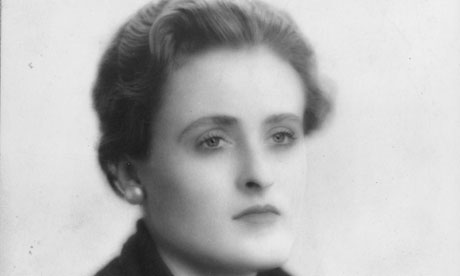
(Left, Nerina Shute in the late 1930s)

This is the second post in my LGBT history month series on bisexual writer Nerina Shute. If you haven’t read yesterday’s post on why I’m doing this, best to read here first.

Nerina's life and times

Nerina Shute was born to an upper middle class family in Northumberland in 1908, the daughter of Cameron and Renie. Her father was in the army, her mother wrote several scandalous novels which were optioned by Hollywood.

While in California (with Nerina), Renie invested all of her money in a married paramour’s gold mine and when Cameron came to visit them, persuaded him to invest his money too. The married man was killed in a car accident and the goldmine was found to be devoid of gold, meaning that the family lost all their money.

Nerina won a short story competition while still in the USA, despite the fact that she had left school at 14. She came back to Britain from California, aged 18, soon moving to London, where she became a typist at the Times Book Club. Attending dance classes, she met playwright and bohemian stalwart Aimee Stuart, who held frequent parties and gatherings in her central London flat. As Nerina wrote later in We Mixed Our Drinks (where she writes of herself in the third person:
“Shute was an odd, rebellious young woman who happened to come of good family but preferred to be thought a ‘bohemian’ than ‘a lady’ or even ‘a gentlewoman’. She was untidy, careless and heavily made up with lipstick and rouge and eye-black ... Behind a half-hearted attempt at flippancy she was deeply in earnest. Behind her sex-talk and her bad manners she was old fashioned, and full of what she herself sometimes called ‘twisted ideals’.”

In 1927, at the tail end of the silent picture era, Nerina was offered a job as a reporter on Film Weekly. She interviewed many celebrities, and did not mince her words, offending many film stars such as Madeleine Carroll, who she described as a “ruthless Madonna”.

Here she is in The First Born, a great (silent)film that was restored/relaunched recently by the BFI.


Nerina also made a nuisance of herself around film sets: director E A Dupont banned her from his productions, and she once returned disguised as a rabbi to see what was going on.

In 1931, her first, autobiographical novel, Another Man’s Poison was published, causing scandal with her relatives, and attracting reviews, as one of its main characters, Paula, describes herself as ambisextrous. This received a fortuitous review from Rebecca West in The Daily Telegraph:
“Miss Shute writes not so much badly as barbarously, as if she had never read anything but a magazine, never seen any picture but a moving one, heard any music except at restaurants. Yet she is full of talent.” (Shute, 1944:40)

This was excellent publicity for Nerina, despite the fact that she was hurt by it, thinking it an accurate criticism. As “the girl with the barbarous touch” she wrote a series of articles for the Sunday Graphic newspaper at 10 guineas a week (compared to £4 for her job at Film Weekly), giving the opinions of “the ultra-modern girl”. Subsequently, she was invited to Lord Beaverbrook’s estate (he was then owner of the Express newspapers) and given a job as a general reporter at the Express, where she was sacked again, this time after six months.
“Far from being a good reporter, she was inexperienced, useless at writing a straightforward news-story, and on top of these fundamental drawbacks, as everyone probably knew, she disliked her job.”

Nerina was aware of her attractions to women from the 1920s on, and was nervous about them. She did not want to become a lesbian, feeling that the societal opprobrium was too great, and she felt “hurt and diminished” by this prejudice.

But around this time, she met “Charles”, a doctor who had been struck off for performing an illegal abortion. Feeling lonely, and anxious to lose her virginity, they began a relationship and were soon in love. After some months, she went to “live in sin” in Liverpool with him, where he had got a job as a condensed-milk salesman. She became jealous, however, which caused arguments, and so she left him and returned to London. Here they are, posing on Blackpool Pleasure Beach, in 1930.


Once more, she became a journalist, where she says she was obliged by her editor to write light stories which she felt were wrong in times of terrible poverty. For instance, she was sent to investigate nudist clubs and colonies “which were springing up in the green fields of England like rude little mushrooms”. She went to visit nudists in Earl’s Court but was amused to find that, for the interview, they were clothed. The editor wanted her to write stories about how they were immoral but she liked the nudists she met and wouldn’t do it.

Like very many creative (and other) people of that time, she was attracted by what appeared to be the greater equality in Russia, although after a trip there she also offended Russian Communists she met by saying they had replaced religion with politics.

Around this time, she also began a relationship with a woman she calls “Josephine”, who was a close friend and lover until the end of the 1930s.

Disillusioned with journalism, and by the lack of success of a play she had written, in 1935 she began to work for Max Factor as their publicity manager, doing what she described as “commercial propaganda” and becoming what she called a “Bond Street blonde” – well dressed and groomed, wearing high heels and bleaching her brown hair. This was a dramatic contrast to her previous look of androgynous messiness, complete with black hat. She was also briefly married to James Wentworth-Day, a high Tory journalist, who attracted her with his strongly felt ideals, even as she furiously disagreed with them. The marriage only lasted a year.

He was around 40 when they married, so I imagine this is him in the 50s:


By 1937, Nerina had lost her eagerness to write:
“A few years ago Shute had been the budding novelist and journalist, a young woman of rebellious thoughts who dreamed each night of rising up and up into the golden heights, creating with words the brave people and the lovely places she saw so clearly in her New World. Full of ambition, she had been a pig-headed untidy young romantic; she intended to write what she believed, live as she wanted, and to hell with criticism”.

In 1939, while riding her horse in Rottingdean, Sussex, she met Helen Mayo and Andy Sharpe, two women who lived in Portland Place in London and worked as a dental surgeon and obstetrician respectively. She went to live with them, becoming Helen’s lover, and worked as a nurse, almoner, and ambulance driver, throughout the war.

She also met her second husband, Howard Marshall, in 1940, a very prominent radio journalist, and the first person to broadcast ball-by-ball cricket commentary.

For the duration of the war, their relationship was intense and idyllically romantic, much of it carried on in intense secrecy as he was both famous and still married, his wife and sons being in America for safety.

This – Begin the Beguine - is one of the songs they used to dance to:


They married in 1944 and were both strongly socialist at this time, endlessly discussing what a better world might look like. Still, however, she had creative ambition: “... she was not a good enough writer. With all her heart she envied the experienced word-wealthy people”. She did, however, publish We Mixed Our Drinks (discussed in the previous post).

In the immediate post-war period, their relationship was “blissfully happy” despite the fact that they were both unemployed and in general found this period difficult:
“When all the excitement was over we all had a feeling of anticlimax. We had done our job. We had won the war. We were unprepared for the long littleness of life.”

What a telling quote! Their intense relationship soon began to show cracks: she wanted to go out, he wanted to stay in. For some years, she acquiesced to this, despite increasing loneliness. When Howard began to work in PR in late 1945, they hired a French housekeeper, "Renee". Renee brought fun and joy into what, over the next few years, became an increasingly unhappy marriage. They loved each other but were wildly incompatible.

Howard did, however, support her quieter, more intellectual endeavours. Nerina studied English at London university, and began to write the first of her historic novels. This one, about Shelley, was published in 1951


After a few years, Nerina and Renee began a sexual relationship (instigated by Renee) which seems to have been maternal on Nerina’s side. Renee, however, was in fact in her 30s, and her mental health was deteriorating. Her family had died in a bombing raid in France, and she had found parts of her mother’s body scattered in the ruins of their home.

Towards the end of her three-year stay with Nerina and Howard, Renee had a serious nervous breakdown, eventually returning to France. Nerina then became very depressed as well and sounds as if she were on the edge of a breakdown herself. “The longing to escape had returned ... this time I felt a desire to die”.

During a furious argument with Howard on New Year’s Eve 1953, several years after Renee had returned to France, she told him she had had sex with Renee. He had known nothing about her attractions to women. Despite speaking on the phone and writing letters, they never saw each other again, although she maintained until the end of her life that she still loved him.

This is Howard, perhaps in the 1940s.


Nerina went to stay in Sussex with her mother and her mother’s much younger and alcoholic sixth husband, Noel. While her depression lifted rapidly, she, her mother and step-father struggled financially, negotiating with the Inland Revenue, trying to make money on renovating houses and moving, or selling off parcels of land. Over the next four years, as her mother’s health deteriorated, Nerina wrote a memoir of Renie’s life Come into the Sunlight, designed to be a reflection of her mother’s joyful philosophy of life. After her death, Nerina and Noel soon moved to London, where they lived in Chelsea, at this time just starting to be the centre of Swinging London.

When she and Noel decided to take ballroom dancing lessons (so Nerina could take Noel’s mind off drinking) they were taught by Phyllis Haylor.

Nerina and Phyllis began a relationship and remained lovers until Phyllis’s death. This was, according to Nerina, a very happy relationship although no particular details emerge in her late-life autobiography Passionate Friendships.
“Phyllis made me happy with an adoration based on a need for motherly tenderness which only a woman can give to another woman. Now, late in life, Phyllis was giving it to me and I was giving it to her. It was like a marriage. We became passionate friends, and our friendship lasted until the day of her death.”

During the 1970s, Nerina wrote two travel and history books about London’s villages, as well as a volume of tell-little autobiography, The Escapist Generations and, in 1986, The Royal Family and the Spencers.


In 1981, Phyllis died suddenly of a heart attack and Nerina was alone once more. Although this is not mentioned by Nerina, her obituaries mention that she began a relationship with another woman, Jocelyn Williams, in 1989, and they stayed together until Nerina died.

In later life, Nerina became as fervent a conservative as she had once been a socialist, but she remained interested in the contemporary world, even as she distanced herself from some of it. With the publication of her final autobiography, Passionate Friendships (1992), she was able to talk more freely about her bisexuality:

“I believe there are many women in the world who need the love of another woman in addition to the love of a man. We are bisexual. Usually we hide this fact from our husbands for fear of ending a happy marriage. I made the mistake of telling my husband ... By explaining how it all happened, and how it ended, I may possibly give help to others.”

So not exactly what bi people tend to think these days, then! Nerina was a product of her class and time, but/and I warm to her and think she would have made a marvellous companion.

In tomorrow’s post, I’ll be writing about some of the questions and issues that studying Nerina’s life has led me to consider.

(The information in this post comes primarily from Nerina’s memoirs and autobiographies, with additional information from Shepperton Babylon, by Matthew Sweet, and from various obituaries.)

Monday, February 27, 2012

Bi lives: Nerina Shute


Nerina Shute, in the early 1930s


February is LGBT history month (in the UK) and – although I have several other blog posts in the offing/promised/massively overdue - I really want to add my twopennorth while I can.

Actually many more pennorth than that. This is a long post, so I’m splitting it into three, to be published over three days, thereby just about squashing it in before the end of the month.

People in the bisexual community often talk about the need for more information about bi lives – people who are now, or were in the past, some kind of bisexual. And whereas there can often be debates or confusion about whether we now can give a contemporary identity (bisexual) to them then, with Nerina there is no confusion. "I am bisexual," she said to writer Matthew Sweet, when she was in her 90s. "What does your generation think about such things?"

Nerina Shute: 1908-2004
This isn’t the first time I’ve written on this blog about Nerina – teenage film critic of the silent era, novelist, London bohemian, laugh-out-loud memoir writer and explicitly bisexual at a time it is so often assumed that people weren’t. But since 2006, when I wrote about her before, I've had more time to think about her, and her life and times.

I first found out about Nerina when I read her memoir We Mixed Our Drinks in around 2000, while I was doing research for another project. Published in 1944, WMOD is the story of her life from her teenage years in the USA when her mother lost all their money in a goldmine fraud; her time as reluctant film critic – she didn’t like film stars; an even more reluctant journalist – she didn’t know what she was doing; and an eager young novelist (nicknamed “the girl with the barbarous touch”).

At the time, WMOD was considered very shocking. Nerina is open about having lived with a man without being married, about being taken to a Chelsea orgy (where the hostess wore a vest that was both too long and too short, and they were thrown out for not taking off their clothes), about the “pansy” and lesbian circles in which she never quite said she moved.

I am fascinated by Nerina for a whole range of reasons, some of which may already be apparent. So fascinated, in fact, that even though writing about her was a significant part of my master’s degree in life history research, I still google her and her gang to see if anything new shows up. Sure enough, I found this superlative blog Cocktails with Elvira. It’s based around a notorious court case – of socialite Elvira Barney, who shot her lover in 1932.

The blog also contains a lot of information about bohemian London of that time, much of which would now be (and somewhat differently would have been then) considered “queer”. This is not simply the haute intelligentsia of the Bloomsbury Group, which has been well-documented. The various overlapping London bohemias of the 20s and 30s (and earlier, and later?) seem to have been overwhelmingly queer. Musicians, actors, models, chorus girls and boys, journalists and people about town seemed to have been strikingly unstraight. Not to mention artists, particularly those condemned with the word “Chelsea”.

“Hello darling, how’s your sex life? Lousy, darling, how’s yours?”
While Matt Houlbrook’s brilliant book Queer London looks at all the different ways in which men at this time interacted with each other for sexual/romantic purposes, there has been very little published about women’s relationships with each other outside of the most famous instances – Violet Trefusis and Vita Sackville-West, for instance.

Now that I’ve read all Nerina’s memoirs/autobiographies, it seems really apparent that there was a lively lesbian/bi/queer women’s scene in London in the interwar period and afterwards. There is more information about some of these characters in Cocktails with Elvira, and I wish I had the time to research this properly. This scene was mainly based around friendship networks of various sorts, rather than the cottaging/picking up/Turkish baths scene etc, described by Houlbrook.

While these women were often well-off, sometimes rich and independent, they weren’t necessarily so – Nerina came from a once-rich background but in the 30s she was often without a shilling for the gas - indeed the whole mix of class and bohemias seems to be to be quite complicated. I’d love to know how much, if at all, any sexual/romantic friendship networks spread to “ordinary women”.

It also seems that there was a group of women who were actively, explicitly, bisexual, who sometimes wanted to distance themselves from lesbians and sometimes had relationships with them. I’ll be looking at this in a bit more detail in a couple of days.

When I read Shepperton Babylon by Matthew Sweet – about the British film industry - I was delighted to discover that Nerina was bisexual, and quite happy to talk about it. I was much less delighted to find out that, at the time I was first devouring We Mixed Our Drinks, Nerina was actually still alive and living in Putney. She didn’t die until four years later. I suppose that’s the hard lesson for oral historians: the people you really want to speak to are often just beyond reach.

Tomorrow, I'll be posting more about Nerina's life and loves. Then finally, I'll be looking at some of the questions that her life, and what I know of her thoughts and opinions, pose for bisexual people today.

Friday, November 11, 2011

Straight out of university - a bi novel


There aren’t too many novels with bisexual characters, so when I “met” Rosen Trevithick on Twitter, I was intrigued. Her new book, Straight Out of University, is a comic novel with a bi woman at its centre.

Rosen has been doing a blog tour this week – a blog tour is where writers “visit” different blogs each day to write a guest post, or be interviewed on them. A bit like a book tour from the comfort of your living room. She’s visiting Bisexuality and Beyond today; the other dates are at the bottom of this post.

And this is what I asked her:


Can you tell us a bit about Rosen Trevithick. Who *are* you?

I'm a British writer and woman, who now lives in Devon. I've recently become a passionate reader of indie books, having been given a Kindle as a birthday present.

So what's your book about, what sort of book is it?

Straight Out of University is a comedy about a bisexual woman whose life shifts when she leaves Oxford University and moves back to her hometown in Cornwall. It focuses mainly on her romantic life.

Why did you think Bisexuality and Beyond would be right for your book tour?

There are a lot of blogs about bisexuality, but many of them are... how shall I put it? A little tasteless. Straight Out of University is an honest book, not an erotic-orgy-romp, so I would like to visit blogs with a similar tone.

To what extent is this an autobiographical novel? I mean, both you and the heroine come from Cornwall and went to Oxford....

Obviously I've used personal experiences and the experiences of those around me, to inspire parts of the story, but it's not autobiographical. I am very much single and have never dated a man in a cardigan, or a rock star.

So you interviewed a few bi women when you were researching this novel. What did they tell you about their lives?

There were a wide selection of responses. Some women were single, some were in relationships with men, others were in relationships with women and a handful were polyamorous. There were a very wide variety of stories. However, as I expected, the predominant theme was love and respect - not detached promiscuity, as the stereotypical bisexual woman dictates.

I'm intrigued by the fact that you did a YouTube trailer for your book. What's the thinking behind that? I loved the animation by the way.

I was inspired by Miranda July's trailer for "No one belongs here more than you". It showed me that sometimes the simplest ideas are the best. I'm glad you enjoyed the animation.

Are there any other bi/queer books or authors that you like?


I've just discovered a great, young writer called Sophie Robbins. She's written an indie book called, "A hole in the World" and it's really quite lovely.

You seem to have e-published a few books, Can you tell us a bit more about them...?

I've written two novels. The first is called Footprints and it's a dark mystery set in Cornwall. However, I feel more comfortable writing contemporary comedy such as Straight Out of University. The other eBooks are plays that I'd written in the past, before the days of Kindle, and decided to share.

What are your future plans? Specifically, do you intend to carry on publishing yourself, electronically, or are you after a big publisher with a big advance?

Obviously, it would be fantastic if I could make a living from writing. I would love to be able to afford to buy my own house, with its own cutting patch and sea view - if I could achieve that doing something that I love, that would be great. However, for now, I'm just happy to have the chance to write and be read.

To download Straight Out of University, click here

Rosen’s website is at www.rosentrevithick.co.uk

The blog tour

Monday 7th November - Literature & Fiction - http://shelaghwatkins.wordpress.com/
Tuesday 8th November – Kait at Catz - http://kaitatcatz.blogspot.com/
Wednesday 9th November – Along the Write Lines - http://alongthewritelines.blogspot.com/
Thursday 10th November – Mel Comley Author - http://melcomley.blogspot.com/
Friday 11th November – Bisexuality and Beyond – http://suegeorgewrites.blogspot.com/
Saturday 12th November - Fentonton http://fentonton.blogspot.com/

Thursday, July 28, 2011

Metrosexy


Everyone who’s ever put fingers to keyboard for money is scrabbling around these days trying to find new ways to make it work. Fortunately for those of us who appreciate our sexual politics through a combination of witty writing and thought-provoking ideas, Mark Simpson has found a way with his new ebook Metrosexy.

Even those people who have never heard of Mark Simpson himself will have heard the term “metrosexual” which he coined in 1994. (Metrosexual meaning something along the lines of “man relaxed in his sexual and gender identity, who takes great interest in his own appearance and that of other men”. Or something like that. Aargh!)

He blogs at marksimpson.com, and sometimes has features published in magazines or newspapers, but it has been FAR TOO LONG since he last had an actual book published.

The book

Metrosexy (subtitled a 21st century self-love story) is a collection of Mark’s writings mostly, but not all, published before. So whether it’s Sporno (sports/porn combo a la David Beckham) or a critique of what metrosexuality has become (“metrosexuality was anything but skin deep, whilst metrosexmania pretended that’s all it was”) there’s lots to ponder over.

E-books tend to be substantially cheaper than paper ones, certainly if they are e-book originals, and not just another format for a large publisher. So at £2.86 (for 70,000 words), Metrosexy is a downright bargain. You can download it here.

The ideas

Mark’s work is all about about gender and masculinity (in men) and how men are seen and see themselves in the media and popular culture. Metrosexuality, for instance, is an indication that traditional gender differences between men and women are fading away. It has sexual ambiguity written into its very core. Where once men looked and women were looked at, now men delight in being objects of desire. They aren’t particularly bothered whether it’s men or women doing the desiring because, fundamentally, a metrosexual’s love object is, it seems, himself.

My own particular interest in Mark, and why he is of interest to this blog, is his own take, and personal experience, on bisexuality. In brief (pun sort of intended), he knows that men don’t have to be gay or even bi to have sex with each other. A lot. And specifically, in a period when mainstream and much of gay society considers bisexual men, or indeed bisexuality in men, to be bogus in some sense, here’s someone who’s not part of the bi scene, or even bi, who disagrees.

I also like Mark’s anti-respectable queerness. Most people writing on L or G issues these days are very focused on equal rights and, in particular, equal rights to marriage. He’s not.

He also writes about complex ideas accessibly, for a non-academic audience. Most books on sexuality these days that are about actual ideas are written by and for people within universities. That’s great for them (and just the way the publishing cookie crumbles these days), but not so good for the rest of us.

Him indoors

Alongside Metrosexy, I’ve also been reading The Spiv and the Architect (Unruly life in postwar London) by Richard Hornsey - a more traditionally academic book in the cultural studies field.

TS+TA isn’t really about spivs and architects per se. Instead, it’s about the post WW2 to 1950s development of the notion of the respectable homosexual and how he did and mostly didn’t fit in with the development of domestic and civic urban life. The book charts the way that male homosexuality moved from that of pre-war London, where men more often felt able to have sex with each other without being unmasculinised, or Queer in the old-fashioned sense of the word.

In the 1950s, where conformity to the nuclear family was all around, and heterosexual marriage was the most natural thing in the world, a few high profile legal cases highlighted the plight of The Homosexual and divided men who had sex with men into Respectable (wanted domestic companionship) and Queer/disruptive (cottagers, bi men, young men). While law reform (which didn’t actually happen until 1967) meant that men could settle down together, those who still wanted to take their sexuality away from the domesticated environment felt the full force of Lily Law.

So thank God to be living in a London where – despite all our many problems - metrosexuality is the new conformity, heterosexual and queer men both wear flowery shirts, kiss each other even when they’re sober and discuss the best product to stick into their carefully tousled hair.

And also

As she so rightly points out in the commments below, I was first told about Metrosexy by Quiet Riot Girl/Elly who (at that time) was promoting this book and Mark's ideas. So thank you QRG for that. And readers might like to know that she also has an e-novella out herself Scribbling on Foucault's Walls. I've only read 10 pages of it so far, but it's an extraordinary book, very unusual and engaging. And free. Free!

Thursday, February 17, 2011

20th Century Bi - Books and Links

Last Saturday (12th February) about 30 people came to Conway Hall in London for what was a really good bi history event. Sadly, Lindsay River was ill and so didn’t do her talk on creative women of the inter-war period, but Christian Klesse, Ian Watters and I were there. As well as the talk listed in the previous post, I did a personal memoir of the 70s. Nothing too personal...

Anyway, I said to people I would give a few links and notes about my talk Androgynous, Ambisextrous, or "enjoying all life's pleasures" - bisexuality before the sexual revolution - so here we are. I also have audio files of all the talks (from an Olympus voice recorder – won’t play on a Mac without some jiggery-pokery that I don't know about), plus printed versions of the talks that I did. Email me if you’d like them (my address is below my pic, on the right).

Books I mentioned
Queer London, by Matt Houlbrook: a truly excellent book about all sorts of man-man sexual behaviour from 1918-57.
The Secret World of Sex, by Steve Humphries: Oral histories of people in the UK before WW2, to accompany the 80s TV series of the same name.
Sex before the Sexual Revolution, by Simon Szreter and Kate Fisher: oral histories, plus analysis, of married couples in Britain who were sexually active before the 1960s. Recently out in paperback.
Fashioning Sapphism, by Laura Doan, looking at androgyny in the 1920s, and how the "masculine" fashions for women in the early part of that decade became connected with lesbianism after The Well of Loneliness prosecution.
Bisexual Love by Wilhelm Stekel. Originally published in 1922, this radical and almost unknown book has been digitally scanned and is available from Amazon!
Passionate Friendships, by Nerina Shute, in which she writes about her bisexuality and her relationships with women and men, was published in 1992. Nevertheless, it almost never appears on abebooks lists, or elsewhere on the second-hand market. I have only ever seen it in the British Library. Currently, there is one copy on Amazon for £29.50
There is more information about her in Shepperton Babylon, by Matthew Sweet – a great book for anyone interested in British cinema, bisexual or not.

Thursday, April 16, 2009

British newspaper publishes good bi article shock

Hallelujah! The first positive piece about bisexuality in an eon is published.

Basically, writer A, Stephanie Theobald (writer of chick lit), used to be a lesbian. Now she’s having a relationship with a man. Viz, writer B, Jake Arnott (far more famous writer of gay gangster novels). He has always been bisexual but mostly had relationships with men. Now they’re in lurve and want to tell the liberal intelligentsia about it.

Or: two novelists each have a new book to push, and they’ve found a handy two-in-one angle for a nifty little feature.

But...

Mr Writer
I have absolutely no beef with Mr A. I have never read any of his books (or hers for that matter) but what he says is interesting… In fact, it's all good: the first famousish bi man out and proud in the UK since Tom Robinson.

According to the piece, he has identified as bi since he was young, and came out as such in the 80s. But he didn’t find acceptance on the politicised gay scene at the time; nor did he find much scope for bi political activity. So, although he was always in relationships with men, he always knew that was not the whole story. Then he met Ms Theobald.

Ms Writer
Stephanie Theobald was (I think) a fashion/style journalist, and a lesbian. Back in 2002, she wrote the most virulent piece of drivel that I have ever seen on male bisexuality, since the work of 1950s sexologists or contemporary religious bigots, or rejected comments on this site. And it was published! In the Guardian! No way am I going to link to it (can’t find it anyway). But it was all the usual stereotypes with extra added venom.

She thought bi women were sell-outs too and wrote so at length. Then she became one. Oh well, it just goes to show what many people think – that those who are secure in their own sexuality don’t have to ridicule that of others.

Out and proud hypocrites, as she styles herself, are simply hypocrites. She doesn't say she's wrong, or apologise, just jokes about it. Pah!

It occurs to me that this is the first time I have ever really slammed any other "bi" people on this site, but I do believe that she deserves it.

Bi The Way
Well I saw this film mentioned in my last post, and certainly didn’t hate it as much as the Bi-Furious writers, although their criticisms - too many to list here - are generally valid. It was about a world that seemed very foreign to me – bi teenagers in the US. At least it was laugh-out-loud funny in places. And it did show that, for some young people, being bi meant they were a target for bi and homophobia, not just lots of sex!

One thing that really pissed me off though: no activists. Robyn Ochs was allowed precisely one sentence. Of course those young people (and others like them) are going to feel abandoned and isolated if they don’t know there is a whole movement of individuals who are battling for them. The bi movement/theorists seem to be made invisible in all places and times. As the bi-furious people wrote, there was no sense of bis being part of a queer community at all.

Complete absence of a sense of history or geography too. Lookie here, filmmakers Brittany Blockman and Josephine Decker, bisexuality didn’t spring out of nowhere last year or the year before, some time after Madonna kissed Britney. Bisexuality exists everywhere and at every time. And not just for teenagers, either.

Friday, June 27, 2008

Casanova a "brainy bisexual"


The 18th century randy man may have loved the ladies (130 of them it seems, which is practically celibate by writer Georges Simenon’s standards) but he was also partial to the odd gentleman. And he wrote a book or two.

It’s all explained on this link, which discusses Ian Kelly’s new biography of him.

Wednesday, March 19, 2008

No bath but plenty of bubbles


I’ve been reading No Bath but Plenty of Bubbles An oral history of the Gay Liberation Front 1970-73 by Lisa Power. Published in 1995, this book about gay liberation in the UK isn’t in print any more, but you can buy second hand copies here.

There was a hell of a lot to fight about 35 years ago – and these people fought it with humour, ridiculing mainstream society. They went to meeting upon meeting, demonstrated wherever and whenever it seemed appropriate, the men dressed in radical drag, and everyone generally had a whale of a time.

This was the time of phenomenal political activity in the UK (and much of the world too) where people thought things could and would change just like that. One of the manifestations of this was (in London at least) squatting the masses of rundown property that existed at the time; living communally and trying to get rid of privacy and private property (no toilet doors, anyone?!?); linking gay liberation with all sorts of other liberation too.

Perhaps their finest hour was the 1971 Festival of Light – an evangelical Christian festival, designed to promote traditional Christianity and family values – where they carried out a hysterically funny intervention, dressing as nuns, letting out mice, singing inappropriately and seemingly having a lot of fun.

The radical drag of those times (men with beards and some lovely 30s frocks that I wish I could wear) was meant to throw stereotyped gender roles into disarray and no doubt was part of the precursor for today’s transgender movements.

As one Michael Brown said: “I was angry, I was thrilled. We thought we could change the sexuality of everyone and not just homosexuals.”

What a lovely thought. So how did they go about it?

To start with, it seems, there was a kind of embracing of polymorphous perversity – that that was a goal in and of itself. Even people whose sexual practice was strictly het could join gay lib if they wanted to support their sisters and brothers.

But after a while things got stricter, people weren’t able to keep up the level of activism over the course of years – meetings every night were a bit much. They fell out with each other – there were personal and political differences. And of course, many – although not all - of the women felt that their issues were not being taken seriously enough. There was also a distinct feeling that women would go off with men if there was the slightest possibility of them doing so – one of the ideas that led to separatist lesbianism that affected so many women at that time.

One woman at least – Sue Winter (who are you and where have you been since 1995? There’s nothing on google) – flew the flag for bisexuality as a gay lib activist. And there were men (such as Tim Clark) who found that, when they had relationships with women, that they weren’t quite so desirable as gay libbers anymore. Polymorphous perversity as a goal for the immediate future faded away, identity politics crept in, and gay liberationists concentrated on being Gay.

Many of the demands that were in the 1971 manifesto have been met in Britain - up to a point - so hurrah for us! No, that sounds too scathing - many people's lives have been absolutely transformed by the changes since then. Young queer people can't really imagine how bad it used to be, in the UK at any rate.

However, I felt sad and nostalgic reading this book. I was too young to be involved in this, although I did come into contact of the dribs and drabs of radical drag, certainly feminism, and general political activity. I wish there was that level of excitement, hope and optimism now – instead of debt, work-hard play-hard, careerism, stress, more debt. And so on. There may be civil partnerships (in the UK, and some of the rest of the world) but what there isn’t is a sense that things in general, not just sexuality, can really profoundly change. There’s assimilation, but it’s been at a high price. You have to be a “good” gay, essentially "straight-acting", if you want to be accepted.

Tuesday, February 05, 2008

B-free LGBT history month


Another month, another theme, and February in the British Isles is LGBT History month. Or, to be more accurate, gay history with a few lesbian events, some trans stuff if you’re lucky, and nothing bisexual whatsoever… month.

Still, as the only bisexual blogger with a strong interest in and a reasonable knowledge of history (probably) I can add my two groats’ worth.
So, to start us off, a bisexual novel of the 1920s: Dusty Answer.

Judith is a lonely child (and later woman) whose (rich, by normal standards of our time and hers) parents don’t take much notice of her. She does, however, live next to a house where a group of cousins come to spend summers. In the years leading up to the first world war, she falls in love with this family - Charlie, Mariella, Julian, Roddy and Martin - finding them entrancing. Charlie and Mariella marry very young during the war, but Charlie is killed, leaving Mariella - a widow at the age of 19 - to bring up their son alone.

Judith – and Roddy and Martin – goes to Oxford, where she falls in love with Jennifer. Their relationship is described in very romantic and sensual terms:
“She roused herself at last as Judith bent to kiss her good night.
‘Good night my-darling-darling,’ she said.
They stared at each other with tragic faces. It was too much, this happiness, this beauty.”
And much in similar vein. Jennifer runs off with another woman, however.

Roddy, who Judith falls in love with later, has a constant companion in the shape of Tony. Tony is an artist who spends much time in Paris…

It all ends sadly, this melancholy tale, but not because they have chosen the wrong gender love objects. Everyone is fated to be unhappy in love, and in life for that matter. Absolutely everyone in this novel is miserable.

But while no one actually has sex with anyone – this was published in 1927 after all – I would certainly argue that this is a bisexual novel. The characters seem to moon after individuals and no character cares or indeed seems to notice whether they are men or women. Of course, they all intend to marry. That’s what people did then. But love existed outside that too.

When I was a student in the late 70s, I read and loved this book. It was recommended to me by Kate Millett (not personally, of course, but in her autobiography Flying where she talks about reading it.) Now that I am back at the university I came from, I got the self-same copy out – now rather more tatty than it was 20 whatever years ago – to read again.
Dusty Answer is a rites of passage novel, something that would have appealed to the young woman I was when I first read it. Now I am more struck by how old-fashioned it seems, how snobbish and privileged the characters are. And how sad – the melancholy seeps from every page. All Rosamond Lehmann’s books (that I have read anyway) have this melancholy.

I think it’s almost certain that Rosamond Lehmann knew that parts of her characters’ lives could be construed as homosexual (she was living in bohemian London, where there was rather a lot of it going on at the time!). But, as I have written quite a lot on this blog, the “dichotomous view of sexuality” – you’re either straight or gay – didn’t have a hold over society in quite the way it does now. She wrote some interesting things about the reactions to her writings here.

A fascinating period piece, but a lot harder to "relate to" than I remembered.

Thursday, January 24, 2008

Getting Bi


Bi? Fancy yourself as a writer? Then you should send your contributions to the wonderful women below. The first edition of Getting Bi was and is absolutely fantastic and fascinating... If you haven't got a copy, buy one instantly here.

Otherwise, read below....

CALL FOR ESSAYS:

Getting Bi: Voices of Bisexuals Around the World, 2nd edition

--Do you have something to say about being bisexual?

--Do you have a story about coming out as bi?

--Do you feel you could identify as bisexual but choose not to?

--Do you find connections (or conflicts) between your bisexuality and
other parts of your identity or life?

--Do you have something to say about desire? About relationships? About
religion? About community? About politics? About the position of
bisexuals in the place or community you call home?

If you answered yes to any of the above questions, we want to publish you!

*We seek short personal essays or poems (200-1000 words) by bisexuals
from Central or South America, Eastern Europe, the Middle East, Asia, or
Africa. We seek Muslim voices from anywhere in the world. *(Essays from
people from other places and backgrounds will also be considered but our
present focus is on broadening representation. )

If you don't want your name in print, you can write under a pseudonym.
If you think you're not a "real" writer and would like to be included in
this anthology, we want you. If you're not comfortable writing, we can
interview you. If you are not comfortable writing in English, write in
your native language and we will translate your essay.

Essays will be published in the second edition of Getting Bi: Voices of
Bisexuals Around the World. The new anthology will be published in 2009,
in dual editions (English and Spanish).

The first (2005) edition includes personal narratives by people from 32
different countries, on 6 continents, ranging in age from 15-79. Please
help us make this amazing collection even broader in scope!

Send submissions to Robyn Ochs (robyn@robynochs. com) by June 30, 2008.

Thank you, and please help us spread the word! !

Robyn Ochs (http://www.robynochs.com) & Sarah E. Rowley, Editors

Friday, December 14, 2007

Queer London


No, not a description of life as we know it now but an absolutely fantastic book that I have been reading. Queer London, by Matt Houlbrook, is about gay life from 1918 – when the first world war ended – to 1957, and the publication of the Wolfenden Report, which recommended that sex between men in England and Wales should no longer be a crime. Life in London, obviously, and between men – slightly less obviously. Things were rather different for women, so that’s another book – in fact, one that I am reading now – and blog post.
It was a very mixed picture for gay men in London at that time. For instance, in the 20s and 30s, there was quite an active gay pub, club and café scene, with lots of cottages (at that time, old-fashioned metal pissoirs that were in the middle of the street) where men could pick each other up. For most of that time, too, there were four or more Turkish baths where you could be steamy in several senses.

But of course, having sex with another man was illegal and from time to time there were clamp-downs. Clubs would get raided and cottaging individuals would be targeted by agent-provocateur style “pretty policemen”. (Pretty policemen were still operating until at least the 1980s, as I remember.) Men who were caught faced prison and subsequent ruin.
Homophobia was rampant – as Quentin Crisp, above (probably in the 1930s) testified. But not everyone experienced homophobia in the same way, and many gay men were in great demand as entertainers. Fine if you were amusing, I suppose, not so great if your bent was in the sphere of road digging or accountancy.

Bi men
One of the most fascinating things for me about this book was to look at how sexual identity, and the categorical division between straight and gay men, has developed. Boy, oh boy, were things different then – probably until the 1950s, when being “masculine” started to preclude having sex with men.
So while there were men who were only interested in having romance or sex with men, there were many other men who were quite happy to do so some of the time.

For instance, there were young men (especially but not only working class) coming to London and mixing in same-sex environments where women were not available. They often had homosex and sometimes romantic relationships with each other too. Then, when they decided it was time to marry, they got a girlfriend, married her, and generally speaking said to themselves: on to the next part of my life now. Sometimes/often, they remained close friends with their male ex-partners who were doing the same.

Sometimes there was a financial involvement in this. For instance, people like gay writer Christopher Isherwood (in his case in Berlin in the late 1920s-early 1930s) had boyfriends who were romantically and sexually involved with them, and kept by them, Then, in their mid or late 20s the boyfriends got married. In neither of these cases did they seem to be “turning their backs” on their “gay pasts” and saying it was a mistake and they were really straight after all. It was much more of a moving between gay and straight behaviours.

There were other young men who were primarily into girls but unabashed about the fact that they would have sex with another boy if girls were not available. As one said: “I had sex with a brown-hatter last night for a laugh”. There was no sense of losing face or masculinity by doing so. Straight men, on the other hand, were often seen by men who were committedly gay as “trade” or TBH (to be had). Or indeed Naff (not available for fucking).

Then there were soldiers - the Guardsmen (why Guards specifically, as it seems to have been?) who would have sex and fun with older wealthier men – who usually gave them presents, meals and drinks etc. This was semi-prostitution but there seems to be no real sense that the Guardsmen were doing it solely for money – they were “made a fuss of” and got, rather than spent, money. Working class masculinity was part of their attraction for their admirers.


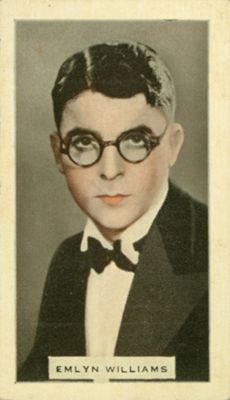
Middle class men seem to have found it a bit more difficult. According to his autobiography (Emlyn: An Early Autography, 1927-1935, long out of print) playwright and actor Emlyn Williams found it difficult to reconcile his feelings for men and women. According to Matt Houlbrook, middle class men were more likely to feel guilty about breaking their marriage vow. Being masculine, for middle class men, was more to intimacy and fidelity, rather than physical strength. EW came to London and had deep relationships with men but remained attracted to women. When his male lover died, he got a girlfriend but was still attracted to men. When another man let him down, he married his girlfriend.

Anyway, I loved this book and Matt Houlbrook – an academic at Liverpool university – has also written an interesting paper for anyone who wants to look at the role make-up played in gay men’s lives in the 1920s-30s.

Between the Acts

Some of this is fleshed out a bit more in the book Between the Acts. It’s the life stories of 12 gay men from the earliest years of the 20th century, who were interviewed during the late 1970s when many of them had become involved in the Campaign for Homosexual Equality. Several of them mention getting married themselves between the wars – with various degrees of success – but one, Sam (with the chapter heading The Dancer’s Life) also talks about being the boyfriend of (several) married men,
In one instance, Sam’s boyfriend’s wife is tolerant of, even happy about, their relationship. When she is about to give birth to her third child, Sam actually moves in to look after the family.
I love that anecdote. In history, in life stories, we get to know some of the complex real lives behind the simplistic stereotypes.

Wednesday, October 03, 2007

Shock news: men and women not from different planets

For the past three days, the Guardian has been running some very interesting excerpts here here and here from the new book by Oxford language professor Deborah Cameron.

In this book, The Myth of Mars and Venus, she is looking at how women and men do and don't communicate, and has discovered that really we are not so very different. But "men and women pretty much the same really" doesn't, as she rightly points out, sell books and get their authors on lucrative book tours and chat shows. She particularly has it in for the grand-daddy of the genre: Men are from Mars and Women are from Venus, by John Gray, which I won't link to because far too many people have copies already.

There are plenty more though: for instance, the fragrant Allan and Barbara Pease "internationally renowned experts in human relations and body language" have a whole slew of books with nonsense titles like Why Men Don't Listen and Women Can't Read Maps. Mr Pease gained this expertise as the youngest person in Australia to sell $1m of life assurance and Mrs Pease by modelling and selling advertising. Real experts, then.

How I hate these books. With their glib little catch-phrases, their wacky cartoons, and their ability to over-simplify the most complex arguments, they are an insult to the intelligence, and it always surprises me that people who seem to have triple-figure IQs believe them. “Men want power, achievement and sex. Women want relationships, stability and love,” they say. What all of them? Always?

Not, sadly, that all of those people talking about men and women being "hard-wired" are dimwits. In the first excerpt from her book, she discusses some who aren't. But they are still mistaken - perhaps in a similar way to Simon LeVay who, when looking for the "gay brain", was mistaken not least because he knowingly and deliberately ignored the fact that some men are bisexual. His initial hypothesis - men are gay or straight - was wrong.

Cameron has a political explanation as to why so many people are keen on these differences being "natural". As she says, people have never been less at the mercy of biology, or men and women less different from each other. However, much of this simplistic writing implies that - because differences are "natural" - we'd all be happier and less frustrated if we reverted to the way things used to be.
But things in the western world have changed so much in the past 100 years: even in the past 20, which they couldn't have done if the previous way of being was wholly natural. Men and women relate differently from when I was a young woman; expectations of how we should live our lives are radically different. Anyone with any sense of history or geography knows that gender expectations vary from from place and time. But those changes that do still exist seem more stubborn.

I think people like these pat explanations because they are easy. Because they don't have to struggle with their partners, because they don't have to make any changes; they don't have to think or challenge anything. Society, in the abstract, doesn't have to transform itself to take these changes into account. We can all go round complaining and tutting about the "opposite sex" as per usual.

Personally, I have also never bought into these man = A, woman = B divisions myself - I can read maps pretty well and have lived with men who iron far more than I do. I hate spending long periods of time chatting on the phone, and I am extremely self-sufficient. No doubt, to some people, I have a male brain. How would that tie in with my interest in the domestic arts, I wonder?

But if you like women, how can you like men?

So what has this to do with bisexuality? Several things in particular. If men and women are so very very different, then other people will perhaps find it impossible that one could be sexually or romantically attracted to both. (Although of course, the difference is precisely what some people like about being bisexual!)

Of course, there is also the all women are bi, no men are bi nonsense which I have written about before. That has a societal explanation too, but again, the "we are hard-wired to X" pops up again and again.

In sexual behaviour, the idea that men and women are very different dies hard. But in my 18 years' experience of interviewing many women about sexuality, and now interviewing men too, I would say that there are far greater differences within any group of women than between men and women. Some people need lots of sex with lots of different people lots of the time. Others are more or less celibate for ever. You can say that men or women tend to do something, but that's it.

These people who simplify sexual differences are likely to have similar views on homosexuality: the Peases, for instance. Headings in their books such as “Why gays and lesbians seem obsessed with sex” give a hint of their agenda. The answer to that question, in case you needed to know, is because men are men and lesbians have higher testosterone levels, making lesbians’ sex drive higher. But is it? Is it really? How do they know - have they done tests themselves? Has anyone ever done any research? I think not. And clearly they have never heard of lesbian bed death either.
So where does bisexuality fit into their world view? Apparently, the “mating centre” in the hypothalamus decides which sex we will be attracted to. In males it needs dosing in male hormones so they will be attracted to women; if insufficient, there will be a greater or lesser (bisexuals, I presume?) attraction to other men.

Hm. Twaddle. Who do you believe - an Oxford professor of language or a salesman and model? Complicated things made not too simple. Differences not so very different after all.

Monday, September 10, 2007

Divine decadence darling


Like a fair swathe of London last weekend, I had a brief “Sebastian Horsley experience” on Saturday.

I went to The Last Tuesday Society dinner and ball where the dandy/artist/writer addressed us as part of the launch of his book Dandy in the Underworld. Mr Horsley, His Royal Lowness, looked spectacular, wearing a sequinned suit that had to be one of the most gorgeous outfits I have ever seen - like black mirrored water. His famously stunning girlfriend and muse, Rachel 2, was indeed jaw-droppingly, hypnotically beautiful. (I wonder what it’s like to be a muse… do you have to actually do anything, or is doing something exactly what you mustn’t do?)

Anyway, SH has built up a bit of a reputation for himself as being the embodiment of decadence in a Baudelaire, Byron, Earl of Rochester, overdosing 60s pop star, “I have had sex with X-thousand prostitutes” and “my clothes are my art” kind of way. His main claim to fame, in so far as he has one, is being sacked as sex columnist of the Observer newspaper for answering questions about oral and anal sex a bit (lot) too graphically. (But they were the ones who published his answers. They could always have asked for a rewrite.) And the other was through crucifying himself (literally) in the Philippines in the name of art. He fell off.

The reason he’s appearing in this blog is because of his sexual behaviour. His notorious mention in his Observer column of: “I’ve buggered and been buggered by men and I’ve buggered and been buggered by women”. While being simultaneously homophobic and misogynistic, it seems. Still, for someone who writes as if he is appalled by practically everyone, he seems to have quite a few friends, many of them women or gay men.

Not many people can boast (the right word) of being having anal sex with a mass-murderer - the by-then reformed gangster Jimmy Boyle, apparently , like SH does. While Boyle was also having an affair with his wide. Lawks! And unrepentantly taking shedloads of drugs too.

This, then, is the polar opposite of the wholesome bisexual activist approach to bisexuality. It’s the “all life’s pleasures” approach – why wouldn’t you have sex with that gorgeous person? Why wouldn’t you try this that or the other sexual activity – it might be fun?

Certainly, dandyism - which is a growing scene in London at the moment, and one I certainly enjoy very much - has a homoerotic element to it, whatever the overt sexuality of the men who are involved. Personally, I love men who take an unusually close interest in their appearance and could look at them all day. It is possible to make yourself into a work of art: dandyism reminds me of one of my all-time heroes, Quentin Crisp, who certainly knew how to give good front and quip elegantly.


Earthy crunchy me

But I’m useless at decadence myself. If I do something even mildly naughty – such as not going to bed till 4am or getting drunk – it takes me several days to recover. When I had hospital-administered morphine I couldn't believe anyone would take it for fun. I live on salad, for heaven’s sake. I don’t mind observing it, though, from a pretty safe distance.

Not that I know what it is really - I read The Decadent Handbook without really being any the wiser about what decadence is. But I suppose sex and drugs and rock'n'roll, with a bit of added death-wish, probably covers it.
Obviously, a life solely consisting of self-destructive self-indulgence is actually pretty boring and empty. Not to mention short. Women never really get to be decadent, either. To be decadent, you need money, leisure, no children or other people to look after; people, preferably servants, to do the cleaning up for you. And perhaps that’s why decadence seems to be having a bit of a moment: because everyone in Britain now is expected to work so bloody, unrelentingly hard. To be career focussed and desperate to pay off the credit cards and the mortgage. To not smoke and only eat healthily and never take any risks we haven't paid good money for (white-water rafting, anyone?) Faced with the hamster-wheel of the modern world, it’s not surprising that people dream of drug-fuelled orgies – of which there were surprisingly few in The Decadent Handbook.

Of course, much of SH’s decadence is really a fantasy – in the Story of O sort of way. I had expected to feel at least queasy at his readings but SH, for all his claims of being the devil incarnate, or at any rate one of his henchmen, was very funny and seemingly self-deprecating. His book sounded very entertaining; his relationships quite sad and difficult.

I had intended to buy it and get him to sign it with some kind of lurid message. But by 2.30am, when I left the ball, he, his books, and Rachel 2, were long gone. Oh, I thought, they've gone off to put their feet up with a cup of cocoa. But no, nothing so cliched. They had changed into matching red sequinned outfits and gone to the second launch of the night - for his Soho exhibition Hookers, Dealers, Tailors.

Alas, like so many disappointed fans, I left with my innocence intact.

Friday, September 07, 2007

Further reading

Two reports on books on bisexuality today – not reviews exactly, rather some observations about them…

Look Both Ways: Bisexual Politics is by Jennifer Baumgardner. She’s prominent in the Third Wave feminist movement that seems to be quite lively in the US.

[On one British feminist mailing list I am on, come International Women’s Day, US feminists who happen to be in London always ask why they can’t find out what’s happening. Answer, always, comes there none: nothing is happening, that’s why. If there is anything it’s usually along the lines of “Businesswoman’s association tells you how to reach empowerment through setting up a highly profitable pampering organisation”. Which, to me, isn’t feminism at all. Of course, some sort of feminist movement does exist – see the Observer Woman section of the Observer newspaper section this Sunday (perhaps it will be online too, via www.guardian.co.uk) where a range of young feminists aged 19-26 talk about what they are doing. Heartening stuff. Still and all, feminism is in a lull before an inevitable storm comes up in the future. Politics goes in cycles, I believe.]

Look Both Ways is a memoir first and foremost – reminiscences about Baumgardner's own experience of bisexuality and how it has and hasn’t fitted in to her life and where it does and doesn’t fit into feminism. She also interviews some famous feminists of the 60s and 70s era to see how having relationships with women was seen and the impact it had on those feminists who had them. But her main argument, I suppose, is that young women these days are embracing a certain sort of light-hearted bisexuality as a positive way-station to being a complete person. Hmm… possibly. Some of them.

What it isn’t about is about bisexual politics. Although she mentions prominent bi activists Robyn Ochs and Lani Ka’ahumanu(both of whom are feminists who have edited books on bisexuality), and the organisation BiNet, she never once mentions the Bi community. I find that baffling… It seems as if she only perceives of the politics of bisexuality within the feminist movement. Indeed, she seems quite clear that there is no bi movement, even though she lives in New York City where I would have thought the most casual search would have found her a group.

Bi America: Myths, Truths and Struggles of an Invisible Community, by William Burleson, is the polar opposite of this – being only about the bi community – in particular in the Minneapolis-St Paul area where the writer lives. Indeed, it discusses exactly what it says on the cover. I just wonder about the many bi people who aren’t in that community: what do they think? “Bi people” and the “bi community” are not synonymous terms, even in the US. Of course, he does mention this, and mentions where else you might find bi people, what exactly the community consists of and where it’s going to. I suppose trying to find out what these “non-community” even more invisible bisexuals think is one of my own hobbyhorses. There’s a lot in here and it certainly would be a helpful book for someone coming out as bi or their loved ones who want to understand them.

These books are also both “very American” – relevant only up to a point to people who aren’t in the US. They’re both enjoyable, interesting and readable books, but they feel to me like they’re written about a very foreign country.

Thursday, January 18, 2007

On writing...

My partner asked me yesterday what I would write about if I didn't write about bisexuality. [I do write about other things, especially when I am paid to do so, but bear with me here...] He was partly being wistful, because no one ever got rich - or even enough money for a good holiday - by writing seriously about bisexuality. Although I did hear rumours about mega spondulicks going Marjorie Garber's way for the book Bisexuality and the Eroticism of Everyday Life. Still, she is a famous academic I suppose.

My main subject, what preoccupies me in both fiction and non-fiction, is "otherness". I don't mean in the academic sense of The Other, or indeed The Others that Nicole Kidman starred in, but otherness as in being an outsider.

Bisexuals are outsiders to both gay and straight worlds, never entirely accepted in either. I think it's true to say that we - and certainly me - feel that being bisexual gives you a view of the world that is unlike those of people who are only interested in one gender.

I am also interested in all sorts of other "outsiderness" but as bisexuality is the one that affects me most profoundly, it makes sense that I write about it.

But also, this blog is specifically about bisexuality because it is covered so rarely elsewhere. (Indeed, until Mercy (link) started her Bisexuality Revisited site recently, I don't think there was another non-personal bi blog out there at all.) At least, this gives me a way to disperse my ideas to the world at large.

Because of that, though, many readers will not know that I also write fiction - which was what obsessed me through my youth. Indeed I had a novel published by no less than Hutchinson. And may (you never know, fingers crossed) have another published by them. Even in this lifetime.

I write psychological thrillers - maybe slightly literary or experimental, perhaps a bit like Barbara Vine when she started. In my fiction, all my main characters bear the weight of their otherness - by not fitting in, by feeling they are on the borders of sanity, by experiencing the wrong sort of sexual desire or lack of desire at all, or simply by being outsiders. That all sounds very heavy, but I'm not sure it really is, except in the sense that psychological thrillers have to be. These characters are also often bisexual - although none of them ever uses the word - and not usually in a Good Role Model way. Often they are tormented by their desires. My interest is in making them three-dimensional, unique, plausible characters rather than having them as representatives of The Good Bisexual.

Still, bisexuality per se is not the focus of my fiction; distorted perceptions of reality, the harm (and good) people do to each other, a rattling tale - those are what I try to write.


I might post up some fiction here at some point. Otherwise, you can still buy my novel Death of the Family here.

Sunday, October 22, 2006

Sunday supplement

Bisexual-oriented things I've been seeing and doing this week...

Bookish things
At the House of Homosexual Culture's Lavender Library event yesterday, a range of writers were talking about LG books that had influenced them. It made me think about bisexual books that had influenced me. I've already posted about Kate Millett's book Flying. But there are many others too... I think KM turned me in the direction of the extraordinary novel Dusty Answer, written by Rosamund Lehmann and published in 1927. It seems that Virago republished it more recently. It's the story of a female student at Oxford who falls in love with a female fellow student, then her brother. A beautifully written coming-of-age story. Then there's Rubyfruit Jungle, which I can't remember much about but know it was hysterically funny, and The Color Purple - Alice Walker's masterpiece, a fantastically moving novel about an abused African American girl in the 1920s Deep South, who finds love and hope with her father's mistress.

Radio and Television things
Mark Oaten, the married Lib Dem MP who was outed earlier this year as having sex with male prostitutes was on Woman's Hour with his wife this week. It was entirely unenlightening. He said there were lots of reasons for his infidelity but he wasn't going to tell us what they are. His wife - who doesn't sound like she would stand for any nonsense - agreed that she was very angry but they were working things through. We are none the wiser. So what was the point of the piece?

The Dr Who spin-off for adults, with the gorgeous bisexual Captain Jack, starts tonight. BBC3 9pm in the UK. Probably coming to screens around the world shortly.

Webby things
Gert, on madmusingsofme, refers us to Ellie, who refers us to the rules for Fever Parties - very glamorous swinging events. They claim that 80% of women are bi, and 80% of men aren't. Hm. What's the guessing that 80% of respondents are lying?
Perhaps they funded this research themselves. Possibly they did extensive qualititative research on the comprehensively peer-reviewed. Or not. Gert's post on the subject is very interesting and offers food for thought.

My myspace page is up and running now. Seems like fun. My first three friends are all people I actually know, the next (Paloma Faith) a singer I like, then a woman who looks like the sort of person I'd like to know, then Stop The War. No need to ask about that one, surely? But one thing I do wonder: is Myspace anything other than an amusing way of wasting time? I am down as "bi" for my sexual orientation, but does this mean anything apart from being contacted by people wanting me to join swingers groups?

My first ever guest post is out now on Dave Hill's temporama. Very exciting! It's actually not about bisexuality, it's about England, but it was fun to do.

Monday, September 11, 2006

How Kate Millett turned me on

Or: bisexuals I never met, part one

In the autumn of 1976, I was an au pair in Paris. Dizzyingly lonely, harassed by men every time I set food outside the front door, pretty much centimeless (due to my own inability to negotiate - or mention even - the fact that I was expecting to get paid) I spent a lot of time hanging out at the Drugstore du Rond Point des Champs Elysees. It was a kind of bookshop/newsagents - probably more too, but that's what springs to mind - and there I clapped eyes on the book Flying, by Kate Millett.
Realistically, it was probably the fact that it was a book in English that made me notice it. Perhaps there was more. Perhaps I knew that she was an influential and controversial feminist thinker, author of Sexual Politics, but more probably that came later. I know why I spent day after day in that bookshop, with no money to pay for the book, just reading it standing there propped against the magazine shelves.
The clue is in the blurb on the back:
"Flying is her extraordinary, frank account of the tumultous period when both her book and her own acknowledged bi-sexuality [sic] outraged the public and triggered some of the most violent, far-reaching aspects of the women's movement."
That word, that one word, made me know I had to read it. And I wasn't disappointed. In this, her autobiography. KM - artist, writer, academic, intellectual, wife and lover of women - gives a fearless, naked in all senses, account of her life and loves up till that point (38). Her writing is extraordinarly vivid and personal; she does a lot, mixes with fascinating people at a fascinating time, but there's every sense that she is suffering too.
The book starts with a trip to London, where she recalls her sudden, unwanted rise to fame after the publication of Sexual Politics - an interview in Life magazine, on the cover of Time, being asked in public if she was a lesbian, the pain and guilt of hurting her religious mother.
Sexual Politics, after all, was essentially the first work of feminist literary analysis, and the mainstream was very keen to slap down the new women's movement. The book looked at misogyny in American literature, to illustrate how men in general use sex to degrade women. The work - and KM herself - were overtly against monogamy and the family. In the late 1960s, that was heretical to almost everyone.

Still true today
Unfortunately, some of what she writes is still quite true today: "The line goes, flexible as a fascist edict, that bisexuality is a cop-out. Yes, I said, yes I am a Lesbian. It was the last strength I had."
She was vilified as a result of this enforced coming out – by the heterosexual women's movement for being queer, by radical lesbians for not being enough of lesbian, by straight society for supposedly hating men. She can't, mustn't, write about sex. Just like now. See this post. Yup, I will repeat, women aren't allowed to talk about their sexual feelings and remain intellectuals of good standing.
More than that, though, what I found moving, and could relate to, were her struggles: to find love, to not feel rejected, to keep on creating - through a film of fairly consistent low-level depression and relentless introspection.
People are always talking about the need for role models and KM - wild woman, artist, bohemian - was the perfect role model for me. She was very consciously, openly bisexual. Feminism might have been going hell for leather in 1976, but not where I was and I certainly didn't know where to find it. But she did, she was doing all those things I wanted to do and be, in my tiny, solitary Parisian room.
I didn't meet any women in Paris, 1976. I didn't meet much of anybody: everyone (apart from the men who wanted a piece of my body) kept themselves to themselves, and I was too scared to go to a lesbian club although I walked up and down outside plenty of times. In fact, I couldn't wait to come home.
I finally bought the book myself in 1980 (I wrote the date inside) by which time I was officially a "practising bisexual". I also read some of the others: Sexual Politics (of course), Sita, the Basement, but it was Flying that really blew me away.

Where she is now
The 1980s and 1990s weren't particularly kind to Kate Millett: her influence faded and she had periods of serious mental illness, which she wrote about in The Loony Bin Trip. I was really pleased when I heard she was coming to London to give a talk in the 1990s but her mother was ill, and she never made it. The next time I heard of her, was in an article in the Guardian in 1998 - where she was apparently selling Christmas trees to make a living. Cue righteous shock about what happened to our feminist heroines; certainly from me. Apparently, though, this article - which she wrote - had all the wit and humour taken out by the editor and her life was not nearly as pitiful as it sounded. See here.
Lots of her books are available now, being reissued in 2000 after being out of print for years. The farm (where the Christmas trees came from) she bought in upstate New York with the proceeds of Sexual Politics is now a centre for women writers, artists and musicians around the world. KM herself conducts masterclasses in writing from time to time.
I was so pleased to read this when I did an internet search while doing this post. You can find out more about her by looking at her website
Thank you Kate Millett. You helped me become myself.