Bi The Way, a US documentary looking at attitudes to bisexuality in America, is finally coming to the UK. It will be at the London Lesbian and Gay Film Festival on March 30th and April 3rd. Online booking opens next Monday March 3rd, unless you are a BFI member when you can book by post now.
Now, no doubt this discussion will be very old news to people reading this who live in the US, where it has been blogged about ad nauseam – so what are your thoughts? Have you seen this film?
Because, although there is very little in the way of bi films out there (the first-ever bi doco at the LLGF as far as I can remember), this one doesn’t sound particularly entrancing.
Of course, any film/book/TV programme that is meant to represent an almost entirely unrepresented (in the sense of analysis, rather than 'phwoar') group can’t possibly win completely. But my hackles do rise when I read: "is bisexuality having a media fad or is the 'whatever' generation having its own sexual revolution"?
But, more than anything, it was the comprehensive shredding on it by the thoughtful blog Bi-Furious that makes me wary.
Anyway, ticket provision willing, I’ll be seeing it and reporting back.
Tuesday, February 24, 2009


Thursday, February 19, 2009
Falling in love with love

I had the first inklings that I was bisexual when I was about 10. My parents had gone to a school meeting and I had refused to go next door to be babysat.
Anyway, I was lying on my stomach watching one of the 1930s films you could see on the TV then. It was an operetta-style musical: it might have been Rose-Marie, or perhaps Maytime. But in any event it starred Jeanette MacDonald.
Oh I thought. Oh… that lady is so beautiful.
It was something to do with the way she sang, the way she held her head back and half-closed her eyes. Her eyelids were luminescent. Shiny eyeshadow, I imagine, although I didn’t know that then.
I thought there was something magic about her, transcendent, utterly unobtainable. And that was what I was looking for. That was what I felt for a little boy I had loved (silently) before. She cast a spell on me, with her eyelids and that clear, high voice. There was, too, the way she stared mysteriously at someone or something the audience couldn't see.
I saw another film of hers on the big screen a few months ago: Love Me Tonight. Damn, I thought, I was right. Jeanette MacDonald really was that gorgeous.
Tuesday, February 10, 2009
Is there a ‘bisexual’ in LGBT history month?
Well no, probably not. This February's UK-based yearly event is, as in all other years, probably entirely “b” free.
A trawl through the website (10% of the 367 events anyway, before I got bored) indicates nothing specifically bi. There are lots of events where bi people could well be included among all-encompassing “gay” events. But nothing to imply that bisexuality might have a history in and of itself.
Anyone who might think it does could do worse than look at the links to this blog’s history posts. I have listed them on the right of this page. History is my thing, you see (well one of them! I am bi, I have lots!).
The ever-active Jen Yockney posted on bimedia.org that there was just one event with a bi speaker. This happened last week – but on a Tuesday morning!
Who do I blame?
Well, not the organisers. They publicise the events, it seems, they don’t arrange or commission them. This is a great “month” to put on, regardless.
A society that thinks that bi people in the past were really gay? So therefore to see bi people separately is simply wrong? Possibly.
A bi community that has shrivelled away, so that putting on any events is asking a lot of a very small number of people? Not really.
It’s true, too, that lesbian and gay history (particularly gay men) is much more documented than bi history. It can (and often does, and certainly used to) take in anyone interested in same-sex.
So I am left with no one to vent my frustration on. Ideas, anyone?
Moving on
I kind of think this shouldn’t happen next year. There ought to be at least a few more events on bisexuality throughout the ages. So who would run it? Get money for speakers’ expenses? Any ideas? It would be interesting, no?
At any rate, I promise to do a few more bi history posts on here this month. I do, I really do.
PS I went on a work-sponsored “writing for the web” course today. And I am tailoring this piece accordingly. Can you tell the difference between this and what I have written before, dearest regular readers? This piece seems very tabloidesque to me.
A trawl through the website (10% of the 367 events anyway, before I got bored) indicates nothing specifically bi. There are lots of events where bi people could well be included among all-encompassing “gay” events. But nothing to imply that bisexuality might have a history in and of itself.
Anyone who might think it does could do worse than look at the links to this blog’s history posts. I have listed them on the right of this page. History is my thing, you see (well one of them! I am bi, I have lots!).
The ever-active Jen Yockney posted on bimedia.org that there was just one event with a bi speaker. This happened last week – but on a Tuesday morning!
Who do I blame?
Well, not the organisers. They publicise the events, it seems, they don’t arrange or commission them. This is a great “month” to put on, regardless.
A society that thinks that bi people in the past were really gay? So therefore to see bi people separately is simply wrong? Possibly.
A bi community that has shrivelled away, so that putting on any events is asking a lot of a very small number of people? Not really.
It’s true, too, that lesbian and gay history (particularly gay men) is much more documented than bi history. It can (and often does, and certainly used to) take in anyone interested in same-sex.
So I am left with no one to vent my frustration on. Ideas, anyone?
Moving on
I kind of think this shouldn’t happen next year. There ought to be at least a few more events on bisexuality throughout the ages. So who would run it? Get money for speakers’ expenses? Any ideas? It would be interesting, no?
At any rate, I promise to do a few more bi history posts on here this month. I do, I really do.
PS I went on a work-sponsored “writing for the web” course today. And I am tailoring this piece accordingly. Can you tell the difference between this and what I have written before, dearest regular readers? This piece seems very tabloidesque to me.
Tuesday, February 03, 2009
Bisexuals on YouTube
Of course – I don’t know why I didn’t think of it before: bisexual videos on YouTube. I mean, everything else is there: high school productions of Carousel; salsa bands from the early 70s; women showing you how to put your hair up in a retro style (although I failed to follow her instructions properly and ended up with a frizz); the new make-up correspondent for the Guardian; and lectures on this, that and the other.
So, naturally enough, there’s bi stuff. There are 36 bi “manifestos” - this, for instance.
Then there’s “the bisexual kid” who has posted a whole series of videos (maybe dozens) about being a bisexual teenager. This one’s about coming out. I am a bit nervous for The Kid – he’s clearly very young, and thousands of people have seen his YouTube vids. This one has 533 comments. Still, what he is doing is, I’m sure, really valuable for isolated kids his age. I just hope the creeps/psychos/homophobes don’t track him down.
What do you think? Is he too young to be doing this? Brave, or foolhardy? I feel kind of uncomfortable when I see the still from his video posted below.
At a rather different point in the age-range, a woman asked if she was “too old to come out at 46”. This seems to be a TV advice programme: Sound Advice with Marcia and Dr Rick.
Actually, I rather fancy doing a series of videos myself… We’ll see,
So, naturally enough, there’s bi stuff. There are 36 bi “manifestos” - this, for instance.
Then there’s “the bisexual kid” who has posted a whole series of videos (maybe dozens) about being a bisexual teenager. This one’s about coming out. I am a bit nervous for The Kid – he’s clearly very young, and thousands of people have seen his YouTube vids. This one has 533 comments. Still, what he is doing is, I’m sure, really valuable for isolated kids his age. I just hope the creeps/psychos/homophobes don’t track him down.
What do you think? Is he too young to be doing this? Brave, or foolhardy? I feel kind of uncomfortable when I see the still from his video posted below.
At a rather different point in the age-range, a woman asked if she was “too old to come out at 46”. This seems to be a TV advice programme: Sound Advice with Marcia and Dr Rick.
Actually, I rather fancy doing a series of videos myself… We’ll see,
Wednesday, January 28, 2009
Why you and I still need this bisexual blog
As they say in France: Jamais s’exprimer, jamais s’expliquer (roughly: never complain, never explain) and the past few posts here have been little more than complaints and explanations – well, enough already!
This is my 100th post on this blog, and the one that probably gets the most traffic is Ten Reasons You Need This Bisexual Blog, which makes me think: all is not yet well…
Two things strike me very forcefully through all the Google alerts I get (on bisexual, bi, bisexuality). One is that, for a few people – Queer, college/university attached, polyamorous, trans-friendly – bisexuality is nothing much. Sometimes, it can even be seen as regressive, stuck in the “two-genders only” norm. Coming out, for them, may not even be really necessary or appropriate. Being attracted to “men” or “women” is not expected. For the moment. While they’re in that environment.
The other is that there is still such a large group of people who say to themselves: I think I’m bisexual, help! Many people – often, but not only, teenagers; often, but not only, people who are not part of progressive communities, do not identify as queer, are in established relationships, do not know where their local lesbian or gay bar is (if any) – find being bisexual, or even thinking about it, very frightening. They think their whole world is going to fall apart, and they may be right. They have had criticism or rejection from people they have told and they wonder if anyone can help them. They need support now, but where do they go to find it? (Of course, nothing like all bi people fall into either of these groups, but you get my drift.)
Bi people, like all people, need validation, to know that they are OK, that there are others like them, that they deserve and can achieve, love. That’s why you still need this bisexual blog, and why I do too.
This is my 100th post on this blog, and the one that probably gets the most traffic is Ten Reasons You Need This Bisexual Blog, which makes me think: all is not yet well…
Two things strike me very forcefully through all the Google alerts I get (on bisexual, bi, bisexuality). One is that, for a few people – Queer, college/university attached, polyamorous, trans-friendly – bisexuality is nothing much. Sometimes, it can even be seen as regressive, stuck in the “two-genders only” norm. Coming out, for them, may not even be really necessary or appropriate. Being attracted to “men” or “women” is not expected. For the moment. While they’re in that environment.
The other is that there is still such a large group of people who say to themselves: I think I’m bisexual, help! Many people – often, but not only, teenagers; often, but not only, people who are not part of progressive communities, do not identify as queer, are in established relationships, do not know where their local lesbian or gay bar is (if any) – find being bisexual, or even thinking about it, very frightening. They think their whole world is going to fall apart, and they may be right. They have had criticism or rejection from people they have told and they wonder if anyone can help them. They need support now, but where do they go to find it? (Of course, nothing like all bi people fall into either of these groups, but you get my drift.)
Bi people, like all people, need validation, to know that they are OK, that there are others like them, that they deserve and can achieve, love. That’s why you still need this bisexual blog, and why I do too.
Monday, December 01, 2008
World Aids Day

There’s slow blogging, and there’s slow blogging – and I seem to be indulging in both. Not on purpose, mind. I’m too serious for the light and frothy, and can’t post thoughts without considering them first; and too stressed and overworked to post often. I mean, two and a half months since the last one! Ridiculous.
But this is World Aids Day, and even the most desultory bisexual blogger can’t let that pass without posting something.
I have been thinking a lot about the recent (to me) past over the past few weeks, as I have been unpacking and repacking the things that came from the loft in my old house and putting them in the loft in the new one.
In the late 80s and early 90s I was quite involved in the London queer scene (although its effect on my sexual and romantic life was negligible, as I was mainly attracted to Cuban New Yorkers at that time). It was a mixed gender place, this queer scene, with lots of lesbians having sex with gay men - flamboyant, energetic, challenging, experimental. We talked about safer sex a lot, and how to make it more exciting, but there was never a thought that it wasn’t an essential part of being a politically, sexually conscious person. That was still fashionable in those days.
So I’ve been looking at stacks of old magazines – Square Peg, Shebang, Quim – that came out of the arty gay scene in London at that time. Square Peg was mixed men and women, and arts-based with beautiful paper and production values. Shebang was a fun lesbian mag; Quim was an arty-lesbian sex mag. This seemed very daring at the time, but only lasted a couple of issues.
But the daring came from desperation about the queer future: the homophobia, the prejudice, the turning back to conventional morality because of Aids which affected women as well as men - although obviously men were the ones whose lives were at risk. The early 90s, when Quim was published, was also the aftermath of the lesbian sex wars, where what it meant to be a lesbian (not, definitely not, bisexual) was discussed endlessly and viciously. It was part of the end of "sisterhood" I think, but a mixed queer political scene - Act-Up, for instance - did thrive for a few years in the UK, and may still be going in the US. Then, of course, there was also the bi community which - from my perspective anyway - was going pretty well at that time.
Remembering People with Aids
Everyone who knew any queer people at that time was affected by Aids - and it baffles and infuriates me when I meet individuals today (either heterosexuals of any age who have lived sheltered lives, or young LBT people) who claim it has nothing to do with them. The first person I knew who died of Aids was in 1987 – but after that, circles of acquaintances went down like ninepins. I was lucky not to lose anyone really close but I still remember all those young men I went clubbing with in the early 80s who were dead 10 years later. It makes me absolutely fucking sick to think about it.
Of course, it’s different now – at least in countries where AZT is readily available. There’s a really nice picture gallery on the Guardian site, looking at various people around the world dealing with HIV/Aids in some way.
But it still gives me a chill when I see people all over the world who are still dying of this disease. Or when I read about young men in the UK who are having sex with each other completely unprotected, thinking that HIV is no big deal because they can take a pill. Think about it buster, taking a pill for your whole life, risking heart disease, tumours, a whole range of things neither you or I know about yet... The latest person I know (in Britain) to be diagnosed with HIV was in 2007, so this is by no means an old story.
In 2008, the necessity for this message hasn't changed a bit.

Thursday, September 18, 2008
Blogging for work
Long time, no post. But, as I said in my last entry here, I haven't forgotten you.
I've been madly busy. I've also been blogging as part of my day job. I don't usually talk here about how I make my living, but I don't think it does any harm. I am about as out as you can be, and as I have often said, there's nothing on this blog I wouldn't want my employer or my family to read.
So, yes, I was in Tanzania and then Bangladesh... If you're interested in developing world issues, you could take a look here at what I've been writing.
Nothing bisexual about it, though - unlike my next post. Whatever that will be.
I've been madly busy. I've also been blogging as part of my day job. I don't usually talk here about how I make my living, but I don't think it does any harm. I am about as out as you can be, and as I have often said, there's nothing on this blog I wouldn't want my employer or my family to read.
So, yes, I was in Tanzania and then Bangladesh... If you're interested in developing world issues, you could take a look here at what I've been writing.
Nothing bisexual about it, though - unlike my next post. Whatever that will be.
Sunday, August 10, 2008
Tearing my hair out

Life minus no time plus stress equals no blogging since July 27th. I haven't forgotten you. I'll write as soon as I can.
Sunday, July 27, 2008
There’s no such thing as abroad any more

You may have noticed that I’ve downloaded some of those cute little flags which you click on and your blog gets translated into another language. Japanese, on my screen, just comes out as little rectangles, but Arabic seems all present and correct and Portuguese I can almost understand.
Any blogger who checks their site stats knows that many of their readers don’t come from the country they live in themselves. Most, granted, probably come from the US wherever the writer comes from, but I would say – and I have before – that while 30-40% of readers come from North America, and about 15% from the UK, the rest come from absolutely anywhere. On earth, natch, although every now and then one of those no-fixed-abode satellite services makes me wonder.
So why oh why do so many US writers (bi ones included) write as if all their readers are coming from the US too. I find it tremendously off-putting. I mean, it’s not “this political season” for me; I’m very unsure as to what a 401(k) is, and I certainly don’t have one myself; and if a congressman has been misbehaving in a toilet (bathroom!) I have no idea what the specific ramifications might be. They write about a “we” that doesn’t include the rest of the world and include stats that only apply to the US without specifying that it is just one country out of c163… It is OK to write about just the US – of course it is – but in fairness to your readers who aren’t from there please make some reference to the fact that’s what you’re doing!
Anywhere and everywhere
Back to the “readers all over the world” tack… Of course, I am writing in this blog from the standpoint of a particular sort of conscious bisexuality. It’s often assumed by those well-schooled in such matters that consciously being bisexual is something that only happens in specific parts of the Western world, and only happens now. People might have felt or behaved bisexuality across time and place, but they wouldn’t have felt they were bisexual.
I think it’s more complicated than that. I have written a fair few posts on bis in Times Gone By (see history links, right)but there’s clearly some kind of self-conscious bisexuality going on around the world too. Otherwise, why would people from, say, Singapore and Saudi Arabia be reading this blog.
Now, of course there are places across the world where sex is treated spectacularly differently than the West: Oman, for instance, where you need to be married to consent to sex; or all those countries where sex between men is illegal and subject to terrible punishments – even death. Not to mention the many many places where men have a degree of freedom undreamed of by women.
Different lives
There are many places where men and women’s lives are so completely separate that I would have thought some form of bisex was probably inevitable. I organised a London bi conference in 1991 where a man from a North African country gave a talk about how prevalent sex between men was there. Someone asked him if women in his country had sex with each other, and he said no. The two Arabic women there rolled their eyes at each other. Well, I suppose that if the sexes were completely divided, then he wouldn’t know, would he?
Given that everyone with an internet connection can be exposed – at least in theory - to all sorts of ideas from absolutely everywhere, there’s no reason people from Romania shouldn’t think about the sort of bisexual a New Yorker might be, or a Tanzanian read about what Sydney bisexuals are up to. And vice versa.
Geographical differences
Of course, there are still geographical differences. For instance, when I visited the Philippines (for work, not on holiday) a few years I was totally flummoxed by the number of open and not-passing male to female transsexuals who worked in the sexual health field, talking to born women about family planning and sexually transmitted infections. They seemed to be accepted as women, but as somehow wiser.
Alongside these people who were queer in a culturally specific way, there were also queers who had been more influenced by western ideas of being gay. So we also met gay men and (one) lesbian who saw themselves in that way. The gay men didn’t like bisexuals: more exactly, their experience had been with those cheating married men who couldn’t understand why any man would not want to have sex with women too and considered gay men as Not Real Men. Well, I don’t like them either.
It did make me think, though, that the world is in a state of flux, with western and non-western ways of sexuality co-existing in interesting ways.
Anyway, now that I’ve done the flags, it’s time to update my blogroll next… Getting on for half of those lovelies gave up the ghost yonks ago but you’re still clicking on them! Time to give some new ones a chance.
Wednesday, July 09, 2008
Bisexual woman to be deported to Nigeria
Gay people who have sought asylum in the UK because of their sexuality (most recently this young Iranian man whose lover was murdered by the state) often have to fight really hard to convince the authorities of their need for sanctuary. Thank God he was eventually allowed to stay; often they are sent back to – at the very least – danger.
Jane Okojie’s case in Canada – as reported below on the queer Canadian website Xtra – is the first time I have heard of a bisexual person seeking asylum. Perhaps it will make those people who think bisexuality is a doddle think again. Sadly, in the UK at least, even imminent risk of death doesn't always mean you are safe.
There’s more here:
Good luck Jane. Nigeria sounds a tough place to be queer. Will someone let me know how she has got on?
Jane Okojie’s case in Canada – as reported below on the queer Canadian website Xtra – is the first time I have heard of a bisexual person seeking asylum. Perhaps it will make those people who think bisexuality is a doddle think again. Sadly, in the UK at least, even imminent risk of death doesn't always mean you are safe.
Time is running out for a bisexual woman who has been denied refugee status in Canada. Jane Okojie is scheduled to be deported to Nigeria on Thu, Jul 10 where she says she and her two children will face persecution because of her bisexuality.
"I don't know what to do," says Okojie. "I am more afraid for my children than for myself. There are so many things going on in my head, I cannot think properly."
"She's very scared," says Nastaran Roushan of the immigrant and refugee rights group No One Is Illegal, which is holding a rally in support of Okojie on Tue, Jul 8 at 11am in front of the offices of Citizenship and Immigration Canada (Toronto, 50 St Clair Ave E). "She fears for her life. If she goes back with her children, she has no one there. Her family has shunned her because she is bisexual. She doesn't have any money and nowhere to go. If she's arrested [her children] will be without a mother. They'll already face extreme discrimination because they were both born out of wedlock, and in fact, Samuel has already endured a lot of harassment while growing up there."
A victim of sexual violence and domestic abuse in her home country, Okojie says she fled Nigeria after being beaten by locals in her village and detained in prison after it was discovered she was bisexual.
"In Nigeria things are very bad for lesbians and gay people," says Okojie. "If you are a bisexual or lesbian or gay you can be stoned to death and you can be sentenced to prison for many many years. The government doesn't care."
There’s more here:
Good luck Jane. Nigeria sounds a tough place to be queer. Will someone let me know how she has got on?
Wednesday, July 02, 2008
This blog is two today

Today this blog celebrates its second birthday. Yes, with this very post and my musings on that year’s Europride, I opened what is the longest-lasting bisexual blog in the known universe.
Whither blogs – will they wither and where are they going – is something that often bothers media pundits. Last week Roy Greenslade sparked off a discussion, commented on mostly by journalists whose opinions ran along the continuum of: a) journalism is great, blogs are white noise; b) blogs are the future, journalists have to have one, ordinary people are empowered etc; c) blogs are great, mainstream journalism is rubbish. However, as one commenter pointed out, the comments were far more interesting than the piece itself.
Good blogs, bad blogs
My own position is quite straightforward: blogs can be great, and the internet offers writers terrific opportunities to get their work to readers. Journalists who believe – as many do – that they can’t see the point of blogging, or don't recognise that it is a terrific tool for self-promotion, or say that they don’t want to write for nothing – are missing a career-building trick. What the mainstream media offers readers, and what blogging offers the mainstream media, is complementary.
It’s not true, though, that all blogs are equal. To start with, most bloggers give up pretty quickly. And writing every day – standard advice for building up a readership – means that pretty soon people are writing about nothing much. Unless they are brilliant writers – a few are – that means the quality goes down. In any event, there is too much to read on the internet, together with books, newspapers, magazines etc. I don’t suppose I’m the only one who just can’t keep up with people who blog every day.
What this blog is for
As I have written here from time to time, I am a journalist (editing more than writing) but what pays me money is nothing to do with what I write here. If anyone ever wanted serious writing on bisexuality then I’m your woman. But, as one of the reasons I started writing this blog in the first place was because my commissioned book on bisexuality couldn’t find a home after its original publisher closed down, I doubt that semi-serious writing on bisex – as distinct from erotica, or trivia, or straightforward academic books - in the UK can pay its way. Not everything can be monetised. As the profit motive in publishing is more important than ever, and booksellers sell ever fewer titles, the prospect for what is euphemistically called “mid-list” writers dims.
Still, onwards and upwards, and those of us who have things to say have a way of getting them out there. I doubt whether my musings that were produced via the dead tree route ever saw the light of day in Indonesia, or Nepal, or Western Samoa – which they have through the web.
This blog is a niche “product”, for people who are interested in the issues around bi/sexuality rather than erotic stories, coming out tales, complaints about boyfriends/girlfriends, polls about what turns you on and so forth. All of those most definitely have their place, just not written by me. They are also more popular than what I write.
Still, as over 101,000 people have read this blog since I started, there must be a demand for it. Thank you, readers!
Friday, June 27, 2008
Casanova a "brainy bisexual"

The 18th century randy man may have loved the ladies (130 of them it seems, which is practically celibate by writer Georges Simenon’s standards) but he was also partial to the odd gentleman. And he wrote a book or two.
It’s all explained on this link, which discusses Ian Kelly’s new biography of him.
Thursday, June 26, 2008
Royals in messy relationships shock

I don’t know if any British readers saw last night’s mind-boggling TV programme on the marriage of Princess Margaret and Lord Snowdon. There’s more here.
Dearie me, what a mess their marriage was, principally due to his inability to keep his trousers on. To say he had an eye for the ladies was an understatement – he had two eyes for the ladies, and a couple in the back of his head as well by the sound of it. He probably still has all those eyes: he doesn’t sound as though age (78) is likely to wither him. And while a certain amount of open-marriage, swinging-sixties-ness was perfectly fine by both of them, he essentially treated PM horribly – abandoning her at parties, making her cry on the shoulders of semi-strangers, being very unhappy when she found lovers of her own.
It seems there are also “persistent rumours” that he “refuses to deny” that he is bisexual! Apparently when they first met, PM thought he was gay. Many of his social circle were gay or bi men, and viewers were lucky enough to see the photo of a young male Snowden in drag?!? His closest male friend – Jeremy Fry - was openly bisexual and had been done for importuning (ie trying to pick up men for sex). This apparently stopped Fry being best man at the wedding (which you will note is not mentioned in his obituary)! Snowdon also had an affair with (Mrs) Camilla Fry, and fathered her daughter Polly.
These are Mr and Mrs Fry…

Fascinating stuff – and this is from me, who finds the royals usually very yawnsome. Perhaps you can see it via the Channel Four look again thingy?
And weren’t there also rumours that she was bi? Lawks, those royals!
Wednesday, June 18, 2008
Gay brains again

Another week, another study on how men’s and women’s, and gay and straight people’s brains are oh so different….
According to this report, gay men and straight women apparently performed better at certain language tasks. Lesbians and straight men had better spatial awareness. Etc. There’s more about it on the link above.
Now then, now then…
It seems that what you make of this study (of 90 people, so of course it can be translated to everyone in the world?!?) depends on what you already believe. So: it might mean that, as evolutionary biologist Dr Qazi Rahman says on the BBC site “As far as I’m concerned, there is no argument any more – if you are gay, you are born gay.”
Well, I’m not an evolutionary biologist, or indeed any kind of scientist, but it seems to me that there are still plenty of arguments to be had. Indeed, that there are gaping holes in this kind of research.
Now, in the aftermath of plagiarist psychiatrist Raj Persaud, I would like to announce that I have not necessarily thought up all these ideas on my ownsome: they have come as a result of reading various sites and blogs, such as this and this.
Problem one is that people doing these studies have such a dichotomous view of sexuality – categorically and forever straight or categorically and forever gay (although may take some time to realise this) – that they overlook the many subtleties that even people who don’t like out and proud bisexuality can agree exist.
For instance:
* How do these researchers define straight or gay? Is it the relationship the person is in? Is it self-identification? Or what?
* Just say that you accept the idea that the brains of gay and straight people differ. Is this a cause or an effect of their being gay/straight? Might their brains change back again if they behave in ways that aren’t gay/straight? (Only partly a joke.)
* But of course my main objection to this sort of study is that they divide everyone absolutely definitely and forever into heterosexual or homosexual. The most casual glance around the world shows that many people are at least on some kind of continuum between straight and gay. What happens to those people who are gay when they are young and straight when they are older? Are “situationally gay” – say in prison?
* And of course, that’s not to mention all of us who actually ARE bisexual.
You picks your scientists, you takes your choice
Problem two. It is interesting to look at this research in the light of the study by US psychologist Lisa Diamond – whose book haven’t read yet but which is currently mentioned a lot on the internet as she’s been in a film I also haven’t seen called Bi the Way. She says that women’s sexuality (not all women; some) is fluid – meaning geared towards individuals, rather than men or women. She’s not the only one of course, Michael Bailey – mentioned disapprovingly elsewhere on this blog – did research showing something similar. So if the way straight and lesbian women feel desire is extremely similar (more Bailey’s view than Diamond’s and something I certainly don’t believe) then there’s an interesting conflict here: how do this other group of scientists decide which women are definitively straight or lesbian?
Butch and femme brains
Problem three. They also seem to be – I say seem, because I haven’t read the original document – to be conflating sexual orientation with gender expression here. Gay men = straight women. Lesbian woman = straight man. This reminds me of the old-fashioned and simply untrue view that if you are a camp or effeminate man, then you have to be gay.
There are lots of online “is your brain male or female” quizzes. I remember I did one and came out as having an absolutely androgynous brain. Well, I hope I am empathetic towards others but I’m not keen on endless phone chatting; like dressing up (stereotypically female) and am fairly “visually stimulated” – ie I like looking at attractive people like straight men seem to. Does this really mean I am born to be bi?
Of the two heterosexual men (my son and my partner) with whom I am in close contact, one loves ironing, the other loves chatting on the phone, and both shrieked with terror at a huge bee which I had to shoo out of an open window. I hate ironing and am quite good at map-reading. Perhaps I am “hard-wired” to be bisexual then?
Born which way?
When I have written about “gay brains” before, some people have commented on this site that they knew they were bi from a young age, that it felt natural to them, that therefore they were “born that way”. Nevertheless, just because something feels innate, doesn’t mean it is. It doesn’t mean it isn’t, either. Personally I don't think it matters in the least but many people strongly disagree.
Another scientific report was published today about cancer and how one man’s illness was treated using his own immune cells. The researchers there are “cautiously optimistic”. Why aren’t researchers into the “causes” of sexuality ever similarly cautious about their results?
Tuesday, May 27, 2008
Celebs gone wild again. Yawn

Word has reached me that Lindsay Lohan – she of Mean Girls, Freaky Friday, that film with the stock car Beetle, and other items of crap - has been spotted at Cannes canoodling with her “best friend” Samantha Ronson. See here, here and here for sundry nonsense, confirming and denying that they are and aren’t in a relationship.
Of course, I don’t really know whether or not their relationship is genuine (it seems that it might be; in any case, Samantha Ronson is apparently a lesbian) as distinct from the publicity-seeking, girl-on-girl-action type of bisexuality that I detest. So what might be behind all this? Has Lohan got a film out or anything? Or is her problem that she hasn’t got a film out?
Then again, it seems she fits in to another celebrity stereotype: “they said that I should go to rehab, I said No No No.” Stealing fur coats? Unwise sex videos? General out of control behaviour?
Why not try snogging some girls? That’s really naughty! That’ll get you in the tabloids. People will be talking about you, noticing you, again. Cue three types of reaction: 1) that’s hot (or, for some reason, hott). 2) that’s disgusting. 3) that’s sweet, you leave her alone.
Hmm, I haven’t blogged about bi-girl celebs for a while and it makes me feel a bit… dirty. This post isn’t very edifying, is it? Then again, because of this rather sweet pic some people who wouldn’t see this blog otherwise will hit on it and might find something to make them think about bisex a little bit differently. It has happened.
Thursday, May 15, 2008
Girls [sic] on film

I know it’s not being released for another 10 days or so, but – in the opposite of my usual procrastination - why not get in early? Yes, it’s my very own Sex and the City post. While I fully realise that not everyone has to have one, urban women all over the world (probably) will be writing about it because they related to the TV series and, now, the film. It certainly speaks to me and, yes, there’s even a bi angle!
I wasn’t an “early adopter”. When I first saw an episode of SATC, I felt completely alienated by the fact that all they did was talk about men. But soon (very soon) I began to appreciate their escapades and their relationships. There was something actually believable about the characters… and although they seem to have preposterous amounts of money (I have met the owner of a PR agency, a media lawyer, and many journalists, none of whom were anything like SATC wealthy) I could relate to them.
Yes, I did like looking at the clothes. Even when the SATC gang were wearing preposterous nonsense, it was still interesting. And yes, why I ended up liking it after all was the reason that other female commentators have said: it foregrounded female characters (still unusual); talked about sexuality in an unprecedently open and truthful way; and presented friendship between women as the most important and stable thing in their lives (although where such busy women got the time to meet so often, God knows).
Bisex in the city
In SATC – the TV series - bisexuality in some shape or form appeared quite a lot, if ambivalently. As an aide-memoire to anyone else who watched it:
In one episode Samantha is asked by a gay male couple if she will have sex with them and she agrees. However, half-way through sex they chicken out, disgusted.
Across another few episodes, Samantha - the most sexually adventurous character - actually has a relationship with a woman, but it ends after she puts her back out using an inadequately harnessed dildo. (I mean really, anyone looking at that dildo could tell it wouldn’t work properly!)
Carrie meets some younger people - including a character played by Alanis Morissette - who actually identify as bi, but backs off from dating a bi man.
Then there is the very ambivalent - in many senses - episode where camp cabaret singer Bobby Fine marries Betsy von Mufling. The SATC quartet presume he’s totally gay, so why are the two marrying each other? At the end of the episode, Bobby tells Carrie that he really does love Betsy while the melancholic song “Is that all there is” plays in the background. But in a subsequent episode, a heavily pregnant, extremely happy Betsy turns up, her husband seemingly as camp as ever as he wants to name their daughter Barbra or Judy.
Who knows whether there is any bisex in this film (I would hazard a guess as to not), or indeed whether it will be terrific or a pile of poo.
Cynthia Nixon
/CynthiaNixon(Countess).jpg)
Then of course there’s a real-life bisexual storyline, the I’d-count-as-bisexual Cynthia Nixon (Miranda Hobbs in SATC) who is now several years into a relationship with a woman she plans to marry.
This is the first, and I fully expect the last, time I have ever used that right-wing rag The Daily Mail on this blog, but credit where it’s due I suppose. There’s a long article about her and her gf Christine Marinoni here, and even the comments are nice!
They quote her as saying:
“In terms of my sexual orientation, I don't really feel that I changed," she says. "I don't feel any different than I did before. I don't feel like there was some hidden part of myself that I wasn't aware of.
"I had been with men all my life and I had never met a woman I had fallen in love with before. But when I did it didn't seem so strange.
"I don't define myself. I'm just a woman in love with another woman."
Aaah!
Friday, May 09, 2008
Women not-loving women
Someone commented somewhere on this blog that one of the things they liked about it was that I wasn’t a “cheerleader” for bisexuality. True. I’m not really a cheerleadery type of person – sceptic, I think is about right, although common sense, or down to earth probably covers it. Some people, including me, are bi. Here are a few things we might find important / interesting / relevant, and here are some other ways in which people aren't giving us our due. And that's about it.
However, I wish, I wish, I wish, that so much of the writing on bisex I am sent through my Google Alerts wasn’t from young bi women getting a tough deal from lesbians. It makes me wonder what has changed since the 80s. Well, obviously, a lot has changed but it seems not enough.
These days I get no personal flack at all from lesbians, but then I am 51 and very much out. I have been bi for so long that no one is going to tell me I can’t be, or that I’m really a lesbian, or that anything I do is for the benefit of men. I'd probably burst out laughing. Any argument they throw at me, I can throw back at them. But anyway, any new lesbians I meet are usually interested, rather than hostile. Of course, that wasn't always the case, and I have had my fair share of blanking / looks of disgust / losing friends / not getting lovers / horrible comments as I hear about now.
(Just to make things clear, I know that lesbians do get a raw deal in society at large. What's more, if I were (and when I have been) after a committed relationship with a woman I would be really unhappy if she were to treat it as something trivial. But what about taking people as you find them? Not judging them before you even meet? Imagining that it might be possible for lesbians to treat bi women badly as well as the other way round?)
For myself, I would go along with a woman I interviewed once who said: "Why on earth would I be interested in them, if they aren't interested in me?" Dr Sue says best leave anti-bi lesbians to their own devices when it comes to being friends/lovers, and find some nice bi women instead.
These days if I get any bad responses they are from heterosexuals (although not a lot of them really – most I meet are nice!). And it is those respectable, polite, middle-class people whose look of disgust and response of silence gives away their real feelings.
It's heterosexual society, not individual lesbians, who have power over bi women. Individual lesbians can make your life miserable, sure, but they can't take away your kids.
However, I wish, I wish, I wish, that so much of the writing on bisex I am sent through my Google Alerts wasn’t from young bi women getting a tough deal from lesbians. It makes me wonder what has changed since the 80s. Well, obviously, a lot has changed but it seems not enough.
These days I get no personal flack at all from lesbians, but then I am 51 and very much out. I have been bi for so long that no one is going to tell me I can’t be, or that I’m really a lesbian, or that anything I do is for the benefit of men. I'd probably burst out laughing. Any argument they throw at me, I can throw back at them. But anyway, any new lesbians I meet are usually interested, rather than hostile. Of course, that wasn't always the case, and I have had my fair share of blanking / looks of disgust / losing friends / not getting lovers / horrible comments as I hear about now.
(Just to make things clear, I know that lesbians do get a raw deal in society at large. What's more, if I were (and when I have been) after a committed relationship with a woman I would be really unhappy if she were to treat it as something trivial. But what about taking people as you find them? Not judging them before you even meet? Imagining that it might be possible for lesbians to treat bi women badly as well as the other way round?)
For myself, I would go along with a woman I interviewed once who said: "Why on earth would I be interested in them, if they aren't interested in me?" Dr Sue says best leave anti-bi lesbians to their own devices when it comes to being friends/lovers, and find some nice bi women instead.
These days if I get any bad responses they are from heterosexuals (although not a lot of them really – most I meet are nice!). And it is those respectable, polite, middle-class people whose look of disgust and response of silence gives away their real feelings.
It's heterosexual society, not individual lesbians, who have power over bi women. Individual lesbians can make your life miserable, sure, but they can't take away your kids.
Monday, April 28, 2008
Two words joined together
I’ve been reading through some notes I wrote once about bisexuality in the media. It’s about the pernicious effects of the casual use of “bisexual” linking it with every sort of misbehaviour and perversion.
Reading below, do you recognise anything similar now, and/or where you are?
This is a random sample from the non-tabloid UK press of around the recent past, including (gulp!) the Guardian.
* Bessie Smith was a “heavy-drinking bisexual”.
* A character in the documentary film Capturing the Friedmans was “bisexual and had paedophilic desires”.
* Painter Christopher Wood was a “troubled, bisexual opium addict”.
* Suzanne Watkins, a “bisexual mother of two… pleaded guilty to two counts of sex with underage boys and child abduction”.
And
“Bisexual Maria Hnatiuk … murdered 18-year-old Rachael Lean in a knife attack.”
Given that, is it any wonder that so many people don’t want to call themselves bisexual?
Progressive papers these days would think very hard about twinning the words “gay” or “lesbian” with “murderer” or “drug addict”. I don’t say it never happens, but I don’t remember it and there would certainly be protests. And even the Daily Mail wouldn’t call singer Amy Winehouse a “troubled, heterosexual drug addict”.
Maybe it’s time that, say, peace campaigners or sports personalities loved by millions declared that they were bi. Let's have the word "bisexual" twinned with some good things instead of bad.
Reading below, do you recognise anything similar now, and/or where you are?
This is a random sample from the non-tabloid UK press of around the recent past, including (gulp!) the Guardian.
* Bessie Smith was a “heavy-drinking bisexual”.
* A character in the documentary film Capturing the Friedmans was “bisexual and had paedophilic desires”.
* Painter Christopher Wood was a “troubled, bisexual opium addict”.
* Suzanne Watkins, a “bisexual mother of two… pleaded guilty to two counts of sex with underage boys and child abduction”.
And
“Bisexual Maria Hnatiuk … murdered 18-year-old Rachael Lean in a knife attack.”
Given that, is it any wonder that so many people don’t want to call themselves bisexual?
Progressive papers these days would think very hard about twinning the words “gay” or “lesbian” with “murderer” or “drug addict”. I don’t say it never happens, but I don’t remember it and there would certainly be protests. And even the Daily Mail wouldn’t call singer Amy Winehouse a “troubled, heterosexual drug addict”.
Maybe it’s time that, say, peace campaigners or sports personalities loved by millions declared that they were bi. Let's have the word "bisexual" twinned with some good things instead of bad.
Tuesday, April 22, 2008
I haven't met... Concha Buika
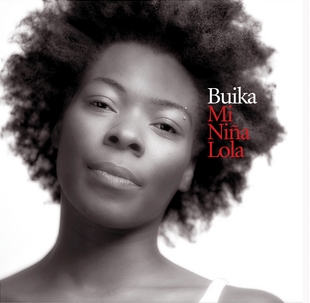
I think I’m going to start a new category on this blog: Bisexuals I haven’t met yet. Not celebrities – I mean, I have no expectation of, or interest in, meeting Angelina Jolie. Nor Bisexuals I have Met (ie famous bis I once bumped into somehow, now dead) or Never Met (famous, dead, and therefore not going to meet me this side of paradise).
However, there are some well-known bis – Alice Walker and her estranged daughter Rebecca; Saffron Burrows; Skin; David Walliams; Alan Cummings – that I could conceivably interview or something… And to start this off, someone you have probably not heard of unless you are from a Spanish-speaking country: Concha Buika.
Who is...
Concha Buika is a Spanish singer, originally from Equatorial Guinea. Aged 35, she sings a mix of latin-influenced jazz and soul and seems to be pretty well-known in Spanish-speaking countries.
I heard about her quite by accident through a music review in the Guardian about six weeks ago (mysteriously not available on the website) as an exponent of New Flamenco music.
There was also a snippet about her private life… apparently, she is married to a man and then met a woman who both she and her husband subsequently married in a three-way wedding. They all split, and she is bloodied but unbowed. According to Pop Matters
“I do what I do, and I’m not doing anything that other human beings haven’t done. All human beings are more or less the same. A lot of people don’t dare do things, but they think about them. People hide something bad. I haven’t done anything bad, so I don’t have any reason to hide it. What rule is there that two people can’t love a third person?”
Good for her. Perhaps her tremendous spirit is due to the fact that, with parents political exiles from Equatorial Guinea, she was part of the only black family on Majorca, and had to fight the racism that resulted. Then she went to Las Vegas as a Tina Turner impersonator. Well, whatever, her voice is beautiful and I’m glad I found her.
Her MySpace page describes her music as Latin / Lounge / Funk, which in my limited knowledge describes her work a bit more accurately than New Flamenco.
Anyway, here are a couple of YouTube videos of her.
This – the New AfroSpanish Collective - is a bit salsa-y and boppy:
Whereas this one - Mi Nina Lola - is slow and poignant:
Thursday, April 17, 2008
Bis thriving in Australia
Often, I worry that I come across as a bit miserabilist. Well – not this time. Because thanks to a commenter on my last post, I’ve been reading Thriving as a Bisexual or Queer Woman: Tips on how to flourish.
A great antidote to all the (sadly true) stuff about bis having bad mental health etc, this booklet does exactly what it says on the cover and tells you how a range of Australian women who identify as bi or queer are thoroughly enjoying life.
According to the 20 women interviewed by Mary Heath and Ea Mulligan, having a network of close, bi-accepting open-minded friends, involvement in bi groups and organisations, involvement in a bi community, coming out, personal strength and honesty, living passionately, and (for most) having a sense of spirituality, were important to thriving. Makes sense, really.
Elsewhere in the world?
I did propose to a publisher once that I write a book called something like How To Be a Happy Bisexual. She “wasn’t sure how it would work” (different, yet somehow similar, to “there isn’t a market for it”). Not enough money to be made, no doubt.
This, though, is original research that seems to have been funded by the Australian Lesbian Medical Association (Wow! Do similar associations exist elsewhere in the world? That can give funding?) and Flinders university in Adelaide. You can download it as a pdf and it doesn’t cost you a penny. In its layout and design, it looks bright and positive too, so you get the message that way as well.
Lucky, lucky Aussies. I think perhaps it is a society where the things enabling you to thrive are easier to get than they are elsewhere. But I’m sure those of us in the rest of the world (and those who aren’t women too) can learn a lot from this. Download it, it really is inspirational.
A great antidote to all the (sadly true) stuff about bis having bad mental health etc, this booklet does exactly what it says on the cover and tells you how a range of Australian women who identify as bi or queer are thoroughly enjoying life.
According to the 20 women interviewed by Mary Heath and Ea Mulligan, having a network of close, bi-accepting open-minded friends, involvement in bi groups and organisations, involvement in a bi community, coming out, personal strength and honesty, living passionately, and (for most) having a sense of spirituality, were important to thriving. Makes sense, really.
Elsewhere in the world?
I did propose to a publisher once that I write a book called something like How To Be a Happy Bisexual. She “wasn’t sure how it would work” (different, yet somehow similar, to “there isn’t a market for it”). Not enough money to be made, no doubt.
This, though, is original research that seems to have been funded by the Australian Lesbian Medical Association (Wow! Do similar associations exist elsewhere in the world? That can give funding?) and Flinders university in Adelaide. You can download it as a pdf and it doesn’t cost you a penny. In its layout and design, it looks bright and positive too, so you get the message that way as well.
Lucky, lucky Aussies. I think perhaps it is a society where the things enabling you to thrive are easier to get than they are elsewhere. But I’m sure those of us in the rest of the world (and those who aren’t women too) can learn a lot from this. Download it, it really is inspirational.
Subscribe to:
Comments (Atom)