No, not a description of life as we know it now but an absolutely fantastic
book that I have been reading. Queer London, by Matt Houlbrook, is about gay life from 1918 – when the first world war ended – to 1957, and the publication of the
Wolfenden Report, which recommended that sex between men in England and Wales should no longer be a crime. Life in London, obviously, and between men – slightly less obviously. Things were rather different for women, so that’s another book – in fact, one that I am reading now – and blog post.
It was a very mixed picture for gay men in London at that time. For instance, in the 20s and 30s, there was quite an active gay pub, club and café scene, with lots of cottages (at that time, old-fashioned metal pissoirs that were in the middle of the street) where men could pick each other up. For most of that time, too, there were four or more Turkish baths where you could be steamy in several senses.
But of course, having sex with another man was illegal and from time to time there were clamp-downs. Clubs would get raided and cottaging individuals would be targeted by agent-provocateur style “pretty policemen”. (Pretty policemen were still operating until at least the 1980s, as I remember.) Men who were caught faced prison and subsequent ruin.
Homophobia was rampant – as
Quentin Crisp, above (probably in the 1930s) testified. But not everyone experienced homophobia in the same way, and many gay men were in great demand as entertainers. Fine if you were amusing, I suppose, not so great if your bent was in the sphere of road digging or accountancy.
Bi menOne of the most fascinating things for me about this book was to look at how sexual identity, and the categorical division between straight and gay men, has developed. Boy, oh boy, were things different then – probably until the 1950s, when being “masculine” started to preclude having sex with men.
So while there were men who were only interested in having romance or sex with men, there were many other men who were quite happy to do so some of the time.
For instance, there were young men (especially but not only working class) coming to London and mixing in same-sex environments where women were not available. They often had homosex and sometimes romantic relationships with each other too. Then, when they decided it was time to marry, they got a girlfriend, married her, and generally speaking said to themselves: on to the next part of my life now. Sometimes/often, they remained close friends with their male ex-partners who were doing the same.
Sometimes there was a financial involvement in this. For instance, people like gay writer
Christopher Isherwood (in his case in Berlin in the late 1920s-early 1930s) had boyfriends who were romantically and sexually involved with them, and kept by them, Then, in their mid or late 20s the boyfriends got married. In neither of these cases did they seem to be “turning their backs” on their “gay pasts” and saying it was a mistake and they were really straight after all. It was much more of a moving between gay and straight behaviours.
There were other young men who were primarily into girls but unabashed about the fact that they would have sex with another boy if girls were not available. As one said: “I had sex with a brown-hatter last night for a laugh”. There was no sense of losing face or masculinity by doing so. Straight men, on the other hand, were often seen by men who were committedly gay as “trade” or TBH (to be had). Or indeed Naff (not available for fucking).
Then there were soldiers - the Guardsmen (why Guards specifically, as it seems to have been?) who would have sex and fun with older wealthier men – who usually gave them presents, meals and drinks etc. This was semi-prostitution but there seems to be no real sense that the Guardsmen were doing it solely for money – they were “made a fuss of” and got, rather than spent, money. Working class masculinity was part of their attraction for their admirers.

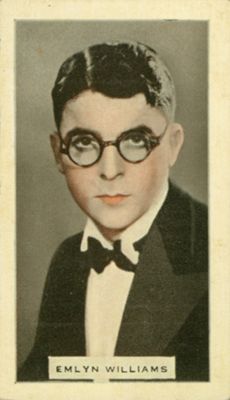
Middle class men seem to have found it a bit more difficult. According to his autobiography (Emlyn: An Early Autography, 1927-1935, long out of print) playwright and actor
Emlyn Williams found it difficult to reconcile his feelings for men and women. According to Matt Houlbrook, middle class men were more likely to feel guilty about breaking their marriage vow. Being masculine, for middle class men, was more to intimacy and fidelity, rather than physical strength. EW came to London and had deep relationships with men but remained attracted to women. When his male lover died, he got a girlfriend but was still attracted to men. When another man let him down, he married his girlfriend.
Anyway, I loved this book and Matt Houlbrook – an academic at Liverpool university – has also written an interesting
paper for anyone who wants to look at the role make-up played in gay men’s lives in the 1920s-30s.
Between the ActsSome of this is fleshed out a bit more in the book
Between the Acts. It’s the life stories of 12 gay men from the earliest years of the 20th century, who were interviewed during the late 1970s when many of them had become involved in the Campaign for Homosexual Equality. Several of them mention getting married themselves between the wars – with various degrees of success – but one, Sam (with the chapter heading The Dancer’s Life) also talks about being the boyfriend of (several) married men,
In one instance, Sam’s boyfriend’s wife is tolerant of, even happy about, their relationship. When she is about to give birth to her third child, Sam actually moves in to look after the family.
I love that anecdote. In history, in life stories, we get to know some of the complex real lives behind the simplistic stereotypes.


/CynthiaNixon(Countess).jpg)

%2B(440%2Bx%2B275).jpg)