Wednesday, April 18, 2007

The perfect bisexual interview


To a Women in Journalism [professional networking, rather than feminist-activist]meeting last night, to hear some of Britain's best interviewers - including Lynn Barber and Mary Riddell - talk about what makes a good interview. I always enjoy WiJ meetings, and this was wildly funny. As well as giving us their master-class expertise (always record the interview, and it's a good idea if your interviewee does too) they regaled us with some hilarious anecdotes about nightmare interviewees: the drunk, the missing, the weird, the hysterical, the scary, the monosyllabic and, in one case, the dead. Japes!

In my working life, I do very little interviewing. I spend most of my time chained to my desk hacking at other people's copy, or begging reluctant writers to please go to somewhere in another time zone tomorrow, flying out at 6am, staying there for 12 hours before flying back, and delivering their features the instant they get return or preferably sooner. (Not much of an exaggeration, actually.)

Whaddya wanna know?
But sometimes, when I've been especially good, I am allowed out and in the course of these jaunts do interview people to at least get some quotes. This is either pure fluff (how did you become a chef/ is that lion really heading for us/ what is that you're doing with your fingers) or about sexual health (how many clients do you have a day/ so, Monsignor, if condoms are forbidden, how exactly should people avoid HIV?). What I don't do at work, and have never done, is the intrusive kind of interview (how angry do you get when people ask you about your estranged sister? I'm not going away until you tell me.)

Many (non-journo) people are hugely critical about the press, particularly the tabloids (who weren't included on the panel). And a lot of the discussion at the meeting was about how to winkle information out of somewhat reluctant interviewees.

But, although it might be in the public interest to conduct a probing interview with politicians or other people with power over us, quite why a writer / actor / footballer's wife should be reduced to tears by someone's questions is beyond me.
I agree with the critics - I too am very distrustful of many journalists. Not only do they have an agenda that may not be your or my own (get "the story" at all costs), they are often either wilfully ignorant, or so short of time that they know nothing about you or the subject.

Ethics
I was once pretty stitched up myself: I was interviewed about bisexuality for a major publication, and asked the writer specifically not to mention my son's name as he was only six. But it was. She also misquoted and warped the information from everyone else she interviewed: I know, because we all discussed it afterwards. This is kind of different from the other kind of interviewing I have experienced as a subject: on TV or radio, where you state your case and a rabid religious representative expresses the contrary. We would both go out of our way to avoid each other in ordinary life, of course.

On the other hand, many journalists do try to be ethical; I know that they have gone out of their way to be helpful and caring to the people they come into contact with. Personally, I always make sure people know what they are letting themselves in for. But then I don't generally meet the sort of people about whom Jeremy Paxman said "Why are those lying liars lying to me?"

Let's talk about (bi)sex
So while Vladmimir Putin or Liz Hurley might be safe from my caring/sharing questions, I have interviewed - in droves, shedloads, or whatever large-sized collective noun you can think of - bisexuals. All sorts of bisexuals - old/young; black/white; good /bad/indifferent; from the UK to Australia, via Germany, India, Mexico and, of course, North America; male/female/trans; of every combination of sexual/emotional attraction and behaviour; in person, on the phone, via the internet and instant messaging. And I have always enjoyed it. Their interviews/information has appeared in articles in newspapers and magazines, on my blog, in journal articles and, in books.

I hope - I think - that I have always been respectful, never uncomfortably probing, careful of the interviewee as well as the eventual reader. Lots of people are just bursting to talk about themselves. Often they have never done so before. And of course, I do think it is very important for bi people - indeed all people - to know about how bisexual people actually think, do and feel.

I have also been an interview subject for many MA and PhD students researching sexual identity development or somesuch - which has always been an interesting experience. This is in stark contrast to journalistic interviews. Academic interviewers have to abide by an incredibly strict code of ethics and their interviewees have to sign a paper saying they agree to be interviewed; that the tapes of their interview will be destroyed; and that they will be strictly anonymous. I think that they also have to submit their questions to an ethics committee first.

Two-way learning
Like one of these top-line interviewers at the meeting said, "I only want to interview people I can learn from". And if you are talking about your sexuality, usually something that is very precious to you and often something that people still don't talk about in public, and I am interviewing you, I will be learning from you. Whoever reads about your life will be learning as well.

Hopefully, you'll get something out of it too, even if it isn't a perfect bisexual interview.

Friday, April 13, 2007

All about my mother


You don't have to be particularly eagle-eyed to notice that it is a month since I posted last. This blog is by way of explanation, a completely off-topic diversion that I need to write. After all, blogs - even subject-specific blogs like this one - are filtered through their author's experience, are influenced by what is going on in the world.

So here we go then...

On 20th March my mother died... she was 82, had had a stroke, plus various "conditions", but in the final analysis, she died from "being in hospital". The first two causes of death on the certificate were "pneumonia" and "clostridium difficile". She caught the C.diff bug in hospital and, after two months' worth of antibiotics to (unsuccessfully) treat it, the drugs had no impact on the pneumonia. According to Radio 4, C.diff is mentioned in 1 in 250 death certificates in the UK. I also found out from the same radio programme - not the hospital - that you fight C.diff by washing with disinfectant, not by using the alcohol gel which stops MRSA. I never smelled disinfectant in her ward, just a sad, sickly mix of diarrhoea and vomit, with a side-order of nutrient-free hospital food. And a sticky floor. Those horror stories about elderly people with no relatives being treated badly: true. She probably would have died earlier if it hadn't been for the unstinting efforts of my sister Julia who was there every day, making sure that she hadn't pulled out her drips or was dying of dehydration.

Right, so I'm angry, which I didn't properly realise. Yes, she would have died anyway - but perhaps not for another year; yes, she was old; but - although some of the medical staff were great - many weren't. Some were caring, despite being harried and busy; others were arrogant shits for whom their patients seemed like so many lumps of meat. This partly to do with NHS lack of funds, but not all. Proper hospital cleaning would have helped and that does cost, but treating patients' relatives like they are incompetent morons has nothing to do with lack of money.


What about you?
I know that most people reading this, those whose mother is still alive, will be thinking of what is bound to happen eventually. As one of my friends said: "Your mother dying made me think of my own mother's death. And I simply couldn't bear it." Yes, and that thing you simply couldn't bear has to be borne anyway. And it seems unbearable whether or not your relationship was close and idyllic, or if you fought like cat and dog, or maintained a polite distance.
I know what the death of someone close is meant to make you think: about relationships being precious, about the necessity to carpe diem, and live life to the full. But what does that actually mean? I have always, constantly felt those things: how could it be otherwise, for someone whose father spent much of their childhood dying? I never felt that sense of immortality, that I and everyone I knew was going to live forever because we were young. But we all have to do things that are tiresome, not live to our fullest potential for a whole number of reasons, especially the time-consuming need to make ends meet. So how exactly do we "live life to the full"? I have to say, I'm buggered if I know.
There might be wisdom coming in the aftermath of death, but I certainly can't offer you any yet. Indeed, my main feeling is still that of disbelief. Is she really dead?
Below I've posted what the vicar read out at her funeral. She wasn't a churchgoer - she always said her Methodist upbringing was enough religion for anyone - and nor am I, but he was a very comforting vicar. A Welsh vicar, which - in suburban Essex - was simply serendipity. And we had "Land of our fathers" and "All through the night" sung by a Male Voice Choir, and Climb Every Mountain, from the Sound of Music which she loved.

Next time, back to bisexuality. Promise.


Patricia George, nee Lewis
23 May 1924 – 20 March 2007


There was never a time when we didn't know our mother was Welsh. Although she left South Wales to live in London in 1947 and her mother's family was originally from Devon, whenever asked our mother always said she was Welsh.

She grew up in Swansea and Haverfordwest with her sister Sylvia and went to university in Aberystwth to study Botany at 17, something that was unusual for a girl of her time and background. She had to take a break from her University studies for work of national importance during which she spent five months with the seed production office driving around the Pembrokeshire countryside in a land rover advising farmers - advice they sometimes didn't take to kindly to, particularly since she was only 21.

Her ambition was always to work at Kew Gardens and although it took her a year from her first application letter, and she had to take the Scientific Officer exam twice, she finally started work there in April 1947. She worked with the flora of many areas in the world, contributed to several papers and had a book published on British wild flowers. She always said how much she had enjoyed working there and how much it had lived up to her expectations.

She married our father Arthur George when she was 31 – at a time when many thought it was too late for her to have a family. Nevertheless, Susan was born in 1956 and Julia in 1961. It was during this time with help from family that they built their own home where they both lived almost to the end of their lives. She wrote weekly to her parents during this time letters full of the tales of normal family life and she often said that she enjoyed being a wife and mother.

In 1969, following a lengthy period of illness, both her father and then her husband died within three weeks of each other. Understandably, she found it difficult to deal alone with the responsibilities of home and children. In part because of this, our relationship with her as teenagers - in common with many families - was not always easy. But with the birth of Susan's son Alexis in 1984 she came into her own as a Grandma and the family became closer and happier again.

It was also during this time that her health improved and she found a renewed interest in the things that she had always enjoyed - the garden and birds, nature books, family history. She also travelled extensively.

In recent years as her health declined, she became more solitary, although she was always a person who had enjoyed her own company. She was also sometimes frustrated with her growing inability to do things. Despite this she still enjoyed time with her family and was always interested in Alexis' life.

Following a stroke at Christmas, combined with her existing health problems and several months in hospital, she became progressively weaker and developed pneumonia.

Perhaps as her children we underestimated the achievements of her life and didn't at the time appreciate the difficulties that faced her. Only with our own life experience have we developed more understanding and will miss her as a mother, grandmother, and for the person that she was.

Wednesday, March 14, 2007

Second Life

I'll quote you this, shall I? It's from the bicafe site.

"Bisexuals in SecondLife has become the largest bi group in ANY world
With over 850 members, Bisexuals in SecondLife is also the most active bi group anywhere with more parties and meetings than all the real world bi groups put together!
Three Sunday meetings at the BiCoastal Center at Carnforth to cover time zones from Europe to Australia.
Thursday parties with DJ dancing and prizes up for grab at Euro friendly time.
Friday night parties at the Diamond Dog Club with DJ dancing and sexy themes (on California time).

BiCafe is tracking all these events and has added a new option to let you select SecondLife as your favorite away region which will show in your profile with the iconic SL hand.
And now you can even search for BiCafe members in SecondLife."

Gosh.

Well, out of over 4.6 million "inhabitants". 7,808 people are online as I type this. There's a guidebook - $22.04 on amazon - that tells you what to do, and I know that a few people have made a lot of money there. Indeed, nearly US$1.5 has been spent there over the past 24 hours.

So "Second Life" is actually seen as a real place now, rather than a set of movable drawings floating around in the ether. After all, Reuters reports news from there, Radio 1 has held concerts, literary agents scout for writers, and we can all look like prettier, more plastic, versions of ourselves.
But bisexuals on second life, now that is interesting. Because this is a parallel world, where you can truly be anything you want to be, something that eludes most of us in one way or another. No one needs to know who you really are, if you don't want them to. You can be part of this group wherever you like - you don't need to be near a large metropolis in a queer-friendly part of the world. You don't need to be remotely out in your daily life or local community. No one need know what you are doing. None of the barriers that stop people meeting in real life are there.
It's well-known that there's been a downturn in all sorts of support groups - bi and otherwise - since the rise of the net. Bisexual.com, for instance, has far more people visiting, chatting, meeting, asking each other for advice, than ever went to a group.
So that's great, and I'm pleased. But if existing in this parallel world is sufficiently comfortable that bi people don't need to be out in real life, then bisexuality will remain something largely invisible - to be disparaged, giggled about, and not taken seriously.

Can any mother help me?
I am absolutely dying to read this. It's a book about a mothers' correspondence club that operated from 1935 onwards; the Guardian gave it an absolutely rave review.
These women - unhappy, trapped, lonely - were lucky enough to find each other by a mixture of good contacts and good fortune. The letter-writing/compiling letters into a book process must have been lengthy, and of course they were only a tiny number among those women who probably felt that way. Reading about this book makes me think about the women in my own family of the time, who had a lot to cope with, and particularly my own mother - who's more on my mind than she's ever been since she had a stroke just after Christmas.
Nowadays, however, like those Second Life bisexuals, it couldn't be simpler to meet another person in a similar situation to yours. You might be able to find them in five minutes. Maybe even five seconds.
Could the contrast between then and now be any more stark?

Friday, February 09, 2007

Blogger's block

Hmm. Been a bit quiet on this blog recently, hasn't it? Well, this is a themed blog and recently I haven't had a bisexual thought in my head. In fact, I haven't had many thoughts in my head at all, except on the subjects of 1) moving house after 21 years, and the practical, emotional and financial difficulties therein. And 2) the health of my poor mother.

While 1) is working itself out — well, we have moved anyway, and the world hasn’t come to an end like I thought it might — the worries over 2) continue. This isn't the place to discuss them, though.


However, I did read some "bisexual" celebrity gossip in The Sun yesterday. Britney Spears, apparently, is into group sex with women. The links on The Sun’s site are broken, so I can’t add them, but this site has more details.

BS has had an interesting transmogrification from celebrity born-again virgin to celebrity knickerless party girl via a few marriages, a couple of babies and some wild "best friends". Oh, and that two-second snog with Madonna.

But does she like sex with women? Has she been living a "secret life of wild sex"?

Maybe. And maybe not.

I no longer believe anything I read, certainly not in the likes of The Sun. And that includes "and" and "the", as someone once said about the writer Lillian Hellman. There is nothing anyone could write about BS (an interesting acronym, non?) that I would automatically believe. Some people have humungous amounts of sex, drugs and rock and roll with each other, paid companions, and the odd passing sheep. Others don’t. Members of either group may or may not be famous. Likewise, those who retire early to bed with a mug of cocoa.

Can I go now? I'm nodding off and smelling that cocoa.

Thursday, January 18, 2007

On writing...

My partner asked me yesterday what I would write about if I didn't write about bisexuality. [I do write about other things, especially when I am paid to do so, but bear with me here...] He was partly being wistful, because no one ever got rich - or even enough money for a good holiday - by writing seriously about bisexuality. Although I did hear rumours about mega spondulicks going Marjorie Garber's way for the book Bisexuality and the Eroticism of Everyday Life. Still, she is a famous academic I suppose.

My main subject, what preoccupies me in both fiction and non-fiction, is "otherness". I don't mean in the academic sense of The Other, or indeed The Others that Nicole Kidman starred in, but otherness as in being an outsider.

Bisexuals are outsiders to both gay and straight worlds, never entirely accepted in either. I think it's true to say that we - and certainly me - feel that being bisexual gives you a view of the world that is unlike those of people who are only interested in one gender.

I am also interested in all sorts of other "outsiderness" but as bisexuality is the one that affects me most profoundly, it makes sense that I write about it.

But also, this blog is specifically about bisexuality because it is covered so rarely elsewhere. (Indeed, until Mercy (link) started her Bisexuality Revisited site recently, I don't think there was another non-personal bi blog out there at all.) At least, this gives me a way to disperse my ideas to the world at large.

Because of that, though, many readers will not know that I also write fiction - which was what obsessed me through my youth. Indeed I had a novel published by no less than Hutchinson. And may (you never know, fingers crossed) have another published by them. Even in this lifetime.

I write psychological thrillers - maybe slightly literary or experimental, perhaps a bit like Barbara Vine when she started. In my fiction, all my main characters bear the weight of their otherness - by not fitting in, by feeling they are on the borders of sanity, by experiencing the wrong sort of sexual desire or lack of desire at all, or simply by being outsiders. That all sounds very heavy, but I'm not sure it really is, except in the sense that psychological thrillers have to be. These characters are also often bisexual - although none of them ever uses the word - and not usually in a Good Role Model way. Often they are tormented by their desires. My interest is in making them three-dimensional, unique, plausible characters rather than having them as representatives of The Good Bisexual.

Still, bisexuality per se is not the focus of my fiction; distorted perceptions of reality, the harm (and good) people do to each other, a rattling tale - those are what I try to write.


I might post up some fiction here at some point. Otherwise, you can still buy my novel Death of the Family here.

Tuesday, January 09, 2007

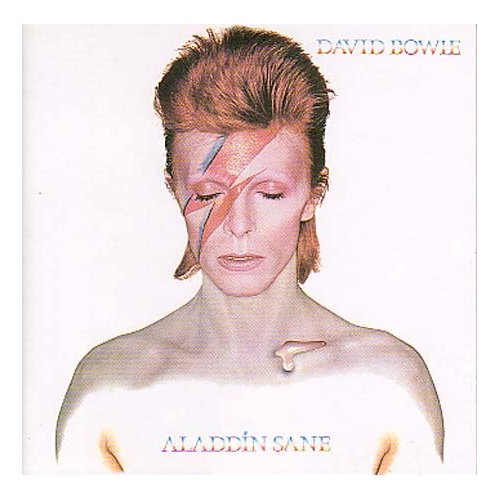
David Bowie made me bi


Oh dear, late again, with this blog as with life. It was David Bowie's 60th birthday yesterday. I spend a lot of time thinking about how I can post things that are, y'know, timely and here I go and miss one.

So, David Bowie made me bi. Well, no, obviously not. No one can form your sexuality just like that. And there were other significant people (Kate Millett etc) later on. But he was My First and let's just say he helped. A lot.
I don't remember how I first knew about DB - he was sort of there throughout my early adolescence. But I do remember the first time I really thought about him. In 1973, when I was 16, my then-boyfriend Martin gave me a copy of Aladdin Sane. It was like having a bucket of water thrown all over me, like nothing I had ever heard before. Then I discovered shortly after that Bowie had said he was bisexual (or gay, or something, exactly what was immaterial; he denies it now anyway) and you could see him cosying up to male musicians... Wow - my eyes were opened.

Time... it's waiting in the wings

Last night I was lying in bed listening to various Bowie tracks on my iPod and it wasn't bisexuality I was thinking about first and foremost, it was my youth. In particular, all the people I used to know and don't see any more. Martin - who came to hate me for being better educated than he was; Robin, a wonderful, funny man who died in 2005 and I don't know why; Jane, his dancer girlfriend who's now a signer for deaf people and has, apparently, "a lovely life"; Trevor, my Diamond Dogs-loving ex-boyfriend who became a born again Christian. Back when Bowie was king, we were all a seething mass of potential, waiting for our lives to start.
But I also thought about how downright impossible it was to be a suburban bi-girl in the 70s. Some of my male friends experimented sexually with each other - they told me so, it wasn't a secret, just something that would-be bohemian boys did - but when I told Trevor that I was attracted to girls he simply laughed and told me I was trying to make him jealous. I filed my own bisexuality away for the future, for the life I was going to have when I could get the hell out of there. When, at about 17, two of my female friends did kiss each other in public (at a girls-only event, interestingly), I thought they were simply trying to attract attention. They were both a bit outrageous anyway, but I was furious. I knew that I wouldn't be able to get away with that myself: I had a "bad reputation" - it didn't take much in those days - and I wanted people to carry on speaking to me. I had no inkling that those girls might have actually fancied each other, and I don't suppose they did, but as one of them later had a 12-year relationship with a woman no doubt I was being harsh.

The prettiest star

Going back to David Bowie again, it was mainly because of him that I started to connect bisexuality with creativity, with androgyny and glamour and excitement, with rejecting what I perceived to be the suburban values of everyone around me. I didn't see him in concert till 1983, so missed by more than 10 years the über-bisexuality of Ziggy Stardust and those amazing clothes. Bowie looked great though. Still does.
And the music sounds as fantastic as ever.

Friday, January 05, 2007

Why Michael Bailey is still so very wrong

Yep, it had to come sooner or later – my angry launch into some of the work done by Professor Michael J Bailey, professor of psychology at Northwestern university, USA. You know, that research heralded in the New York Times with the headline "Gay, Straight or Lying". The research that allegedly showed that true male bisexuality doesn't exist. That men either fancied men, or women, but not both, even if they said they were bisexual. I know that this research came out in 2005, but I wasn't blogging then. I know, too, that the best response to a lot of this twaddle is simply to ignore it and hope it fades away, but unfortunately this research hasn't. Indeed, a commenter on my blog has cited it within the past month.

Where the blood flows
Michael Bailey and his researchers measured "genital arousal patterns in response to images of men and women". Apparently, even those men who identified as bi (although it's more complicated than that, see below) were only – or near as dammit – attracted to one sex or the other, usually men. They assessed this genital arousal using a plethysmograph – which measures blood flow to the penis and is apparently not admissable as evidence in US courts (although the mind boggles as to what it would be needed for).

So, why does this research have more holes in it than a leaky sieve:
* He used a tiny number of men – 104, of whom only 33 identified as bi. Only 22 of the 33 whom had "sufficient genital arousal for analyses"
* Although it's hard to figure out exactly what happened – without reading the extensive report - it seems that their self-identity wasn't used after the recruitment process. Instead, the researchers rated men as gay, straight or bi according to answers they gave to questions about their sexual desires
* Not everyone, even male everyones, is turned on by porn, particularly not in lab conditions. A third of all his research subjects (however they identified) were not aroused at all. So does that mean they are really asexual? Excuse me while I roll my eyes. What about the fact that (many? some?) lesbians like gay men's porn? What would that make them in his eyes? Or bi porn for that matter. And some people don't like some sorts of porn/some scenarios / some physical types, all of which might turn them off. Apparently, the bi men's subjective response – whether they thought they were turned on – did tally with their stated orientation. There is far more to sexuality, sexual identity, orientation and desire than simply physiological response. Surely this is common sense. Not in this study, however.
* An important element of sexuality is emotion, which isn't even alluded to here. What about all those men who are strongly sexually interested in men, but only fall in love with women?
* "I'm not denying that bisexual behavior exists," quoth The Man "but I am saying that in men there's no hint that true bisexual arousal exists, and that for men arousal is orientation." Erm, why? Seems like a leap over a huge great gulf to me. I would have thought that the differences in number between men saying they were bi and their penises saying something else precisely showed that arousal did not equal orientation. If you even buy that measuring blood flow to the penis really tells you anything useful.

Proof of what, exactly?
However, this flawed research is still currently cited and re-cited as "proof" that bi men don't exist. It's so popular because it says what people want it to say. Huge swaths of society seem to have a vested interest in implying that no men are really bisexual and all women are. Society (specifically, but not exclusively, straight men) is frightened of bi men – who are a bit too much like them - but they can push gay men over to one side and think of them as "other". They can even allow them a few rights now and then.
On the other hand, the daft idea that women are much more likely to be bisexual - to be specific, have "bisexual arousal patterns" - was allegedly demonstrated by the same team of researchers. Not in my experience, they don't, unless of course I have come across the world's largest collection of biphobic prudes.
Of course, Bailey doesn't even attempt to address the social factors making bi men differ from bi women. It is very much harder (in the West, in 2007, although not in other times or places) to be a bi man than to be a bi woman. It's also self-fulfilling: if you are a young man told you can't be bi because all bi men are really gay, chances are you will go along with that. If you are a young woman told all women are bi, you might well think your affectionate responses to your female friends should be more sexual than they are. Simple result: more women than men say they are bi.

What the papers say

While the mainstream press gave the original research a lot of favourable press coverage when it was published, the queer press was more – and sometimes highly – sceptical. It was comprehensively trounced on this blog post. In fact, this blogger has plenty of other information about why Bailey and his research shouldn't be trusted (his appalling work on transsexuals, to start with), along with some great comments. He also links to this fact sheet from the Gay and Lesbian Task Force Foundation which says a lot of what I have covered in this post, but better and with footnotes.
Ron Jackson Suresha, who co-edited Bi Men: Coming Out Every Which Way, writes here about some of the political reasons why the media likes anti-bi research, and ignores pro-bi information. And Mark Simpson wrote a brilliant – and funny - dissection of this research on his blog back in April. It's a long post, but it shows that – in his experience as a gay man sleeping with bi men – that there are a lot of men who will enthusiastically sleep with other men without having the remotest interest in making it a full-time job.

Wednesday, January 03, 2007

Happy bisexual new year


In the past couple of days, I’ve had a lot more traffic to my blog. In fact, it’s getting on for double what it usually is and most of the readers seem to have found it through putting “bisexual” in search machines rather than using links and so forth.
Is this the New Year effect? I think it might be. You know, resolution time - you’re not going to do X for another year, you’re going to make important changes and so forth. For some people, that means doing something, however small, about their bisexuality.
“Oh no,” cries a lonely voice in Sweden, or South Korea, or South Dakota. “Not another year when I’m going to hide my sexuality. In 2007 it will be different.” I hope it will.

And my resolution? Must Try Harder (to post more often on this blog).

So what about predictions… Here’s three:
* More people will decide to “explore their sexuality” as I wrote in a previous post. Indeed, in 2006 two always-gay men that I know personally told me that they had recently “experimented” with women.
* More individuals will write their bi stories on blogs and meet lovers there too. Some relationships will break up as a result, but others will last happily ever after.
* Two female celebrities will tell the world that women are beautiful and everyone is bisexual really. And one male celebrity will threaten legal action because he wants the world to know he is totally, utterly and forever straight.

No brainers, eh? For something more random, there’s always Nostradamus. Or indeed any mainstream media outlet.

Thursday, December 28, 2006

Not upset at all

I've been reworking my new book The Truth About Bisexuality; I'm determined it will appear in 2007, come hell or high water, or indeed online publishing. I just read parts of it again and remembered Margaret, who is quoted below. She is the non-bi partner of one of my male interviewees - a refreshing counterpart to the betrayed wife stereotype.

Margaret, 61, librarian, Victoria
I was aware of Neville's bisexuality before we got together. I was informed by a jealous friend but I think he would have told me anyway. I already liked him a lot and being bi made him positively exotic. The fact that being attracted to either gender probably precluded absolute fidelity was also a positive. I was quite paranoid about emotional comitment. Freedom was what it was all about.
Neville and I moved in together (in a communal house) quite soon after we got together but with a specific agreement that we didn't "own each other" that we were both free to dally where we would. I actually did more of that than Neville and was very open about my activities.
He often does talk about his adventures later, so I don't really know if/when he's looking for sexual partners. These days I think it's more a case of if an attractive opportunity arises. I've met and really liked most of the people from BiVic but if he's off with any of them I don't know. I think if I did I'd handle it with equanimity but I can't say for sure. Emotional reactions are horribly unpredictable. I think I might feel rather insecure about a long-term sexual relationship (although he says that won't happen) because he might find he'd prefer to move in with him/her and I might lose my best friend, not to mention a great lover. Short of that, I'm very happy with the way things are. There's a feeling of closeness without being hemmed in.

Effects
HIV doesn't worry me. I trust Neville to be careful and trust him absolutely to let me know if there are any slip-ups. When you're over 60 a life-threatening illness that probably wouldn't kick in for 10 years isn't too much of a worry.
It's difficult to answer what effect Neville's bisexuality has had on our relationship. If anything, I've enjoued talking about his experiences. Maybe this is me vicariously living a more daring life? As to how his bi-ness affects his personality, that's rather a chicken and egg question. I certainly don't wish he was totally straight. I think being bi makes him less likely to be trapped in the male stereotype. I also have a theory that bis make better lovers - more aware that there are all sorts of ways of going about things, maybe more imaginative and responsive.
My sexuality is ideologically bi but in practice hetero.

Thursday, December 21, 2006

You can't have one without the other...?


Love and
It's a special anniversary in the UK today - exactly a year since the Civil Partnership Act came into force, and lesbian and gay couples could get hitched. Lots of them have, too - 15,672 up till the end of September. Many congratulations to those - like Elton John and David Furnish - whose first anniversary it is today.
I think it's fair to say that the move has been wholly popular. No mainstream political party has uttered so much as a squeak of disapproval in recent years. When Elton John and David Furnish got married, even the notoriously homophobic Sun newspaper was celebratory in its reports and the streets of Windsor were thronged with people wanting to wish them well.
Even the gay couple in the Archers (an extremely popular BBC radio soap set in a middle-England farming community) - Ian and Adam - got married without a huge amount of disapproval. Their cross and annoying fathers came round, sort of, and the only person who expressed overt homophobia was given short shrift.
The idea seems to be that to not allow stable gay couples equal rights in terms of inheritance tax, pension rights, next-of-kin arrangements and so forth is against human rights. Which it is.
Nevertheless, the media is looking for the downside, in particular gay couples who are now getting divorced. Darryl Bullock and Mark Godfrey, one of the first couples to get hitched last year, have split up but are delaying their divorce, not wanting to go down in history for being the first to do so.

Marriage
But civil partnership isn't exactly the same as marriage, something that's both good (the history of women being owned by men, for instance) and bad (not the same symbolism or gravitas). One of the main reasons for not calling them "weddings" or "marriage" is to appease people or institutions whose religion tells them that marriage is between a man and a woman only - and mainly for the purpose of having children.
There is also a whole rubbish-heap full of nefarious doings in the notion of "marriage". The historic idea of a woman being owned by one man (her father) and passed to another (her husband) - which is still overt in many parts of the world and persists everywhere in the way that most women change their names. The idea of penetrative sex defining marriage: you have to have sex or the marriage can be annulled. I don't know if that's true everywhere, but certainly in the UK it is. You must not have sex with anyone else and you can divorce on the grounds of adultery. Presumably all that's to do with procreation and the need to know who is the father of a particular child. Then there's also the symbolism of two complementary (male and female) beings becoming one - the unit, the couple, headed by him. And Him - God. In civil partnerships, whether or not you are actually having sex is irrelevant.

Love and marriage
The UK is by no means alone in legally recognising some kind of gay marriage or partnership: the Netherlands, Belgium, Spain, Canada and South Africa (the first being celebrated on 1st December this year) all have same-sex marriage. In many places around the world - mainly Europe, but also parts of Australia, Mexico, Argentina, Brazil and others - at least some form of civil union is permitted.
In the US - from where I am frequently sent petitions to sign and organisations to join on this subject - the situation is totally different. There, 26 states have constitutional amendments barring the recognition of same-sex marriages; by contrast, four have legal unions that sound similar to civil partnerships; three recognise unions offering some rights. Only Massachusetts currently recognises gay marriage.
The majority of readers of this blog are Stateside themselves, and I extend my good wishes to them. I don't need to tell them that they have a huge fight on their hands. As an American ex-pat friend said to me recently, "Anyone who lives in the US and doesn't see the profound level of homophobia there is in a state of deep denial". And he used to live in California!
It also seems pertinent to me that the US has higher rates of heterosexual marriage than do most countries in Europe - so not being allowed it marginalises gay people even further.


Go together like a horse and carriage
Personally, I am not married and never have been, although my current relationship - with a man - is now 11.5 years and counting. The idea of changing my name to Mrs Husband and being a subservient appendage used to make me feel faint; there was also the idea that you were selling out, giving in to convention. Not to mention building a great big dividing line between you on one side and the queers on the other. I don't feel either of these so much now, but I'm still not rushing to any register office. I don't think I would if my partner was female, either.
My gay friends in general seem to agree with me; none has tied the knot yet. Like me, they are likely to think that the legal changes in the UK are more to do with the government's agenda: everyone has to be part of Labour's "hard-working families" - gay people as much as anyone. There is plenty of money being made out of "pink weddings" too. Just beware if you are poor (cuts in benefits for same-sex couples to bring them in line with straight ones) or you don't want to couple up with someone. People who don't want stable monogamous relationships, or want to partner with more than one person, or don't have a sexual partner at all, are simply left out. Of course, this has a big impact on those very many bisexuals who believe in polyamory: what are they do to? Then, there is the - to me - very compelling idea that this type of legal partnership should not be confined to people who are in romantic couples. What about two friends, or two siblings? Why shouldn't they gain those legal and financial rights?
Still, whichever way you look at it, having the possibility of civil partnership is a huge, step-change type improvement to not having it.
I will be going to my first civil partnership celebration in January, for a couple who have been together for 25 years. Their stated reasons for doing it are practical, rather than romantic, although I think that there is something very romantic about loving someone for such a long time. It seems so unlikely, so against the odds. But maybe I am just an old cynic.
Many gay people don't agree though: they want to have a ceremony just like their straight counterparts. And that is truly progressive, I think: to see that lesbians and gay men, just like heterosexuals, can be radical, or conventional; or good, bad, indifferent; rich or poor; interesting or ordinary. That actually, sexuality should have nothing to do with whether anyone is accepted into society or not. We have taken a few steps here. But there are very many still to go.

Wednesday, December 13, 2006

More questions than answers


Do more people than ever, these days, wonder about whether they might not be totally straight or gay? I think they do. In the past, and in most places around the world now, everyone just assumed they were straight unless there was staggering evidence to the contrary. And sometimes they didn't believe even that.
Things are different now in much of the western world, even in repressive countries like the US (Joke. Sort of). This is a feeling, rather than evidence given us by people with masters' degrees in research methodology. Many people on MySpace - where people commonly give their sexual orientation - give it as Not Sure. Not bi, which is also an option. As I said in this post, many people ask (both me and themselves): "Am I bisexual?" which is a kind of questioning too.
Apparently the LGBT acronym is now being joined by I (intersex - which I will leave for another time) and Q (questioning) which means that I'm not the only one noticing this.
So what does "questioning" or "not sure" mean? Different things to different people, I'd say.
When I was a young feminist, decades ago, there were groups for women who were lesbian or questioning their sexuality. (Not bisexual, of course; that wasn't allowed!) The idea behind questioning then, I think, was that women would re-consider their relationships with men in the light of their feminism and subsequently - necessarily - reject them. In short, they'd done the questioning already and answered themselves: men were out. They were just talking it through.
This is a different kind of questioning, though. Maybe those questioning their sexuality actually don't know the answer. They feel nervous that they might be choosing the "wrong" identity. They don't want to close off their options when they don't even know who they are. They might be attracted to all sorts of people but bounce from one gender to another without thinking that is OK. They might not be attracted to many people at all.
This is indicative of a new openness, I think, an accepting that the old ideas of "straight equals good and gay equals bad" are a bit more blurry than they used to be. And my main reaction is: terrific!

Let's experiment?
So is this the same as "experimenting"? Well, it can be, except that "experimenting" seems to imply something more sexual, more active rather than introspective.
It is both easier and more acceptable to experiment when you're young. No one thinks that a 16, or even a 21-year-old should have seen and done everything (with the possible exception of the young persons themselves!). When you are a youngish teenager, wondering if you prefer girls to boys is perfectly fine, even for old-fashioned biological determinists. It might be hard for you personally, people might be chivvying you to make your mind up, your boy- or girl-friends might be giving you (and getting) hell but you are allowed to go through a "stage". Still, by your mid-20s, everyone expects you to have made your mind up.
Then people also analyse their lives and themselves after the end of a long relationship, which can happen at any time. In fact, the longer the relationship and the older the person, the more intense the questioning in my experience (well not my own experience, you understand…, but that of people I've known). Not to mention the experimenting / dabbling / putting themselves about a bit or a lot.
But there is another questioning group that I discovered in the research for my book: men in their 50s. Commonly, they had lived mainly heterosexual lives up till that time. Not repressed lives, but often happily married ones. Then, sometimes very suddenly, their feelings shifted. Either they just started looking at men; or they had an out-of-the-blue gay-sex experience that knocked their metaphorical socks off; or they felt that mortality was hitting them round the face like a wet kipper and they needed to do as much as they could before it was too late. In general, they found that a lot harder than the people in the previous two groups, particularly if they were or had been in long-term, previously monogamous relationships.
For some people, too, Not Sure is another word for Bisexual - which often pisses off those of us who are Very Sure that we are bi. But when "bisexual" is such a disliked word by so many, perhaps it's not surprising when they say that.
And of course, there's that slightly more developed side of Not Sure and Questioning: Bi-Curious. I'll leave that till next time.

Tuesday, December 05, 2006

57 varieties of bisexual - an introduction


Back in September, I put up a post about men who didn't kiss other men, although they had sex with them. It was connected to the - still live - discussion on the subject on bisexual.com. Around 50% of men who posted didn't understand why you wouldn't kiss other men if you were having sex with them; the other 50% thought men should keep their lips below the belt, as it were.

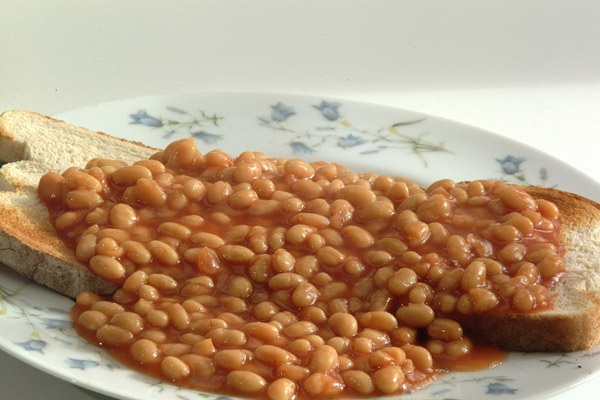
That post was meant to be the first in a series called 57 Varieties of Bisexual (like the beans, duh). We who are bisexual in some way or another include people with such a wide variety of behaviours, emotions, fantasies etc etc. As usual, I got distracted, but now's the time to revisit the subject, in what will be an occasional series. This is by way of introduction.

Anyway, what's below is taken from the proposal to my forthcoming (please) book The Truth About Bisexuality.


Does bisexuality exist?

Many people from all walks of life don't think so. They consider that bisexual people are really either straight or gay, with only a few pathetic individuals - oversexed, experimenting, exhibitionist, confused, cheats - in between.
What drivel! This preposterous question would never be asked about any other sort of sexuality. And this is despite the fact that the most cursory glance at history or geography shows bisexuality in some form or another has existed across time, place and culture, whether it has been openly acknowledged or not.
This book is based around interviews with people who consider themselves bisexual. People like these:
* Lisa, 26, a shop manager. A self-described "wild child", she has only had relationships with men, but casual sex with women. Even though she would like to be more experienced with women she doesn't know how to go about it.
* Manny, a 49-year-old hair colourist, who has spent most of his life as a gay man. Nevertheless, he "crosses the fence when the opportunity arises" and his most intense relationship was with a woman.
* Linda, 36-year-old full-time mother, who lives in the suburbs with her husband, children and, more recently, her female partner too. Her husband and her girlfriend are close (non-sexual) friends and, with their children, consider themselves to be a family.
* Danny, 16, who is thinking about his attractions to both boys and girls and writes about them frequently on his blog, although he is too intimidated to do anything about them yet.
* Artist Jay, 38, who is only interested in relationships where she has to be sexually submissive. That is the important thing for her; her partners may be male or female.
* Rob and Donna, in their early 30s, who live in the country with their three small children, and operate a smallholding. Their dream is to form a community with other bisexuals that is based on ethical and environmental principles.
* Charis, 49, who describes himself as a "she-male". He has committed relationships with women but, when dressed as a woman himself, has casual sex with men.
* Ian, a 32-year-old journalist who says he's attracted to all the usual qualities people go for. But, as long as they don't fall into masculine or feminine stereotypes, he doesn't care whether his lovers are men or women.
* Dana, 45, a previously male transgender activist who is in a relationship with a female to male transsexual.
* Natalie, 23, who moves in mainly lesbian circles and is mostly attracted to women. But because she retains sexual feelings for men, she describes herself as bisexual.
* Businessman Alan, 59, who decided that after 40 years without sex with men - because he was married, and because it was socially unacceptable - he ought to see what he had been missing.
* Alex, 30, a researcher who had been married and later identified as a lesbian before she decided that - when she fell in love with a man again - the word bisexual fit her best.
* Sue and Bob, a professional married couple in their 40s, who have swinging sex with other male/femake couples. But although Sue has had sex with women outside of that context, Bob is only interested in men within very strict parameters.
* Darragh, 33, a civil servant who - after a bisexually active few years - has agreed with his girlfriend that theirs will be a monogamous relationship.
So, given that many people clearly are bisexual, why does the question of its existence pop up again and again? For political reasons. Mainstream society finds bisexuality so threatening to the status quo that it needs to make bisexuality as unappealing or impossible as it can. Bisexuality exposes as a lie the notion that people are divided into good straights and bad gays, with a brick wall between the two. It forces a recognition that fewer people are wholly straight or gay than everyone likes to think. That's something almost no one wants to hear.


These are just some of the people I interviewed for my book. What other types of bisexual people do readers know about? Is your bisexuality some other sort to that listed above? I can think of some people I have left out...

P.S. Dizzy, Danny isn't you! He is an American guy with a livejournal page who unfortunately seems to have suspended his account.

Friday, December 01, 2006

No more AIDS, no time soon

Support World AIDS Day

World Aids day is today - yes, information about it is everywhere, but fighting HIV/Aids never stops being important.
Despite the availability of anti-retroviral drugs (ARVs), HIV is not something that has gone away. Indeed, it seems that the HIV rate among British men who have sex with men is going up. And, just because people can take ARVs, that doesn't make having HIV a walk in the park. Positive people are living much longer and healthier lives (well, they are in the UK anyway) but there are still effects. People do die.
Still, though, still, too many just aren't doing the sensible thing and using condoms. If you want to know what I think of that, look here.
According to UNAIDS, in 2006 there are 39.5 million people worldwide living with HIV. That's 2.6 million more than in 2004.
This year is the 25th anniversary of the first reported Aids cases. How much longer till it stops?

Thursday, November 30, 2006

Bisexuals I have met - Alan Freeman


So, here's a bisexual I did meet, disc jockey Alan "Fluff" Freeman, who died yesterday.
Of course, many of you readers will have no idea who he was, but to British teenagers in the 70s - and subsequently adults who liked his rock shows - his radio programmes were a highlight of the week.
"Greetings, pop pickers", he used to say on his Sunday night chart show Pick of the Pops. "Not 'Arf".

I had no idea he was bisexual until I read the Guardian obituary last night. Apparently, in 1994 he told a "shocked" breakfast TV programme host that he had been celibate since 1981, but before that was bisexual. According to a (non-bisexual) chat room I often frequent, AF was outed in Michael Palin's autobiography - although it sounds like no outing was necessary. Unfortunately, though, I have no idea what his bisexuality consisted of... Or am I just being nosy?
So how did I meet him? Well, I am using the term "meet" in a very loose kind of way, of course. I was working at the BBC (years and years ago) and I had to collect him from the lift and make sure he could walk the few steps down the corridor to some programme-making bod. He was gushingly friendly and, at that point, the campest man I had ever met, wearing some kind of tunic-thing over his velvet trousers. That goes to show what a very, very long time ago it must have been!

All right. Stay Bright. RIP Alan Freeman

Wednesday, November 29, 2006

Ages of consent

Something that I am rather uncomfortable about has happened recently. A 16-year-old boy posted on bisexual.com (which has a very explicit over-18s only policy). He posted there asking for people to read his blog as he felt no one was reading it. At the same time, he also said that he knew he'd probably be thrown out for being too young.
Today, though, his post on bisexual.com has completely disappeared. No clue that he ever wrote it.
I caught the blog address before it went, and logged on... His blog is sexually unexplicit, talks about how he feels, his yearnings towards a boy and his ex-girlfriend, and how his father reacted when he said he was bi. It is also very articulate, far more so than most blogs, but perhaps that's down to the fact that he goes to a private school.
What are teenagers meant to do? He needs support, just like people two years older than him do. But they can get it. Of course, young people do need protecting. But they are also sentient beings, raging with hormones, obsessed with sex and love. Dizzy - the boy concerned - is actually full of yearning, rather than "up for it". He hasn't even had sex yet, although intellectually he is certainly mature.
If you are under 18 and want to talk to someone who's not your friend (or presumably those old chestnuts - teachers, priests, parents of your friends) your sexuality has to be mediated by youth workers, part of whose remit is, presumably, to stop you "doing it". Also, I suppose, to protect you from predatory adults. At 17 years and 364 days, young people are seen as innocent flowers who need protecting from dirty-minded adults. But one day later, they can join swinging and hard core porn sites. How is that not daft?

Coming out at 16
I came out to myself- and no one else - when I was 16, so I feel for him. At that time, where I lived anyway, there was no gay scene, no queer people, no feminist movement that might have offered support. But no one thought that 16-year-olds were completely incapable of judging things for themselves either. If I had wanted to write about sex, anonymously or otherwise, being 16 wouldn't have been a problem. The world at large didn't think that 16-year-olds were helpless. I could have gone to adult gay or feminist groups and no one would have stopped me. They would now. And, certainly in the UK, people are infants for longer and longer periods, reliant on their parents for money, support and housing in ways they weren't in the recent past.

But at the same time, bisexual.com have done the only thing they can and banned him - for their protection, as much as his. According to the United Nations, people are children until they are 18, which seems unneccessarily patronising to me but I am sure has its uses in terms of stopping young people being forced into marriage, the army and so on.
Sexual sites of any and every sort, everywhere in the world, have 18 as their lower age limit. I imagine that's because no countries have a heterosexual consent limit higher than that (although homosexual activity may be illegal, or you may have to be married for sex to be legal).
Investigating, I see that the highest age of consent for gay and lesbian sex is South Africa at 19. I wonder what their thinking is? As far as I can tell, all European countries have lower limits: Austria, 14; Denmark, 15; France 15; Germany 14/16; Greece 15/17; UK 16 etc The info is here.
However, I feel that their response Teens, Sex and the Law is very patronising.
But it's no-one else's business. Why do we have these laws?
Although many young people are mature enough to know how to deal with it if someone tries to get them to have sex, some teens are not grown up enough to know what to do. Age of consent laws are there to stop young people from being exploited by adults.

Yes, but... for instance, why would someone be considered not old enough to fight against that exploitation at 15 in the US, but would be in Denmark? What about those differing ages of consent for straight and gay sex? And, while of course people should categorically not be exploited, what about those many people who aren't being? The answer is they will carry on ignoring the law just as people have always done and do more and more these days.
And, of course, one 16 year old can be so much more mature than another. My own son at 16, for instance, had his feet firmly on the ground. He did all the teenage stuff - exactly what is none of your business! - but he always came home, did his homework, and went to school on time. At 22 he is a fine young man.

But...
Nevertheless, I feel uncomfortable reading Dizzy's blog in a way that I probably wouldn't have done 10 years ago. There is so much - frankly - hysteria about both young people having sex and predatory sex on the internet. Much of what I see about teenagers on the internet in the press is about protecting them from the dangers. I do think that Dizzy has done one thing wrong, though: called his blog Just another British Schoolboy. It's the schoolboy bit I find tricky; that's the bit that might attract weirdos. I think I would probably have been unhappy about my 16 year-old son doing this.
In fact, a lingering sense of unease prevents me linking to his blog. It's not hard to find though. But I do long for an adult discussion on this - one that involves people who are not necessarily legally adults yet.

Sunday, November 26, 2006

Ch-ch-changes part three: 1997 to 2006


Our beloved [sic] prime minister looks very young in this picture, and it makes me realise that Tony Blair has been in charge of the UK for a bloody long time...
I stopped abruptly at 1997 in the last post; at work, hungry (it was 8pm after all), and I wanted to go home. So I didn't carry on talking about the end of the 1990s.
It's always more difficult, I think, to consider what's happening now, and the effects of the recent past. In nine years, however, things have changed dramatically. Indeed, change seems to have speeded up. It's not just ageing that's doing that I think - it's how things actually are.
1997 was a very significant year for people in the UK - that majority of readers who aren't, don't look away, please! Two things happened. After 18 years of right-wing government, the Labour party got in. Of course, nine years later right and left parties in Britain have both moved closer to the centre until they've pretty well collided, and many of the changes they have instituted (plus the war, of course) have been nothing short of disastrous, but that's not how it felt at the time. It really did seem like the dawn of a new age.
For queer people in general, there have been many good things to come out of the Labour government: equalisation of the age of consent for gay men and everyone else; repeal of the hated Section 28 part of the local government act - which essentially stopped school teachers from talking to their students about homosexuality in case it was perceived as "promoting" it; civil partnership laws - which, although they aren't officially called "marriages" mean that lesbian and gay couples have more or less similar ways of legalising their relationships than do straight couples. This liberalisation is similar to that experienced in many European countries, South Africa and Canada - where you can get properly married.
That's all great. But while it's more or less acceptable in most circles - even the Tories - to be a respectable, nearly-as-good-as-a-heterosexual gay, I'm not sure that, for instance, gay men who go cruising are accorded the same degree of respect. And there's still a constant rumbling of homophobia under the surface.
The other thing that happened in 1997 was the death of Princess Diana. The subsequent hoop-la about her death was one of the most extraordinary things I have ever experienced. It made me feel as if I had been transported to some parallel medieval universe, where beautiful dead princesses had been given magical powers to heal the sick and make previously sane people weep hysterically about the effect she had on them.
The "Diana effect" apparently killed off Britain's collective "stiff upper lip" for good. And perhaps that made people talk about their feelings - including their bisexual ones - a lot more.

Internet, internet
When, in 2000, I wrote an article about bisexuals and swinging in the UK for the Journal of Bisexuality, my explorations on the internet came to nothing much. People contacted each other through the secondhand sales magazine Loot, and contacts magazine Desire. Now, anyone and everyone who wants to meet a partner, whether for swinging, marriage, or table tennis, can find them through the internet - whether they live in Birmingham, England, Birmingham, Alabama or Hong Kong, Sicily, the Cook Islands, or Korea.
For people who have grown up after the internet was already widespread, it's hard to overstress the difference it has made. I got my first email address in 1998 - I had to go to an internet cafe to access it - and was staggered to receive a mail back the same day. Previously, correspondence between the UK and US would take at least five days - something that seems actively prehistoric now.
These days, like most other people of most ages and in many parts of the world apart from the poorest, I get friends, information, community, news, music, humour and intellectual stimulation from the internet. I am in more and easier contact with my real-world friends and keep up with a wider variety of people. I am back in contact with people I knew at school. I can discuss things with people on the other side of the world and think nothing of it. A woman I don't know can tell me about a new sub-set of sexual identity (see comment on post below) and I can find out about it within minutes. How is that anything other than fantastic?
But the internet has had one unpredicted effect: the decline in real-life community and political activity. If I can find a bisexual community on the web, why do I need to make a massive effort to travel miles and, very nervously, go to meet people I don't know in a pub? If I can MSN someone about my confusion about my sexual identity, why should I ring a phone line? If I can blog about it, and people send me plaudits, where's the problem?
Well, I'm not sure. But I do know that, for instance, the London bisexual women's group of which I was a founder member, and which was flourishing throughout the 1990s, seems to have ground to a halt. After all, if you can go to gaydargirl and get as many sexual partners that you want, what's the problem?
Well, friends and community are as important - perhaps more than - as lovers. And a virtual community cannot take the place of one that is flesh and blood. You can find community on the net, and meet people from that community in the real world, but if many members of that community are on a different continent... Oh, I don't know. What do you think?

Tuesday, November 21, 2006

Ch-ch-changes. Part two

Of course, I failed you again and had no chance to carry on posting last night. So anyway, here's a continuation of those changes that I've noticed.


1990s: I've slapped up a picture of Madonna here because it seems to me that she was one of those "bi-try" women of the early 90s. Think her book Sex. Think all those other songs... Justify My Love, was it? Think her giggling appearance with Sandra Bernhard on the David Letterman show.
Of course, there was also the flowering, if you can call it that, of "lipstick lesbianism" which is generally agreeed to have started when KD Laing was seen on the cover of Vanity Fair being "shaved" by Cindy Crawford. Whatever, there was a decline in the separatist feminism of yore which made it easier for women to say they were bi. Sadly. Can't we have fun, acceptance and feminism?
Bi men were still having a terrible time, although the introduction of ARVs in the mid-1990s meant people weren't dying in such huge numbers, or so rapidly. Thank God. Although outside of the wealthy West, and indeed inside it for people with no medical insurance or national health service, it wasn't a great deal of help.
Then queer theory started being taught at universities. Ah, queer theory. Very important to many people, and certainly a good tool in deconstructing gender, but a bugger if it hasn't been explained to you. I try to muddle through but given that it wasn't invented when I was at university its jargon can be an uphill struggle.
The bi community started off the decade pretty healthy, but in the UK anyway, it seemed to me to be wobbling a bit. The bi community has always had far more than its fair share of computer geeks and they started setting up listservs and message boards which meant that meeting in person became less significant. The general public took a few years to catch up...
Then, in 1997 - very important to us in the UK but not elsewhere - the election of the labour government. Lots of anti-gay laws repealed, true, but lots of changes in society that haven't helped anyone...

(Note to self. This is a blog. It is not a newspaper article. Stop now and have some dinner. You can write about the changes since 2000 next time.)

Monday, November 20, 2006

Ch-ch-ch-changes

It was my birthday on Friday and, as often happens to people with Big Birthdays, I've been thinking about the past and how things have changed in my lifetime. A warning: gross generalisation alert. This is a broad brush look at how I remember things. It is not an Authorised History. Even by me.


1970s. At that point, all the publicity was about bi men, not bi women, due to David Bowie, glam-rock, a supposed kiss that Jagger and Bowie gave each other on stage. Androgyny - for men - was trendy. This must have had some impact on men at large, but I remember many of them being horribly sexist in a way you'd never hear now. Bi people in general were more incorporated into gay liberation - if you loved/were attracted to members of the same sex, you belonged. This seemed to apply to women too - but I never came across any bi women until the end of the decade. I just yearned. Kate Millett, see this post, didn't find it easy at all. On the other hand, this was - apparently - a decade of very active swinging and the Californian bi scene was openly a part of the sexual liberation movement.


1980s. Fun time was over. Bi men were hit pretty damn hard by the Aids pandemic that was first reported in 1981. In the US, many bi men died, including significant bi activists such as and so did some in the UK - actor Denholm Elliot, for instance. But as no one knew or knows how to define "bisexual man" or whether many individuals presenting with HIV symptoms were gay or bi, precisely how many will never be known.
It wasn't a great time for bi women either. A particular sort of feminism laid down that women should be lesbian and, if they couldn't, they were allowed a sort of guilty heterosexuality. But bisexual women were bad, traitrous, "taking energy from women to give to men" etc.
With that in mind, no wonder that this decade saw the establishment of the politicised bi community in the UK and North America.

Wednesday, November 15, 2006

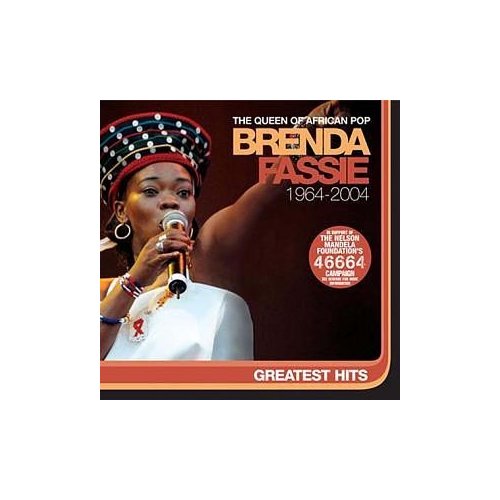
Bisexuals I never met: Brenda Fassie


I'm not sure now whether or not South African pop star Brenda Fassie was still alive the first time I heard of her, but I remember very distinctly how I heard of her. It was an Arena documentary, re-broadcast on BBC4, all about her and her life, following her comeback and forthcoming wedding to Landile Shembe.
She was an amazing woman - endearing diva, yet down to earth woman; massive star living in what seemed to me an ordinary bungalow; a larger than life character possessed of an amazing voice. She was also openly bisexual, a taboo for many Black South Africans.
Dubbed "Madonna of the Townships" Brenda was born in 1964 in the Cape Flats township outside Cape Town, she started singing at the age of five. Her career proper started in the early 1980s, when she and her band The Dudes recorded their hit song Weekend Special. It's a brilliant piece of music - catchy, cheerful, get up and dance-worthy. Other greatest hits-style tunes followed shortly after.
If she had been American, she would have been world famous. South African singers, though, particularly of the Apartheid era, rarely made it outside of the continent and for a long time the only people who knew of her were Black South Africans, for whom she was a superstar.

A hard life
But her life was also very difficult, and not just because of the political situation. She became addicted to drugs, chose a selection of bad husbands and boyfriends and saw her career go down the toilet. Then, in 1995, her girlfriend Poppie Sihlahla was found dead of an overdose. Brenda, in a drug-induced haze, was lying next to her. This horror sent her into rehab.
But while she recorded some more great songs, now in the specifically South African Kweito genre - including one used by the ANC in their 1999 election campaign - the drug problems continued. As did her bad taste in men. Her teenage son Bongani begged her not to marry the last one. He turned out to be a conman only after her money.
In April 2004 she collapsed at home and slipped into a coma. Nelson and Winnie Mandela and Thabo Mbeki visited her in hospital when she was dying. Although people were initially told it was due to asthma, in fact it was a cocaine overdose; brain damage meant she never regained consciousness and she died in early May.

Her fans react
There was a massive outpouring of grief from all parts of Africa, as can be seen on this rather morbid death site. There's a good obituary here about her life and times.


But her music lives on. You can buy some of her albums here and of course, she has a myspace site where you can play some of her tracks. It's here.

I notice that one of her albums that I possess Memeza (Shout) - her big comeback album - is currently for sale on Amazon from £49.35. But I think I'll keep it thanks.

Tuesday, November 07, 2006

Bi men's blogs

Yes, yes, I know I said my next post would be about that pesky old research that said bi men didn't exist, and I have let you down. That's a long post, something I'd have to think about and formulate an argument with. Maybe in a couple of days...
So instead, I'll post some links to bi men's blogs that I've been looking at recently.
Over the past few days, I've noticed people being referred to this blog from a site I'd never heard of before. It's here. Bi-journey is a new blog written by Al, a bi-guy who's just come out to his friends but hasn't had sex with a man yet - indeed isn't in a relationship at all. Much of his blog is devoted to exploring what bisexuality means to him, often talking about sex and being very thoughtful and thought-provoking with it. Indeed, while some of this site is perfectly safe for work, lots of it isn't - particularly the photos - so perhaps best viewed at home.
Al comments a fair bit on another bi man's site defending the raven. Raven is a married bi man, quite sexually active with other men and his wife is also bi. This blog has been going for a while, and as far as I can see a fair bit of it is involved with how he and SR, his wife, make things work for them. Very valuable if you are going through something similar.
I also like Trouser Browser. Like Al, he's also from the UK. TB writes about his rather active sex life, and very witty it is too.
So there we have it. Bi men both existing and writing about it. And yah boo sucks to that stupid research...