Tuesday, October 31, 2006

Am I bisexual?


So many people have asked me this during my long period of being out, that I thought I'd have a bash at answering it. I don't think people who have never really questioned their sexual identity, worried about the impact of change on their relationships, friendships, whole lives, can really understand how troubling it can be to not know something so fundamental about yourself.

Now, first up, the "I" here is not me - it is whoever is asking the question. I know that "I" am bisexual, whether or not I have had any male/female lovers recently. I know this through my past, my interests, my perspective on the world, my friendships, who I fancy, everything. It's an important part of my identity.

But people who are asking "am I bisexual?" don't have that. Quite possibly they either:

* Are mainly straight or gay, and wonder if having sexual fantasies about the "wrong" sex, or having kissed one at a party, makes them bisexual.

* Have been in a monogamous relationship for a long while, and are now wondering - sometimes obsessively - what a lover of another gender would be like.

* They are young, or going through a period of great flux in their life, and really don't know who they are attracted to.

* They are very much less young, and haven't "done anything" about their bisexuality in a while.

* They don't feel entirely gay, or straight, but feel that the amount of experience they have had with the "wrong" sex doesn't qualify them to identify as bisexual.

* While they were in a gay/straight relationship previously, they are now in a straight/gay one, and intend to stay in it until their dying day.

* Their sexual desires don't fit into other kinds of boxes, including but by no means limited to the following: they are a woman who is only sexually attracted to gay men, or a man who wants to dress as a woman and have what he (or they) see as lesbian sex, or a person, any gender, who is only attracted to transsexuals.

* Or, quite common this, they are a man who enjoys having some kind of sexual contact with other men but needs to keep this within very strictly confined boundaries and never, ever, would be emotionally involved with one.

* Or, also very common, they think they are "sort-of" bisexual, but consider that to be properly bisexual they need to have a 50-50 interest in men and women.


What do you call yourself?

Now, people who ask this question, I don't know if you are bisexual or not. For me, the bottom line (so to speak) has always been: you are bisexual if you think you are, it's self-identity that counts. Not what other people think - for instance, saying that you have to have had sex with both a man and a woman within a certain time-frame or you will have to hand back your bi credentials.
However. However...
Many people who - looking at their behaviour, or history, or all the things that count for me - don't identify as bisexual. Leaving aside for the moment those people who want to identify themselves as "queer", or who think that there are many different genders, not just two, and therefore consider "bisexual" to be reductive, or know that their "wrong" sex behaviour is something too trivial to be bothered with, many actually don't want to think they are bisexual.
What about all those "Men who have sex with men" or "Behavioural bisexuals" much beloved of HIV-preventors? They are more likely to say "I am just sexual" - and indeed some of them have said precisely that to me. Perhaps the much-hyped African-Americans on the "down-low" (probably only differing from the MSM or BBs by the fact that they are African-American) would say something similar. Thinking of themselves as "bisexual" would be giving it too much importance, or taking on a label that all these men would consider inappropriate.
But people who actually ask "am I bisexual?" aren't - in general - playing word games about whether bi-curious or bi-dyke is a better option for them. They are asking about the deeper aspects of bisexuality. They feel uncomfortable in their own skin, about how they present themselves to the world, about their futures. They are looking for answers to some pretty fundamental questions about themselves and the possibility of being happy in the future. Those answers can only come from within the individual - hopefully through talking things through with friends, lovers, partners, possibly therapists, but also through reading and perhaps finding support groups. The internet is hugely helpful here.

So what's the answer?

There isn't, unfortunately, one simple answer as to whether "you" are bisexual, certainly not one that I can give. But I can say: you can much prefer one gender over the other, and still be bisexual; you can only want emotional relationships with one gender, and still be bisexual; you can call yourself bisexual at the moment - it doesn't matter whether you will always feel this way; you can be happily monogamous and still be bisexual; you can only want to have sex with blonds (scarcely even seeing their gender) and still be bisexual.
It can be really hard to live with uncertainty, particularly if it feels like things are falling apart, but ultimately please don't worry. Bisexuality can actually be pretty great.

Sunday, October 29, 2006

Monday supplement

Drat, I've missed Sunday this week. Nevertheless, there's been a world of bisexuality out there this week, ladies and gentlemen, and here are some bi morsels for your delectation.

Torchwood
Well, I've seen the Doctor Who spin-off this week, and it's kind of fun. All right, it's like Doctor Who without The Doctor, and with lashings of sex and swearing, but I still like it. Bi-factor: pretty high. Episode two featured an alien disguised as a sex-hungry young woman who needed the energy she got from sex with men to survive. They, on the other hand, ended up as a pile of dust. One of the female scientists couldn't keep her hands off her either, much to everyone's surprise as she has a boyfriend. Captain Jack quote: "oh, you humans and your self-imposed categories." Indeed.

Another Tory MP leaves wife shock
Yes, Greg Barker, apparently shadow environment minister, has left his wife of 14 years to be with another man.
So, what's the story? Was he always gay and just hiding his feelings - as did so many tories of yore? Did his feelings change? Did he just fall in love with this particular man? Or did he always have bi feelings he hadn't acted on? Who knows. But here's a good post about it.

Not practising safer-sex yet?
According to Aidsmap, gay and bisexual men with HIV "serosort" themselves, ie if they are negative, having unprotected anal sex with other men they believe to be negative, and if they are positive, doing it with other positive men. Researchers say that, because of this, men who are having condomless sex are not necessarily risking infection, or transmitting infection.
Well that's good. Any strategy that genuinely cuts HIV tranmission is good. But.
Men who thought they were negative weren't necessarily. It is also possible for people with one strain of HIV to contract another strain through sex with another positive person, with all the obvious risks to health. There's also
this. Drug-resistant gonorrhoea in the UK. Yum. Isn't a little bit of rubber a better option?

Further adventures in MySpace
Still not entirely sure that I am making the most of My Space. However, I have "met" Maria Angeline who coordinates the Carnival of Bent Attractions - a gathering of some of the web's most interesting queer posts. And she's nominated one of mine for the next edition. Ooh good!
If you've seen a post anywhere in the last month - on your own site or anywhere else - that is LGBT related, get cracking and nominate it. Deadline 00.00am Wednesday, New York time.

Thursday, October 26, 2006

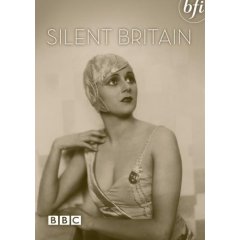
Bi-girls of the 20s

Bisexuals I never met, part two


I'm reading a really interesting book at the moment, Shepperton Babylon by Matthew Sweet. He's writing about the British film industry from its beginnings to the 70s, and it's based on discussions with those very very elderly movie people still alive in the late 1990s/early 2000s, who talked to him about what it was like when they were young.

I started reading it really because I wanted to know about Nerina Shute.
In fact, I had intended to post at length about her, because she sounded so downright fascinating, but I think I've come to the end of what I can know about her - at least, without extensive research elsewhere or reading her entirely unavailable autobiography.
NS was Britain's first female film critic - starting in 1928 at the age of 19. She had a weekly film column as the studio correspondent of the biggest fan magazine. Perhaps leading writer on Heat would be today's equivalent. But she was also a very harsh and influential critic, known for being able to make or break a career. There's lots more about her in the link above - her obituary when she died in 2004.
She was also a fierce, passionate, amazing, bisexual - quite consciously so, none of this: oh it was so different then malarkey. "I'm bisexual, you see," she told Matthew Sweet. "Tell me, what do your generation think about such things?" When she came to London in the mid-1920s, she became part of a group of "ambisextrous social radicals", and proceeded to embark on a lifetime of marriages to men, and dalliances with women, to be rounded off with a long-term relationship with a female ballroom dancer that only ended when the dancer died.
NS's autobiography, Passionate Friendships, was only published in 1992 but the whole of the internet yields not one second-hand copy. A few years ago, I read her book We Mixed Our Drinks, published in 1945 but written about her youth in the 20s, and it seems like she toddled along from one club to another, a hotel here, a bar there, having a simply marvellous time. No mention of the sex though.

Gay's the Word

This book (the bits of it I've read so far) is quite fascinating. The utterly gay composer (of the song Gay's The Word) and film/musical comedy star Ivor Novello (who also appeared as a character in Gosford Park, played by Jeremy Northam) used to have a club in London's Wardour Street called the Fifty-Fifty - a direct allusion to the bisexuality of its clientele. The club also appeared under the name The Half-and-Half in the 1932 film The First Mrs Fraser. I remember seeing that - or perhaps just the relevant clip from it - and being pleasantly shocked by its overt gayness. I mean, men in white tie and tails quite openly dancing together...

My name is Tallulah
Then there was the uber-bad girl Tallulah Bankhead. Actress, dope fiend, drinker, "well-known for being a lesbian and immoral with men", who spent a lot of time in Britain that decade. Her quotes are legendary, for instance: "my father warned me about men and booze but he never said anything about women and cocaine". In fact, she's certainly known more these days for her wit and sexual exploits than anything she did on stage and screen.

Roaring 20s
Of course, many people know that the 1920s were jam-packed with same-sex sexual activity (among the upper-class bohemian set, I mean let's not get over-romantic here. Can I say the words "Bloomsbury Group"?) and lots of those people were also married. I remember reading Evelyn Waugh's diaries where he talks with irritation about sharing a ride home with two women and that he was fed up with them "lesbianising in the back of taxis"!
But there was also what seems to have been a dramatic increase in sexual activity in general among girls of all classes. Young women were allowed a great deal more freedom after the first world war - earning their living, wearing short skirts, cutting their hair, casting off their corsets, abandoning their chaperones. And, if you knew where to go, contraception in the form of the diaphragm. Both men and (particularly) women adopted a fashion and hair style that was, for the time, shockingly androgynous. Noel Coward's song Masculine Women and Feminine Men was about precisely that. And here's an amazing site called Queer Music Before Stonewall that includes it.


Well, that's the British film industry. Female bisexuality of the time in Hollywood sounds much, much more frenetic. If Marlene Dietrich had sex with half as many people as it's made out she did, I can't imagine she'd have had time to make any films whatsoever!

Sunday, October 22, 2006

Sunday supplement

Bisexual-oriented things I've been seeing and doing this week...

Bookish things
At the House of Homosexual Culture's Lavender Library event yesterday, a range of writers were talking about LG books that had influenced them. It made me think about bisexual books that had influenced me. I've already posted about Kate Millett's book Flying. But there are many others too... I think KM turned me in the direction of the extraordinary novel Dusty Answer, written by Rosamund Lehmann and published in 1927. It seems that Virago republished it more recently. It's the story of a female student at Oxford who falls in love with a female fellow student, then her brother. A beautifully written coming-of-age story. Then there's Rubyfruit Jungle, which I can't remember much about but know it was hysterically funny, and The Color Purple - Alice Walker's masterpiece, a fantastically moving novel about an abused African American girl in the 1920s Deep South, who finds love and hope with her father's mistress.

Radio and Television things
Mark Oaten, the married Lib Dem MP who was outed earlier this year as having sex with male prostitutes was on Woman's Hour with his wife this week. It was entirely unenlightening. He said there were lots of reasons for his infidelity but he wasn't going to tell us what they are. His wife - who doesn't sound like she would stand for any nonsense - agreed that she was very angry but they were working things through. We are none the wiser. So what was the point of the piece?

The Dr Who spin-off for adults, with the gorgeous bisexual Captain Jack, starts tonight. BBC3 9pm in the UK. Probably coming to screens around the world shortly.

Webby things
Gert, on madmusingsofme, refers us to Ellie, who refers us to the rules for Fever Parties - very glamorous swinging events. They claim that 80% of women are bi, and 80% of men aren't. Hm. What's the guessing that 80% of respondents are lying?
Perhaps they funded this research themselves. Possibly they did extensive qualititative research on the comprehensively peer-reviewed. Or not. Gert's post on the subject is very interesting and offers food for thought.

My myspace page is up and running now. Seems like fun. My first three friends are all people I actually know, the next (Paloma Faith) a singer I like, then a woman who looks like the sort of person I'd like to know, then Stop The War. No need to ask about that one, surely? But one thing I do wonder: is Myspace anything other than an amusing way of wasting time? I am down as "bi" for my sexual orientation, but does this mean anything apart from being contacted by people wanting me to join swingers groups?

My first ever guest post is out now on Dave Hill's temporama. Very exciting! It's actually not about bisexuality, it's about England, but it was fun to do.

Thursday, October 19, 2006

What do you look for in a bisexual blog?


I look for intellectual stimulation, a good laugh, and some pictures of hot bi babes. Oh when will I ever find what I am looking for?


Like many other bloggers (surely...?) I am somewhat obsessed about who looks at my beautifully crafted words. I am often to be found on sitemeter, seeing who is reading what, for how long, and where they got me from.
Some of the results aren't surprising. Lots of people have found me through that wonderful site, bisexual.com, where I add my finely honed apercus on topics from coming out to oh, especially coming out, and where my blog is listed as a resource - right under the brick testament which would make a corpse laugh. Unless it was a fundamentalist Christian.
Blog-chums, such as Mark Simpson, Dave Hill, Eine Kleine Nichtmusik and Clare Sudbery, also send quite a few readers my way, as do the blogrings - in particular Blogher, the women bloggers hub. None of this is a particular surprise.

A bit baffled
Unlike lots of things. Why does my domain name - www.suegeorge.com, leased for peanuts back in the day (2001) and never used till now - send me readers from Korea? Only Korea. And maybe only one reader from Korea with different ISPs.
But what fascinates me the most is what people put into google to find this blog. OK, now they probably never become regular readers (most of them click off immediately - "The 0-second click"), and I wonder why they bother. The clue for the reader is, you know, in the title of this blog. So when they google David Blunkett, or glamorous clothing, and come up with Bisexuality and Beyond surely they know what they're getting. Just a teeny bit.
In the past hour, I have had hits from people searching for "naked gay men" and "naked bi men" words which, if they appear at all, come right in a section of text - given that I have never added any Not Safe For Work pictures to this site. Then there's "12-letter words" I have to assume from a scrabble player and "How can I make the right guys in the gym flirt with me?" Well, not by reading this blog, that's for sure.
There have also been some interesting queries too. What about "creative things to do while kissing". It conjures up two images. One, the innocence of some young thing whose sexual behaviour thus far stops at snogging and wants to know about stroking hair, arms, or other fiddling whose sweetness I am just too jaded to imagine. The other, someone with their left hand on their beloved and the right embarking on some elaborate counted cross-stitch.
Now, lots of people come to this blog wanting sex - either pictures of it, or explicit discussion. No doubt if I deliberately put in things like "cute girls kissing" or "hot buns bi-male action" I'd get even more 0 second google hits. Which I probably will do now.

Logging in and out
I also get lots and lots of 0 second hits from people wanting things I can't give. "She-male blog", "attracted to men", "bisexuals experimenting", "am I bi". Actually, the last one deserves a post to itself because that's something lots of people seem to want to know. It'll get one at some point. Real-world people have actually asked me that, although surely they know better than I do.
By far and away the most popular thing that has brought people to this blog, though, lies in this post, where I talk about The Girl With The One-Track Mind, and how she was outed by the gutter press. Abby Lee/Zoe Margolis is one popular lady if google searches are anything to go by, and bloody good luck to her. Lots of those searchers don't just click off immediately either.
My all-time favourite 0 second click, however, is this: "How many women in the West Midlands have sex with horses". Ooh, I know the answer to that, it's right here in my blog... Just let me have a look....

Oh, wait, I've found it. Yes, that's right... A big fat zero.

Tuesday, October 17, 2006

One day in history

Today there's going to be the biggest blog-in ever in the history of the world. Not surprising, perhaps, given that the blogosphere hasn't been going for five minutes.

Anyway, what ordinary people [sic] are being asked to do is blog about what happens to them today, 17th October. The idea is that "future generations" will be able to find out what their forebears were doing today. A snapshot - rather like the Magna Carta.

Now I actually do believe that history is important: those who don't learn from the past are condemned to repeat it, or whatever it was. I felt so strongly about that, I even did a history degree. So I'll be posting my bisexual twopennorth. Not that I've done anything that could be considered bisexual today, you understand, other than simply being. Although the night is still young! But I do believe that it's important that so-called ordinary people make their mark on history. If you believe so too - submit your own blog.

You don't actually have to be living in the UK - people with "connections" to the UK can submit entries too. Deadline 1st November.

Tuesday, October 10, 2006

The day today

It's World Mental Health Day today... and in theory, wherever you are on this planet, there'll be awareness-raising, "empowerment"-giving, celebrity-profiling discussions on the subject.
In the UK, over the past few days/weeks there's been lots of media coverage about mental health: yesterday on Radio 4 there was discussion about David Blunkett and Alistair Campbell's depression; last night on Channel 4 it was an expose of the shocking conditions in some mental hospitals; today on the radio, someone from BT was talking about provision for their staff. Then there was the two-part series with Stephen Fry interviewing celebrities (and the very occasional civilian) about being bi-polar/manic depressive.
Now, this has significance for bi people in general. Whenever anyone has researched the topic, they come to the conclusion that bisexuals (defined how precisely, I wonder?) have worse mental health than straight people, or lesbians or gay men.

Statistics that do your head in

It's only recently that studies have been made that separate bi from gay people. For an article published in the British Journal of Psychiatry in 2002, Anthony Jorm et al, conducted a community survey of 4824 adults in Canberra, Australia, looking at anxiety, depression, suicidality, alcohol abuse, positive and negative affect and a range of risk factors for poorer mental health. Compared with heterosexuals and homosexuals, bisexuals had the worst mental health, scoring highest on measures of anxiety, depression and negative affect.
Another British study, published in collaboration with Mind (the mental health charity), looked at the mental health of LGB people - including 85 bi men and 113 bi women. Using "snowball sampling", they recruited several thousand lesbians, gay men, heterosexuals and bisexuals, to compare rates of mental health, quality of life and experiences of mental health services. Gay men and lesbians were compared with heterosexuals and with bisexuals. Unsurprisingly, heterosexuals did best.
There were some interesting findings. Using a scale to measure "psychological distress" heterosexual men reported least, and bisexual men most, with gay men and women in general somewhere in between. Levels of substance abuse were higher among gay men and lesbians, but bisexual men were more likely than gay men to have recently used recreational drugs. Lesbians, gay men and bisexuals were all more likely to have been bullied at school than were heterosexuals, with 51% of both gay and bi men, and 30% of lesbians and 35% of bi women reporting it.
Gay men and lesbians were - according to the writers of the study - "more at ease with their sexuality" than were bi people. The former were more likely to be out to their friends and family, colleagues, doctors or health professionals. However, more bisexuals than lesbians/gay men reported that mental health professionals had made a causal link between their mental health problems and their sexuality. 64% of gay men and 74% of bi men had had a positive reaction from their mental health practitioner about their sexuality. Women fared less well: 58% of lesbians had received a positive reaction, but only 39% of bi women had.

Not all in the mind
There are a number of reasons why bisexuals might suffer from "psychological distress". (Of course, I'm not even giving page space to the anti bi ideas of instability etc.) Try some of these: lack of support from friends and families; keeping a significant part of yourself quiet; lack of recognition from the wider society; fear of relationship breakdown; fear that there is something wrong with you; a feeling that bisexuality in and of itself is wrong; and that you will never meet anyone else like you.
The mental health of bisexual people has always been significant within the bi community. Fritz Klein, for instance, one of the founding fathers of the bi movement in the States, was a psychiatrist and wrote extensively on the positive attributes of bisexual people. And the first positive thing I ever read on the subject Bisexuality: A Study by Charlotte Wolff - sadly long out of print - was also written by a bi psychiatrist.
Now there's a new book edited by bi psychotherapist Ron Fox, most conveniently bought here. Affirmative Psychotherapy with bisexual women and bisexual men - for therapists dealing with bi clients - looks at the issues that might arise and how to help unhappy bisexuals become happy ones. I'll write about it more when I've had a chance to read it. Bi psychologists in the UK are also trying to draw together research on bisexuality that will allow it to be taken seriously in the same way as is lesbian and gay psychology.

Why me?
World Mental Health Day also has personal significance for me. I've suffered from depression on and off since I was 15 and, at various times, both my parents had it too. In certain places, it's considered stigmatising to refer to a person as "suffering from" a disease or condition: you are a person with depression or whatever. No. NO. NO. You have depression, believe me you suffer from it.
However, rack my brain as I might (both within and without therapy), I can't see what being depressed has to do with me being bisexual and this, I think, is a major-league problem with the "bisexuals have worse mental health than anyone else" stats. If I went to the doctor and said I was depressed and I was bisexual, then it sounds as though the two would be conflated anyway.
For depressed people in general, though, there's plenty of things to help out now that simply weren't there when I was a 15-year-old lying on my bed wondering what was the point of life when we are all going to die anyway. Not least of these is much better anti-depressants, but there is also a great deal of research about what works and support to help prevent things getting too bad.
Now, this helps. And for people trying to improve the mental health of others, I particularly admire these people. And this self-help group.
And if anyone knows of any bi-specific depression support groups, please let me know.

Categories

Wednesday, October 04, 2006

Now you see them

The very picture of a bisexual- bisexual


I was standing there, chatting away in a group of gay men I didn't really know, when one suddenly came out with:
"I bet you say that to all the gents."
Oh, I thought with a bit of a start. Oh, he thinks I'm straight.
Now, given that we were in a gay environment, by with and for gay people, you'd imagine that the assumption would be that I, too, was gay. Nope. There I am, once again, being mistaken for straight.
Of course, he didn't know me, this man, in fact our exchange had barely made the shift from phrases to sentences, let alone paragraphs. Immediately beforehand, I think I'd told him he could lend a hand, or I could lend a hand, or something. Then, while I was thinking whether or how to respond, he wandered off.
There had been no chance for me to say the word "bisexual". I wasn't wearing a badge - something I often do as a bloody great signal that I'm not, actually, y'know, simply geared towards men. And, yes, I was wearing feminine clothing plus my hair is quite long. So I look girly then, or womanly, or at any rate not what they think a lesbian looks like.

Lesbian dressing
Except that lesbians these days often do look girly, or womanly, or not like a lesbian. At least some of them do. And that's the media perception of lesbians now.
There's a letter in Diva this month from a woman complaining that none of the women in the magazine are butch - and she's right. Out and about, there are plenty of butch women, or women who wear androgynous clothes, or who don't look like they're trying hard to look feminine. Though there's obviously a difference between gender presentation and sexual identity, the world at large doesn't always realise that: butch women are lesbians, feminine women are straight. Culturally - just in a couple of places that I know about - what counts as looking butch varies hugely. In Holland, for instance, women in general look a bit "butch" to me. And most of the Cuban New Yorkers that I know personally look very feminine, but are very much into a butch-femme role-play that doesn't always tally with their appearance. I'm not going to spin off into a huge great riff on butch-femme here, but obviously (well not obviously, but still...) the counterpart of Butch is Femme. Lesbian.

So what do bisexual women look like?
Once, on a hot Sunday afternoon a long long time ago, I went to a bi women's group meeting and subsequently met up with a male lover. I was wearing a black vest, black trousers with little green flecks on them, socks in a similar colour-combination, and black plimsolls. I also had, at the time, very long straight hair. "Wow," he said appreciatively. "You look bisexual". Did I? What did bisexuals look like? Within that group, we all kind-of looked like any other feminists of any sexuality. At the time, I wondered if he had some esoteric knowledge that I didn't, but I'm sure now he was just trying to flatter me. Also, perhaps, he was registering some mix of what he considered masculinity and femininity.
Then, I was reminded of a flirty evening at a bisexual conference back in the early 90s. A now fairly well-known queer theorist said to me, looking around wryly at the attendees: "there are butch bi women, and they're probably lesbians, and there are femme bi women, and they are probably straight". I bristled uncomfortably, considering that she had got things wildly wrong.
But there was a weeny grain of truth there. As Fritz Klein said, there are straight-bis, gay-bis and bi-bis. So perhaps straight-bi women look straight, lesbian-bi women look lesbian and bi-bi women...?
There is a "look" on the bi-activist scene: SM/pierced or tattooed/geek/androgynous/bright dyed hair. The successor, in other words, to the anarchist/punk/hippy look of 80s-90s bisexuals. Now, not all, or even nearly all, politically conscious bis look like that, but that's "the look".
For instance, I consider myself a bisexual-bisexual but I don't have that, I've never had it, never wanted to, and don't know that I could have carried it off anyway. Realistically, I look like a middle-aged, fairly low-key feminist, who from time to time dresses up in over the top glamorous clothes.
But to go right back to the beginning, the man with the quote thought: woman in dress=straight. Perhaps, to him, woman with T-shirt, short hair and jeans= lesbian. But maybe not. Whatever he saw, though, didn't register to him as=bisexual and I don't think any look I could adopt would have signalled that either.
Because when it comes down to it, it is bisexuality itself that is invisible and not just the clothes that it wears.

Friday, September 29, 2006

Let them eat cake


If you happen to be in London tomorrow, you should come and join me. I'm going to be spending the day with my lovely chums at the House of Homosexual Culture's Autumn Fayre. It'll be a laugh.
Fancy a day of "desexualising sexuality", bringing the gay scene "out of the clubs and into the kitchen"? This is queer London's answer to the village fete.
Ian McKellen (sir) will be opening it - and selling the first fairy cake - then there'll be gingerbreadmen-icing by Gerhard Jenne (of Konditor and Cook loveliness), needlecraft from Stitch and Bitch, a Tupperware stall, Pasta Portraits, a bring-and-buy sale and very many more. Fun for all the (unpretended) family.
And, although this started off as a boys' event, naturally us girls have muscled in too. I've even heard a rumour that there's going to be an edible representation of the history of political lesbianism. Now that's something many of us have had stuffed down our throats; this might be the chance to eat it in a more leisurely fashion.
I'm serving teas, and if you come up to me and mention this blog, an extra big smile will come free with your 50p beverage.

Saturday 30th September, 12noon-5pm, St John's church, Waterloo Road, London SE1

All proceeds to the Food Chain

Monday, September 25, 2006

They recruit!


It's true what they told you: bisexuals are trying to turn your young people into wicked deviants. The
bisexual recruitment army wants YOU to be the bi-est.
And B*R*A's original 1881 motto: "We're Looking For a Few Good Men, and a Few Good Women, And A Place That Sells Sturdy Beds"
The saucepots!

Tags

Saturday, September 23, 2006

Celebrate bisexuality day


Celebration time, come on!


Today, 23rd September, is Celebrate Bisexuality Day. From its inception in 1999, it's a day for bisexuals to get together and feel really bloody proud. The link above explains more.

This year, according to the Bi Resource Center in Boston, events are taking place in Toronto, south Florida, Manchester, Boston, and Sydney. And in Sweden, where you can enjoy a whole entire conference. At least, with less than a teaspoonsworth of Swedish, that's what I gather.

So what would I choose? Maybe the Biversity Fur, Fins, Feathers and Flesh dance party in Sydney. That's a city where bisexuals party hard - and what a great place to do it.

Tags

Wednesday, September 20, 2006

With his tongue down my throat


Or: 57 varieties of bisexual
1. men who don't kiss men


Picture: Juergen Teller, for Marc Jacobs

There's a very interesting discussion going on at the moment in the forums at bisexual.com. A man is asking why men do (or don't)like kissing as he has found that many gay men assume bi men won't do it. Most of the men on the forum say they do like kissing men, consider it essential to enjoying sex. But some don't like it at all. They don't want to kiss anyone (part from their most significant female other), or they don't want to kiss men.
I have found this very interesting myself, although it was not something I thought about at all before I did research into male bisexuality for this new book. It had never occurred to me that men wouldn't want to kiss each other. But then I'm a woman.
Now please, politically conscious bis, don't be cross with me for looking at this. I know it could be construed as stereotypical, y'know, bi men who might be just looking for sex and not relationships or community. Behavioural bisexuals as HIV prevention workers did or do call them. But they do exist. You know and I know they do. So can we not just take a calm look at what might be going on?
Right then - when it comes to boy on boy action, why do some men keep their mouths below the belt?
Here's a much-edited extract of the relevant section of my book, The Truth about Bisexuality, to be published at some time or other. Really.

"Many men report a great deal of ambivalence about their bisexuality - far more than do women. They seem to want to keep men at a distance, and keep the sex distant too - no kissing, no stroking, no sensuality - simply animalistic.
Here's Jeff:
I am only attracted to men in terms of their genitals, their butts and the unique feeling of pleasure that a penis can give me in my ass.
I never even stare at men on the street like I do with women, but I do sneak looks at naked men in the gym. I guess the clothes must be off. Plus, I have to have chemistry with the right guy. Most men turn me off. I would never kiss a man. Jeff, 42
Some men need a bit of a nudge to understand what's going on. For instance, Steve said,
Ask me to kiss a man I would run a mile. Figure that out if you can.
When I asked him to elaborate, he said:
It's too intimate. I don't want to be that close to a guy. Steve M, 45
So is it all about intimacy, then, closeness? Or rather rejecting it?
As one MTF transsexual (who describes herself as a "she-male", and still lives part of the time as a man) said:
I do not have ANY emotional relationships with men. It's only sex. I cannot imagine even having breakfast with a male partner. As soon as the passion is gone, I look for my things and start to say "goodbye". Cherry, 49
Some of my male interviewees were very ambivalent about having sex with men. They said they only have sexual contact with other men if the situation is right. They do it, then say they won't do it again because they feel sick, but then they do it again anyway. Several men pointed out to me that there is a gradation from gay men to really bi men to men who will have some kinds of sexual contact with other men contingent on all sorts of things and often deny that they really want to do it. For instance, some male swingers will only have sexual contact with each other when women are there too, and claim that there is no desire behind their actions. Their relationships with men do not include affection; or to be precise, if they involved affection (their friends and brothers, for instance) they did not involve sex.
HIV researchers June Crawford, Susan Kippax and Garrett Prestage, working in Australia, found a big difference between bi men who had some involvement with the gay community and those who hadn't.
Evidence suggests that bisexually active men, particularly those who are separated socially from gay communities, distance themselves emotionally from their male partners.
They quote surveys that show that whereas only 60% of such men kissed their male partners, 89% of out gay men did. They used terms like fooling around, and saw themselves as sexual adventurers, having also often done SM, bondage, voyeurism etc. Their sexual practice with men was not central to their lives or who they were." It comes from this book.
The men on bisexual.com have a vast range of identities, politics and lifestyles. They are out and no-not-never-in-a-million years. They are part of bi groups and aren't. But they do go on a site where you are assumed to be bisexual, discussing things to do with bisexuality. To that extent they aren't in the closet. Whatever they are doing, they are doing it consciously.

Girls gone slightly wild
There is another discussion on that site too. A woman says that a female friend of hers has been kissing and cuddling her in a nightclub and she wonders whether the friend is sexually interested; another respondent says that is just what women do in clubs.
So, there is some interesting gender politics stuff going on here - the perceived difference between bi men and bi women. Women having a snog is perhaps the least bi thing they can do, while remaining titillating: Madonna and Britney with their tongues down each others' throats, for instance. Girls in clubs looking round to see who's watching. They are still as straight as a straight thing, if that's what they want. For straight-identified men, kissing is the most bisexual thing they can do. It implies desire, vulnerability, intent. It threatens their masculinity.
While traditional notions of feminity have been largely abandoned, masculinity has changed much less. While David Beckham and metrosexuality mean that men might seem to be in touch with "their feminine side" it only penetrates as deep as their moisturiser. In particular, the fact that men in general look down on femininity and prize masculinity has not changed at all. This is key to the way many bi men see gay men: they equate "gayness" with a lack of masculinity, and this seems to them to be a direct attack on their sense of self.
As one of my interviewees put it:
In succumbing to bisexuality, men are surrendering their masculinity. There's no surrender of identity for [bisexual] women. Clive, 50
He's right. And God knows, surrendering their masculinity is the last thing many men want to do. Patrick Califia, actually writing about transsexual autobiography here (and who is himself FTM transsexual), puts it succinctly:
Such books, he says, "reinforce the vigilance that even the most macho of men are encouraged to feel, lest their precious manhood be swept away in one unguarded moment of tenderness, grief, femininity, or homosexual passion".
Of course, many bi men snog away with each other, fall in love, are part of the gay community, are bi activists out and proud. There are also women - prostitutes but also swingers - who don't kiss their clients or casual sex partners. Probably they want to keep their distance too. But readers, this post is not about them. There are at least 56 varieties of bisexual left. And Be Warned: eventually, I will be writing about all of them too.
Tags

Tuesday, September 19, 2006

Oh those liberals


Swinging all the way www.bigfoto.com


Or, possibly, oh that writer Tim Hames. To quote from this piece from the Times Online (link above):

"Then there is policy. Strange as it might seem to say, what the Liberal Democrats require is more bisexuality. They have to be able to swing both ways. They need a combination of policy stances that would mean that it was not impossible for them to form an administration with either Labour or the Tories. If they were so situated, then they would have the maximum leverage in any post-election bargaining that might occur and much more of their manifesto would be fully implemented."


Yes, strange to say is about right. This is the party that has been most connected to bisexuality with all that Simon Hughes is-he-isn't-he-can-we-say-the-word-bisexual stuff from back in February. He might have lost that election battle, but at least we had a bit of a discussion on that old bisexual thang.
Still, it is good to have the word "bisexuality" used in a positive way for once, as in being able to see both sides, develop a "both/and" perspective, as many bisexuals have said for years.
But still, "gay" is bad, kiddies, as you will know from the playground.

Thanks to Cat from the Yahoo Bi media group for this link.

Monday, September 11, 2006

How Kate Millett turned me on

Or: bisexuals I never met, part one

In the autumn of 1976, I was an au pair in Paris. Dizzyingly lonely, harassed by men every time I set food outside the front door, pretty much centimeless (due to my own inability to negotiate - or mention even - the fact that I was expecting to get paid) I spent a lot of time hanging out at the Drugstore du Rond Point des Champs Elysees. It was a kind of bookshop/newsagents - probably more too, but that's what springs to mind - and there I clapped eyes on the book Flying, by Kate Millett.
Realistically, it was probably the fact that it was a book in English that made me notice it. Perhaps there was more. Perhaps I knew that she was an influential and controversial feminist thinker, author of Sexual Politics, but more probably that came later. I know why I spent day after day in that bookshop, with no money to pay for the book, just reading it standing there propped against the magazine shelves.
The clue is in the blurb on the back:
"Flying is her extraordinary, frank account of the tumultous period when both her book and her own acknowledged bi-sexuality [sic] outraged the public and triggered some of the most violent, far-reaching aspects of the women's movement."
That word, that one word, made me know I had to read it. And I wasn't disappointed. In this, her autobiography. KM - artist, writer, academic, intellectual, wife and lover of women - gives a fearless, naked in all senses, account of her life and loves up till that point (38). Her writing is extraordinarly vivid and personal; she does a lot, mixes with fascinating people at a fascinating time, but there's every sense that she is suffering too.
The book starts with a trip to London, where she recalls her sudden, unwanted rise to fame after the publication of Sexual Politics - an interview in Life magazine, on the cover of Time, being asked in public if she was a lesbian, the pain and guilt of hurting her religious mother.
Sexual Politics, after all, was essentially the first work of feminist literary analysis, and the mainstream was very keen to slap down the new women's movement. The book looked at misogyny in American literature, to illustrate how men in general use sex to degrade women. The work - and KM herself - were overtly against monogamy and the family. In the late 1960s, that was heretical to almost everyone.

Still true today
Unfortunately, some of what she writes is still quite true today: "The line goes, flexible as a fascist edict, that bisexuality is a cop-out. Yes, I said, yes I am a Lesbian. It was the last strength I had."
She was vilified as a result of this enforced coming out – by the heterosexual women's movement for being queer, by radical lesbians for not being enough of lesbian, by straight society for supposedly hating men. She can't, mustn't, write about sex. Just like now. See this post. Yup, I will repeat, women aren't allowed to talk about their sexual feelings and remain intellectuals of good standing.
More than that, though, what I found moving, and could relate to, were her struggles: to find love, to not feel rejected, to keep on creating - through a film of fairly consistent low-level depression and relentless introspection.
People are always talking about the need for role models and KM - wild woman, artist, bohemian - was the perfect role model for me. She was very consciously, openly bisexual. Feminism might have been going hell for leather in 1976, but not where I was and I certainly didn't know where to find it. But she did, she was doing all those things I wanted to do and be, in my tiny, solitary Parisian room.
I didn't meet any women in Paris, 1976. I didn't meet much of anybody: everyone (apart from the men who wanted a piece of my body) kept themselves to themselves, and I was too scared to go to a lesbian club although I walked up and down outside plenty of times. In fact, I couldn't wait to come home.
I finally bought the book myself in 1980 (I wrote the date inside) by which time I was officially a "practising bisexual". I also read some of the others: Sexual Politics (of course), Sita, the Basement, but it was Flying that really blew me away.

Where she is now
The 1980s and 1990s weren't particularly kind to Kate Millett: her influence faded and she had periods of serious mental illness, which she wrote about in The Loony Bin Trip. I was really pleased when I heard she was coming to London to give a talk in the 1990s but her mother was ill, and she never made it. The next time I heard of her, was in an article in the Guardian in 1998 - where she was apparently selling Christmas trees to make a living. Cue righteous shock about what happened to our feminist heroines; certainly from me. Apparently, though, this article - which she wrote - had all the wit and humour taken out by the editor and her life was not nearly as pitiful as it sounded. See here.
Lots of her books are available now, being reissued in 2000 after being out of print for years. The farm (where the Christmas trees came from) she bought in upstate New York with the proceeds of Sexual Politics is now a centre for women writers, artists and musicians around the world. KM herself conducts masterclasses in writing from time to time.
I was so pleased to read this when I did an internet search while doing this post. You can find out more about her by looking at her website
Thank you Kate Millett. You helped me become myself.

Tuesday, September 05, 2006

Bisexuals go back to school


You'll see them here, there and everywhere - kids in their new school uniforms, hyped up for the new term. It might be hotter in London than it was a month ago but no matter: it's time to knuckle down to work.
And of course, for some it will be hell.
As reported in Pink News, Stonewall is conducting a survey of young people to see how extensive homophobic bullying is, and the forms it takes. Early results indicate it's every-bloody-where.
The people I know who work in schools and colleges (ie with kids up to 19) report that anti-gay feelings among the young people are extraordinarily widespread. One teacher, working in an inner-city college, told me that the kids were very keen indeed to know whether he was gay, being gay seeming to encompassing every kind of badness. Actual same-sex behaviour wasn't all that they were concerned about: they were very keen on being ultra-masculine or feminine, and they wanted everyone else to be like that too. Another is aware that several of her students are gay but this is a secret that stops with her. Essentially, she protects them from their classmates.
Then of course there's the wide use of the word "gay" as an insult by young people, even on the BBC (DJ Chris Moyles on Radio 1, which was widely reported). But "gay" couldn't be seen as an insult unless being gay was also thought of as something dreadful. After all, no one says, "oh this book is blue-eyed/ vegetarian / flowery. Even liberal adults who don't seem homophobic sometimes say it.
This kind of homophobia in young people seems to have got more entrenched if anything, perhaps because queerness in general has a somewhat higher profile these days. When I was at school, girls were occasionally called "lezzers" but no one really believed they were as no one had ever actually met, or seen, or heard of, a real lesbian.
But I also read a piece recently about how more high school girls (this is in the US) are "making out" with their female friends in order to entice boys. Some of them, allegedly, are as young as 13. It seems likely to me, though, that these girls are completely heterosexual and just doing it for the boys. If you were really keen on another girl, it seems more plausible that you would feel very nervous about being outed, about being rejected.
However, the same piece also claims that gay teenagers are coming out younger. It says that schools with gay/straight alliances make it easier for youngsters to come out. We don't have them in the UK, I don't think, but it seems clear that in progressive or liberal schools, young people are more likely to be accepted whatever their sexuality, and will therefore be able to come out. A boy at my own son's school did precisely that, making an announcement at school assembly. Apparently no one was particularly surprised or bothered. And people using "gay" as an insult were considered downright unsophisticated.
So, if you're a queer student, there's a lesson for you. Make sure you go to the right school. And for that, you need to have the right parents, live in the right catchment area, and make sure there aren't too many religious zealots around.
Good luck! I really hope you don't need it.

Sunday, September 03, 2006

Ten reasons you need this bisexual blog


www.bigfoto.com

1. Because almost everyone thinks almost everyone is really gay or straight. Or more probably straight or gay. There is no bisexuality.
2. Except among female celebrities, where there may be bisexuality... of a kind.
3. And although there are a lot of sex sites where bisexual people get together, there's nowhere at all dedicated to the discussion of bisexuality. If you have a blog that does just this, for God's sake get in touch and I'll buy you a drink. A big one. What we have to discuss will take a while.
4. In any case, there are hardly any British blogs that discuss sexuality at all. If they do, it's about bloggers' own personal experiences. See post below.
5. The blogs that do talk about sex are from the US. Come on now, fellow Brits. Let's get talking.
6. And whenever bisexuality is mentioned in public, people still curl their lips, as if to say "oh yeah?"
7. So hardly anyone comes out.
8. Making everyone else think that bisexuality doesn't exist; and bi individuals that they are the only one ever.
9. Especially if they are men.
10. In any case, I need to write this blog. I do. Because it bugs the hell out of me that still, in the 21st century, what seems self-evident to me - that many people, men as well as women, desire, or love, or have sex with, men and women - seems so hard to grasp for so many people. I know I'm not the only one who thinks they need to wise up.

Tuesday, August 29, 2006

Let's not talk about sex

So, Abby Lee - author of the brilliantly entertaining blog "the girl with the one track mind", which led to a book of the same name - is probably stopping her blog. The reason: her real identity (Zoe Margolis) was "outed" by a gutter publication masquerading as a Sunday newspaper.
As a result, not only has she had to leave home, but all her friends, family, lovers, work colleagues and passing acquaintances, know what she does, who she does it with, and when and where she masturbates. Being outed means she can't write candidly any more.
This brilliant blog details the attempts of a 33-year-old single woman to find sexual partners. She thinks about sex a lot (ie has a one track mind) and writes about what she does and who she does it with in a witty and engaging way.
What's happened to her has certainly given me pause for thought, both for myself and as a feminist. Now I've made it a personal rule that I won't write about anything here that I wouldn't want my family or my (obviously liberal) employer to see. This blog is about the politics of sex, not actual shagging - especially not any that I've ever done myself! I post under my real name: given that I'm a career journalist/writer, it would be stupid not to. Still, if I ever slip up and say something that isn't in the public domain - that I identify as bisexual, am in a long-term relationship with a man and have had relationships in the past with women and men - then I might have problems.
It's partly because I am a journalist that I am so disgusted by what's happened. Many of us try to be ethical in our dealings with other people. Ms Anna Mikhailova, however, the author of this "expos", is obviously motivated entirely by ambition. While knowing full well that Abby/Zoe is worried about her perfectly legal and moral exploits being known to the world, she goes ahead and does it anyway.
The undivine Ms M throws around plenty of damning words: "shameless", "commitment-free", "low-brow pornography". She also throws into doubt the fact that Zoe actually wrote the book. "Much of its commercial value depends on readers believing it is the true account of a sexually liberated women". Why would anyone think it wasn't? Abby/Zoe writes about fancying some of the actors she works with. Well, why wouldn't she? Anna M hides her prissy moralism very badly.
Of course, she is obviously trying to make her mark - an internet search of her name reveals four pieces done at the Sunday Times (two as a joint byline) and many others at a publication called Oxford Student, so perhaps she was on work experience at the ST.
The ST, a Murdoch-owned paper, has behaved really hypocritically - they published a piece by Abby/Zoe, and excerpted her book. Then, a few weeks later, they do this to her. Why? It seems needlessly mean, particularly as Abby/Zoe writes at length about how worried she is that she will be "found out".
There is no reason for the public to know the real identity of Abby/Zoe. In fact, I doubt if the public is actually interested. She is not a public figure, a celebrity, a member of parliament. She's an ordinary woman on the crew of British films. Or she was. Now, she's not getting any work.

Women, know your place
So for me, this issue has some led to some pretty thumping political conclusions. 1) If you (a woman) want to be taken seriously or have a career, don't write about sex. 2) don't believe for a second that you can think about, or act like, men do when it comes to sex.
The media has decided there are two acceptable ways for women to be sexually - and everyone knows that when women try to be sexual in unacceptable ways, they have to be punished. The first is: woman who wants a long-term relationship, or is already in one, and within that wants sex. If she is young and innocent, or has been married for a long time, fine. If she is over-30 and single, it's going to be tough because there is cellulite and weight gain, men who won't commit, the biological clock, and career demands to worry about. She will have to resort to some kind of manipulation - or at least bloody good luck - to get a man. It's the Bridget Jones scenario. But Bridget Jones started off as a satire.
The second is: kiss and tell girl, who has sex with footballers, and as a career goal wants to be famous, which she will achieve by posing naked for men's magazines. She is invariably under 25. Most of the women in Big Brother fall into this category.
If you might in any way fall into this latter camp, then you can forget any idea that you have the right to think. After all, a one-track mind can only focus on sex; women's poor little brains are much too small to actually have an intellect too. If you think about/write about sex - and especially if you are involved in the sex industry at all, in any way, ever - then you are necesssarily a stupid victim, probably not knowing what is good for you due to sexual abuse or other abuse by men. Look at all the hoo-hah surrounding the Belle de Jour blog/book. BdJ is or was an escort who blogged about it, and the supposition is and was that it couldn't be a real prostitute writing it because it was too well done. Now, I have no idea who BdJ is, whether it is a female escort or a male jobbing hack or a team of people, but in a way it doesn't matter. It's the supposition that all prostitutes are dimwits, incapable of stringing a sentence together / no intelligent woman (who wasn't a junkie) would ever be in the sex industry that I object to. And good liberal journalists (like me) are as likely to believe that as anyone crawling up the posterior of Rupert Murdoch. Perhaps they should check out a blog like this.
But anyway, Abby/Zoe is not in the sex industry. She is simply a woman trying to follow her own desires, writing about wanting sex in a way that many women can recognise. I certainly can. She doesn't write about wanting a boyfriend, about being insecure, about wanting to settle down. Occasionally, she even writes about having sex with women. But in no sense is she a victim in her search for sex.

What a man can do
If she was a man, no one would be remotely interested. I presume there are blogs about straight(ish) men pursuing sex with women, but no one gives them book deals or is interested in knowing who they really are. And gay men are almost expected to talk about/write about casual sex: Mark Simpson, for instance, who among other things writes fascinating stuff about having sex with "straight" men, is perfectly explicit.
But Abby/Zoe is a woman, and she has not played by the rules. She specifically says that she started blogging to write about sex a progressive, feminist, sex-positive way, something she didn't see covered elsewhere. Interestingly, some of the reviews on the amazon site also think she is pandering to male fantasies. But there are mentally healthy women who are interested in casual sex. There are!
"The idea that men use love to get sex and women use sex to get love is a myth," she says. "In my experience, men want and need love just as much as women, and women seek sexual pleasure just as much as men do. The difference is that it's still unacceptable for men to admit to that emotional need, in case they are labelled weak or feminine, and if a woman is open about her sexual desires, she's instantly labelled a slut." As she has clearly been.
As Natalie Angier, Pulitzer-prize winning science correspondent puts it "Women are said to have lower sex drives than men, yet they are universally punished if they display evidence to the contrary."
Just like Abby Lee/Zoe Margolis is being punished right now. And Anna Mikhailova, traitor to women who want to play by their own rules, has her reward: a byline, a few hundred pounds, and a leg up on a very slippery career ladder.

Thursday, August 24, 2006

Choices, choices

In the Guardian today, a woman asks for advice about her desire for a baby (while in a long-term heterosexual relationship) and her simultaneous / conflicting desire to have a relationship with a woman. It's here.

Now, far be it from me to offer advice to anyone. What do I know? What, indeed, do any agony aunts / pundits / readers offering advice on the basis of not-very-much-at-all know? All we have to go on about this woman's dilemma is what can be fitted into the allocated few hundred words.
That being as it may, it seems to me that she is operating purely in a fantasy world: she wonders what it would be like to have a relationship with a woman. She doesn't seem to have anyone actually in mind; she's not mentioning how much she's lusting after someone, or even anyone. Mightn't it be true that, once she actually got together with a woman she'd discover - hey, this is pretty much the same as having a relationship with a man? Or not.
Specifics aside, though, what she is getting at is much the same as many bisexual people who only realise their same-sex attractions after being married or in established het relationships. What should they do - if anything? Who can they talk to? Is there anyone else out there like them, and how have they coped? And, very very important, if they tell their partner how I feel, will she/he tell me to sling my hook? Bugger off. And not in a good way.
Talking to people on the bi helpline (when it was going, in pre-internet days) told me that a very large proportion of people who called were bi men who didn't know what to tell their wives. They felt they would almost certainly be rejected. Indeed, if you read any agony aunt advice to partners of men who are "suspected" of bi behaviour or feelings, you'd say that was almost certainly the case. Indeed, should be the case. The interviews I did for my not-yet-will-it-ever-be published book showed bi men - apart from those in the bi community - having a really tough time of it, with women not
But research done by people like Australians Maria Pallotta-Chiarolli and Sara Lubowitz (well, as far as I know, just them, as most research seems to be dedicated to showing either that bi men don't exist or that they are/aren't HIV risks) showed that the female partners of bisexual men had a tremendous range of responses - from lust to disgust and everything in between. You can get it from here.
The expectation seems to be that bi men are going to be rejected by their partners, but bi women aren't. That's not necessarily true either. What does sometimes happen is that husbands/boyfriends start by thinking it's a great idea, but when it becomes apparent that it's about more than a succession of "hot bi babes" flocking to bed with them, then insecurity starts to niggle away.
So going back to the woman in the paper, shouldn't she be talking about her desires to her partner? OK, it does sound as if she is thinking about having a relationship with someone else instead of him, rather than the more radical possibility of as well as him. No doubt he will be hurt whatever she does. But she is giving a fantasy relationship - one with a phantom woman she has never met - a lot more power than a real one by keeping her feelings to herself.

Saturday, August 19, 2006

California dreaming

I've just come back from rural France - great holiday, thanks for asking - and it's set me wondering: where's the best place to be bisexual? When I say "be" bisexual, what I mean (in brief) is: the ability to be open about your sexuality if you want; the chance of meeting people who might just understand you; and an absence of violence towards people whose sexuality or appearance is not that of the mainstream.
And I've come up with a possibility: California. Now, of course, I've never actually been to the place, my US-side jaunts being restricted to the east and middle of the country. So what I'm about to write is based on no personal evidence whatsoever! Still, when did that ever stop bloggers?
But it does seem to be the place where there is more questioning of conventional notions of sexuality and gender identity than anywhere else in the world. After all, people like Susie Bright and Carol Queen live and work there. It's a state with a long history of accepting alternative politics and lifestyles and where cutting-edge sexual politics do find an audience. Imagine trying to make a living as a queerish sexual pundit in the UK... Even my bank manager laughed.
Then of course, there's those beautiful women in The L Word (or am I perhaps confusing fantasy with reality....?)
Not that London's bad. It's even quite good in that people in general are laid-back about sexuality and not too bothered about how others live. There are places to find sexual partners if you want them. And, importantly, there's the newish civil partnerships, which mean that lesbian and gay couples have sort-of equality before the law.
So where would be a really crap place? Anywhere where same-sex behaviour is illegal; anywhere where strong fundamentalist religion is part of the everyday landscape - and that means large swathes of the US; places where you might go years on end without meeting another "like-minded" individual.
Well, what do you think, you Californians? Is it all a bowl of cherries out there in the sunshine? Or is the fact that Arnold Schwarzenegger is Governor enough to get you all heading east?

Monday, July 31, 2006

Cruising for girls

So lesbians are learning to cruise. At all-night women-only saunas and via the internet. Allegedly. It's no longer just gay men after some no-strings how's your father.
In a feature in the Guardian today www.guardian.co.uk/gayrights/story/0,,1834025,00.html, one Jaq Bayles writes about this "new" lesbian sexuality. Well, if lesbians were having more casual sex, it wouldn't be so surprising, would it? Thanks to gaydar and internet sex sites for people of every sexuality, everyone's doing it. Potential lovers are just so easy to get hold of.
A couple of months ago a friend/one-time girlfriend and I agreed (in a half-jokey way) that we would never have got together if gaydar had existed then. Certainly, there's a lot more women to choose from: if I wanted to find a 25-year-old blue eyed banker who also liked salsa dancing, that wouldn't be too much to ask. Gaydargirl has plenty of bi women, or lesbians who are happy to date bi women, too.
There's also a massive increase in swinging due to the internet, and I have interviewed several women who told me they had got into it precisely in order to have casual sex with women. But as their male partners were always very much in evidence, that was sometimes a bit hard to organise.
One of the reasons why lesbian sex - or indeed any sort of casual sex - is so much easier to get via the internet is that it takes away so much of the physical and emotional danger. I do remember about 15 years or so ago some lesbians tried to set up a cruising area on Hampstead Heath. But it never really took off. I certainly would never have gone there, even if I was crawling the walls, and the physical danger aspect is a definite part of that. It was also the idea that you were really ceding control: in the semi-dark, how can you see if you fancy someone? What if it all turned out to be an emotional nightmare? What if you got cold feet?

Trained to change behaviour
Radical feminist Sheila Jeffreys says that women are being "trained" to change their sexual behaviour by sex entrepreneurs. Now I hate this idea that women are these pure beings, existing in some kind of pre-lapsarian state - until some nasty men, or pseudo-men, or women acting as agents for men - come to corrupt them. Only then will they want to have heterosex / S/M / promiscuous lesbian sex - depending on the decade she was writing in - rather than the utterly egalitarian un-messy (in any sense) lesbian sex that she thinks best for women. I may be parodying her views - or at least exaggerating them - but not by much. Women do always, and have always, liked all sorts of different things sexually. There was always casual sex and some lesbians have occasionally slept with men. The idea that it has suddenly started is nonsense.
Where I do sort of agree with the nay-sayers (in this case a bloke, queer theorist Stephen Maddison, is the idea that "cruising is a commodified, competitive and highly ritualistic business". Yup, no chance for an older, unattractive, shy person. And he also says "Gaydar culture institutionalises erotic interplay, turning adventure and wonder into a sexual McDonald's."
True. How much more spontaneous to meet a short-term sweetie walking down the street or in a bar, with no money changing hands, data being captured, or cookies placed on your computer. But much more of a risk - and much less likely that you'll get the person that you want.